
Laura’s Law might have saved my daughter’s life. I support its approval in Sacramento
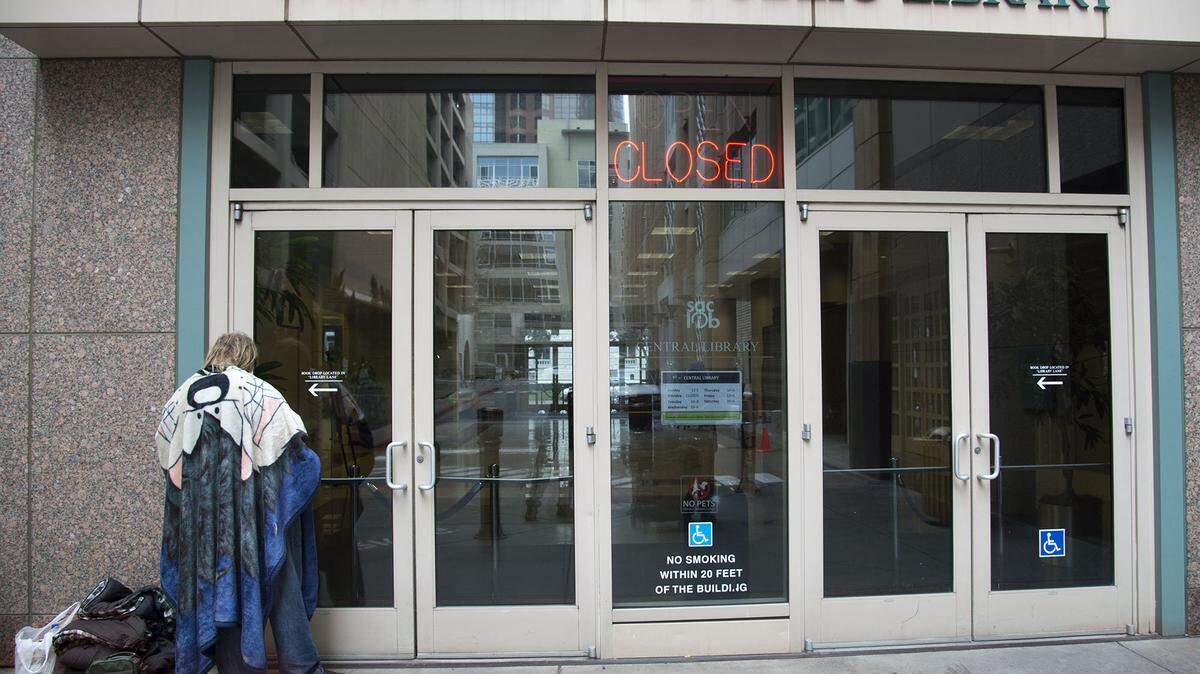
Laura’s Law, born out of the tragic death of its namesake, Laura Wilcox, finally passed in Sacramento County after a unanimous vote by the Board of Supervisors. The deep grief and angst of Nick and Amanda Wilcox over the unjust death in 2001 of their 19-year-old daughter, Laura, by an untreated, mentally ill individual, Scott Thorpe, motivated the law’s conception.
Because of the narrow constrictions of the Lanterman-Petris-Short Act — that established the right to due process in the commitment process of people with mental illness — the Thorpe family tried unsuccessfully to get Scott help before he acted out. Laura’s Law now provides a potential way for families to get aid for their loved ones and prevent senseless deaths of innocent individuals like Laura.
This is not the first time Laura’s Law has tried to come to Sacramento County. In 2011, on two hot summer night meetings at the Mental Health Board, an advisory arm of the Board of Supervisors, opposing opinions about assisted outpatient treatment (AOT) were given. Randall Hagar, the father of a mentally ill son and director of Government Affairs for the California Psychiatric Association, represented the opt-in position, while Meghan Stanton, current executive director of the Consumer Self-Help Center, articulated the opt-out position. The undercurrent of passionate feelings on both sides simmered — family members versus consumers and their advocates.
Inspired by these presentations, three members of the Mental Health Board formed an ad hoc committee to explore AOT and the possibility of its implementation in our county. I led that committee. I had served on the Mental Health Board as a family member and appointee of Supervisor Roberta MacGlashan, District 3, since 2008.
Our beautiful Christmas Day child, Christianne Noel McCrea, and her mental illness, beginning in 1999 at the age of 22 with her first psychotic break, drew me to accept that nomination. Our family witnessed Christianne’s increasing revolving door episodes of hospitalizations, missing person reports, incarcerations for minor offenses and even homelessness before she returned to our home in 2007. My presence on the Mental Health Board helped us navigate the intricate and often pockmarked mental health system in an attempt to help our daughter receive support during this wrenching, vicious cycle.
Our efforts ended in 2010 with Christianne’s suicide death, an outcome no family member wants to experience. Would Laura’s Law have helped Christianne? Being on the Mental Health Board after this event first morphed into grief support. It then became a way of supporting families in similar situations as ours and honoring the memory of our dear daughter, Christianne, by trying to help consumers like her. I became an active Laura’s Law advocate.
During the spring of 2012, our Mental Health Board Ad Hoc Committee, composed of Lois Cunningham, Brian Brereton and myself, met at my kitchen table for months, sorting through information and interviews with key people in Sacramento County on both sides of AOT. We wrote a professional document, thanks to Lois’ expertise: The Feasibility Study of Alternatives for Individuals with Chronic, Untreated Mental Illness in Sacramento County. It was 99 pages in total.
After the publication of the document by the county in July of 2012, the strongly divided Mental Health Board voted not to approve or recommend AOT to the Board of Supervisors. This paper is still available and was part of the documents used for agenda item #50 for the Board of Supervisor’s Meeting on May 18 of this year.
The next attempt to bring Laura’s Law to Sacramento occurred in 2017-18, when a group of family members, led by retired lawyer Susan Goodman, approached several supervisors with a request for AOT for their mentally ill family members. Supervisor Sue Frost had concerns over civil liberties. Supervisor Patrick Kennedy shared a paper on the benefits of the CARES+ Program, used by the Conservator’s Office. The position that CARES+ is a substitute for AOT was shared by other mental health leaders.
“The supervisors were respectful but not encouraging about AOT,” said one of the family members.
What has changed? First, assisted outpatient programs have been implemented in large and small counties all over California, as many had already embraced Laura’s Law. Reports showed great successes for individuals helped by these programs with cost savings to counties.
Through persistent education, there is also a greater understanding of Laura’s Law and how it only affects a very small population of needy, unreached consumers. In The Feasibility Study, Turning Point Director John Buck used a ballpark analogy to talk about how the people reached by AOT are those “in the bushes” — individuals who don’t know there are services or even know that they need them. Also, AOT has no forced medication.
There has been a realization that the CARES+ Program only reaches those on conservatorship, a difficult designation to achieve in today’s mental health system. As indicated in recent county surveys, a great percentage of consumers are supporting Laura’s Law. Even on the latest Mental Health Board vote, a consumer presented the pro-AOT, opt-in argument.
The climate has changed. There is no longer the sharp polarization that marked this debate 10 years ago. Lines defining supporters and non-supporters have blurred.
Now a new chapter begins to form a sensitive and successful AOT program for Sacramento County, one that will also alleviate concerns of individuals who chose to opt-out of Laura’s Law. Let’s all work together to bring a great AOT program to Sacramento County that can bring more help to our marginalized, neglected neighbors on our streets and in homes, jails and hospitals.
This story was originally published June 5, 2021 at 9:00 AM.