
Placer County student: I am not your poster child for every act of anti-Asian violence
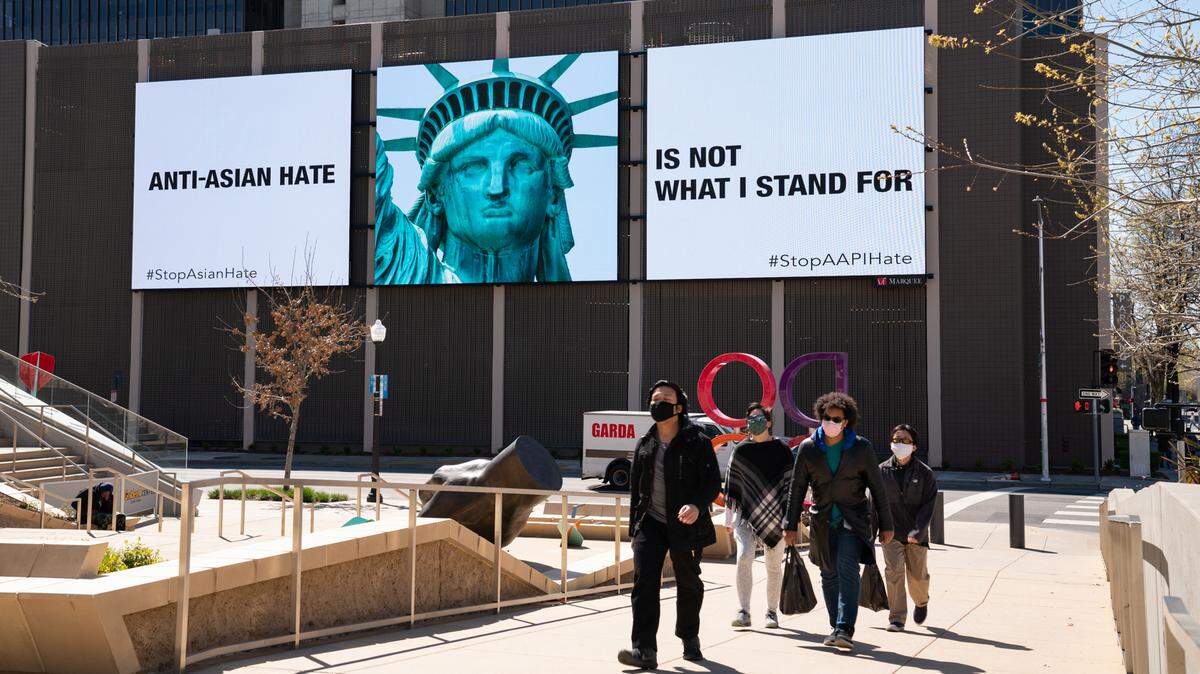
Last May, 75-year-old Pak Ho, a member of the Chinese community in California, was robbed and killed on his daily walk in Oakland, just two hours from my home in Placer County.
My family had been aware of a rise in anti-Asian hate crimes in the past year, but as one of the few Asian families in our area, we had only observed this from afar. I went to sleep that night, not knowing who Ho was.
The following day at school, one of my teachers approached me and, to my confusion, asked how I was dealing with the news of Ho’s death. Timidly, I explained that I had no idea who Ho was or what had happened to him.
This odd game of race association continued throughout the day. Peers asked me about or gave me condolences for a man I had never known. I got messages from some of my more politically active friends, asking me how I felt about Ho.
That night, after doing some research, I reflected on the day. It was striking to me how many of the non-Asian people in my orbit assumed that I knew about this deadly confrontation two hours away. It was even more striking that many of them expected me to make a grand statement on the incident or have some secret insight.
My world is predominately white, and this leads to me fielding a lot of questions about my race, Chinese New Year or where the best noodles are. But this year, I discovered a more troubling side to these well-meaning questions: because of my specific place in my community, I had become a perceived expert on anti-Asian hate.
Minorities shouldn’t feel pressured to become spokespeople for their entire race, just because they look like the victim.
The Center for the Study of Hate and Extremism reported that in the largest cities in the United States, anti-Asian hate crimes rose 149% in 2020. So why haven’t I discussed this issue with my peers as one of the few Asians in my community? Frankly, I don’t feel qualified. I’ve never been the victim of a hate crime or blatant racism, which I’m thankful for. But that also leaves me woefully ill-prepared to discuss such a sensitive subject.
My inexperience is why I’m so uncomfortable being viewed as a pundit. I’m not an activist or an expert on Asian hate, but it appears that my genetic makeup has qualified me to speak on this issue.
There is an unspoken pressure to be publicly outraged because that’s what many people expect. They expect me to be an outspoken advocate for the Asian community, unrelentingly chasing after hate, wherever it lies. Anything less than that would be apathetic to my own people.
This is an unfair double standard for minorities. When the victim looks like me, I’m expected to care twice as much.
This isn’t to say that I’m uncaring. The targeting of Asians in the past year is despicable. But my process of dealing with these tragedies is completely my own.
Asking Asians to speak on behalf of their entire community is a more polite way of saying that all Asians are the same. Whether you are the victim of a hate crime or not, this is the type of covert racism that can make Asians uncomfortable with their own race.
Pak Ho’s death was a disgusting display of hate. But that’s as much as I can say. I didn’t know him.