
Will Senate Bill 9 change your California neighborhood? Probably not in the way you think
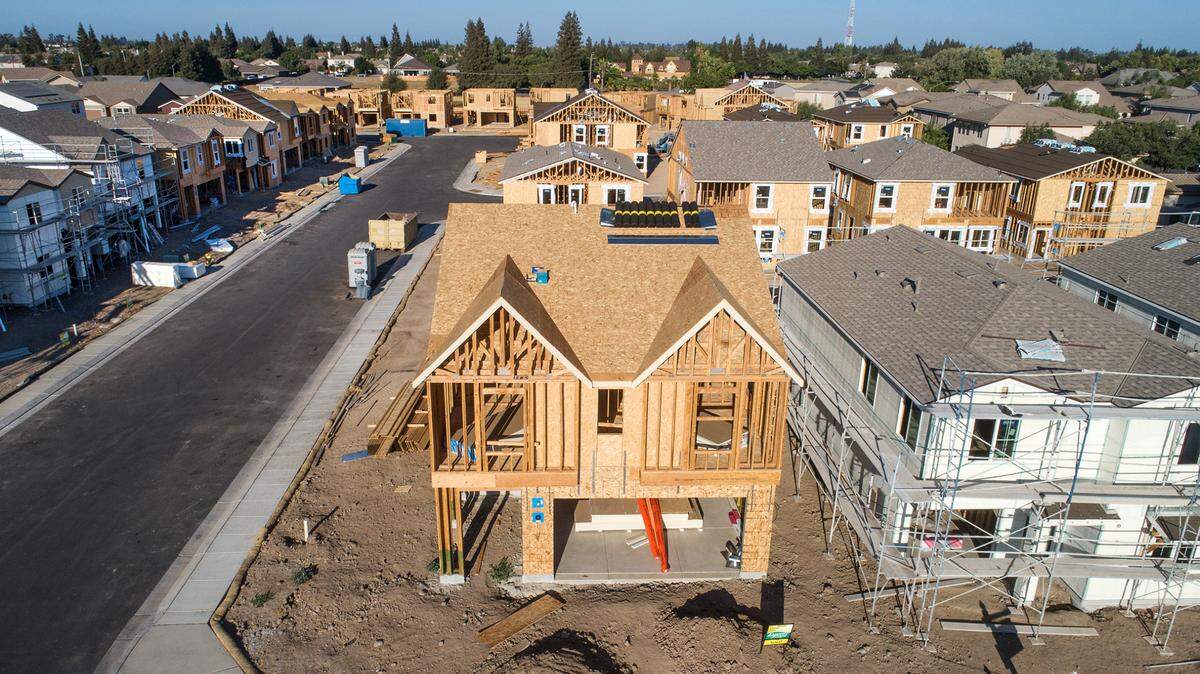
The debate around single-family zoning in California is contentious. A case in point is this year’s most sweeping piece of statewide legislation, Senate Bill 9, which has galvanized opponents and supporters alike.
But what would actually happen if SB 9 became law? A recent analysis by UC Berkeley found that SB 9 could play a role in the state’s overall housing solution, but financial and geographic factors will limit its impact to just a small percentage of the state’s single-family homes.
Authored by Senate President Pro Tempore Toni Atkins, SB 9 would allow homeowners to construct up to four units on their property in two ways: conversion of a single-family home into a duplex and subdivision of the parcel into two, which would allow an additional duplex or single-family home to be built on the new parcel.
The bill has attracted fierce opposition in recent months as it has moved through the legislative process, making its passage far from certain. In committee hearings, opponents have claimed that the bill would lead to the destruction of single-family neighborhoods as we know them.
Research has shown, however, that the changes proposed in SB 9 would not lead to the wholesale changes that opponents fear.
Recent analysis by the Terner Center for Housing Innovation at UC Berkeley, in partnership with MapCraft Labs, assesses how much new development SB 9 may enable. We model where new home construction would make sense financially throughout the state, finding that relatively few of the state’s roughly 7.5 million single-family parcels would see any new home construction whatsoever as a result of SB 9. The bill would only enable about 110,000 new parcels to feasibly add new housing — just 1.5% of all single-family parcels statewide.
Why are so few single-family lots impacted? Construction costs are exceedingly high. Even today’s skyrocketing rents and home prices are not enough to cover the development costs on most single-family parcels across the state, whether the new housing is a single-family home, a duplex, two single-family homes or any other housing types considered in our model. Another reason is that many lots are simply too small for multiple homes. The bill’s restrictions on historic districts, fire hazard areas and tenant protection provisions, and owner-occupancy requirements also limit applicability.
Concerns of widespread demolition of existing single-family homes are unsubstantiated. For 97% of single-family homes in California, demolition would not be financially advantageous. In cases where development occurs, the most likely path to add units is dividing an existing home into two.
Despite limitations, SB 9 still offers potential benefits, particularly in incrementally expanding wealth building and homeownership opportunities. While recent legislation has made it possible for homeowners to add an accessory dwelling unit (ADU), our research has found that the benefits of these policies largely go to affluent homeowners who can leverage significant equity or cash savings to build an ADU, financing options that are not available to low- and moderate-income homeowners.
SB 9’s lot split and for-sale provisions would open up new financing options to more households. The creation of modestly-sized housing — such as town homes and small-sized homes feasible under SB 9 — would also offer more affordable choices to first-time buyers at a moment when home ownership is slipping away from younger and middle-class Californians.
SB 9 is a modest housing production bill. Certainly, new homes will be built that would not otherwise be allowed under current zoning, but the scale of this development is not enough to solve California’s overall housing deficit. However, while other strategies are needed to adequately address our housing crisis — such as lowering building costs and focusing resources on affordable housing — SB 9 can be an important piece of the solution.