
There’s only one way to protect California’s environment from catastrophic oil spills
There are some spills we just can’t clean up.
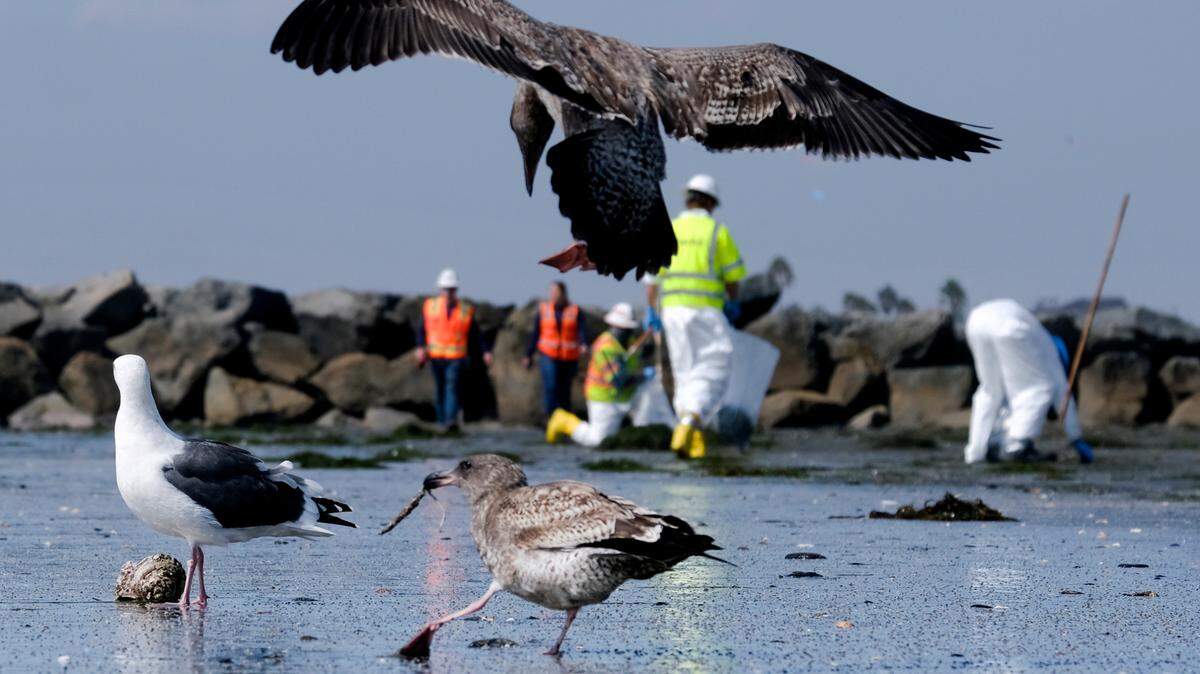
In the wake of the disastrous oil spill off of Orange County, which covers 13 square miles of ocean and has washed up on six miles of beaches, government agencies and local wildlife groups are hard at work attempting to clean up the mess.
It extends beyond the shore. Oil has flowed into marshes where birds make their homes. Farther out to sea, Southern California’s dense population of whales swim in oily waters.
It’s no secret that oil spills are a death sentence for many of the marine animals unlucky enough to be caught in them. Oil spills also create poisonous air pollution that makes shores and beaches worse than inhospitable. So rapid cleanup is an official priority.
Unfortunately, even when the cleanup is “done,” the aftereffects of an oil spill can damage the ecosystem for many years. A 10-year review of the impacts of the 2010 Deepwater Horizon oil spill in the Gulf of Mexico showed continuing health problems in dolphins and whales.
Over 1,000 whales and dolphins were found stranded from 2010 to 2014, the longest known marine mammal die-off in the history of the Gulf. In the five years following the event, 75% of observed dolphin pregnancies in the area affected by the spill failed. Dolphins also suffered increased instances of anemia, liver damage and pneumonia. Animals were not only sickened but couldn’t replenish their populations.
The Deepwater Horizon oil spill did permanent damage to wetlands. Oil weakens the plants that hold wetland soil in place, and when wetlands become less resilient, storms can do more damage onshore. To make matters worse, when those storms come along, they churn up the oil buried in the wetlands, causing it to resurface and harm wildlife all over again.
Talbert Marsh is an important wetland near Huntington Beach. In addition to providing a natural barrier against ocean storms and sea-level rise, the marsh is a refuge for 90 species of birds. Despite efforts to block the flow of oil into the marsh, it is slick with it, as are nearby Brookhurst Marsh and Magnolia Marsh.
Talbert Marsh was also the victim of a 1990 disaster in which an oil tanker leaked a whopping 416,598 gallons of crude oil into the ocean nearby. This spill killed over 3,000 birds and damaged plants in Talbert Marsh that still, more than 30 years later, haven’t fully come back.
It’s crucial that government agencies and responsible parties work together to clean up the mess after an offshore oil spill. But let’s not kid ourselves: The aftermath of this spill will be felt by wildlife and wild places for years to come. As long as we continue to drill for oil offshore, we run the risk that beaches will be fouled, more animals will be killed and more habitats will be made uninhabitable.
That’s why it’s not enough to clean up the spill. It’s also not enough to bemoan it. We need to take a hard look at our reliance on the dirty, dangerous practice of offshore oil drilling and finally bring it to an end — because there are some messes that just can’t be cleaned up.