
The Supreme Court is about to decide whether states can blatantly ignore the Constitution
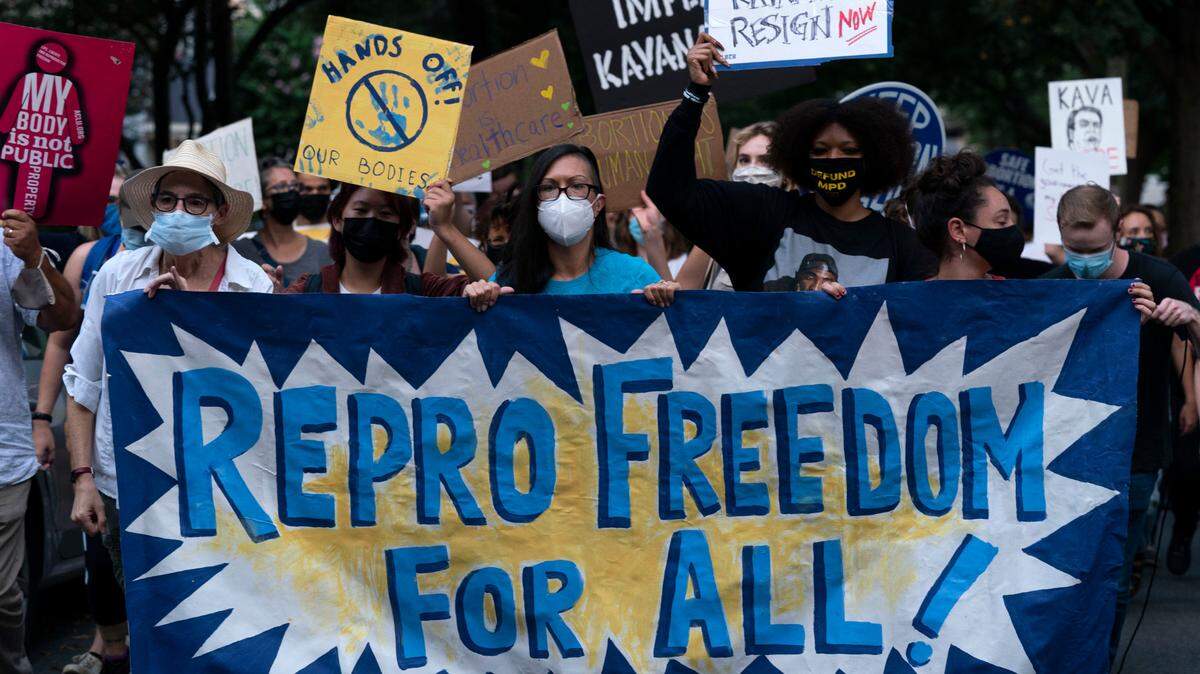
The Supreme Court will hear oral arguments Monday in two cases challenging a Texas law that prohibits abortions after the sixth week of pregnancy. The stakes in these cases are great not only for the future of Roe v. Wade but also for the ability of states to violate the U.S. Constitution.
No one disputes that Texas’ Senate Bill 8 blatantly violates the Constitution. The Supreme Court has ruled for almost 50 years that states cannot prohibit abortions until a fetus is viable — about the 24th week of pregnancy. Yet the Texas law prohibits abortions far earlier than that. Until and unless Roe v. Wade is overruled, the Texas law is unconstitutional and should be enjoined.
Twice, federal district courts have done exactly that and issued preliminary injunctions to keep the Texas law from going into effect. In each instance, on Sept. 1 and last week, the Supreme Court refused to enjoin the law. The result has been widespread closures of abortion clinics in Texas, even though women in the U.S. have a constitutional right to abortion.
How can this be? Texas says that neither it nor any government officials can be sued to enjoin the law because they play no role in enforcing the statute. Texas argues that the only way to challenge the law would be for a doctor to violate it and argue, as a defense, that the law is unconstitutional. In light of the uncertain fate of Roe v. Wade, doctors in Texas understandably don’t want to risk civil liability by violating the law.
Texas says no court can consider the constitutionality of the law or issue an injunction against it, but this surely cannot be right. The court has repeatedly said people don’t need to violate a law in order to challenge its constitutionality.
The two cases to be heard by the court on Monday thus raise the question of whether a state can adopt an unconstitutional law and immunize it from being enjoined by any court.
One of the challenges was brought by Whole Woman’s Health, a facility that performs abortions, and asks whether state officers could be sued to enjoin the statute. The other case was brought by the U.S. government on behalf of Texas women. The issue before the court is whether the federal government has standing to sue a state when it’s violating the constitutional rights of its residents.
Therefore, the issue of whether to overrule Roe v. Wade is not directly before the court on Monday. The two cases to be argued that day are both about who, if anyone, can challenge a state law that authorizes civil suits for exercising a constitutional right. That means the consequences are far greater than just abortion rights: If no one can bring a suit challenging a state law authorizing civil suits, then states can adopt laws creating liability for the exercise of any constitutional right. As a consequence, states could, for example, adopt a law authorizing suits against those performing same-sex weddings, even though there’s a constitutional right to marriage equality.
The outcome of the cases before the Supreme Court would be obvious and clear — states cannot disobey the Constitution — except that the cases arise in the context of abortion. And a majority of the justices on the court have already shown that they are opposed to constitutional protection for abortion rights.
It’s hard to overstate the significance of what will be argued next week, which is ultimately about whether a state can flout the Constitution. If no one can sue to enjoin an unconstitutional law, what is left of the supremacy of the Constitution and the rule of law?