
Daughter of RFK to Gavin Newsom: Please don’t parole the man who murdered my father
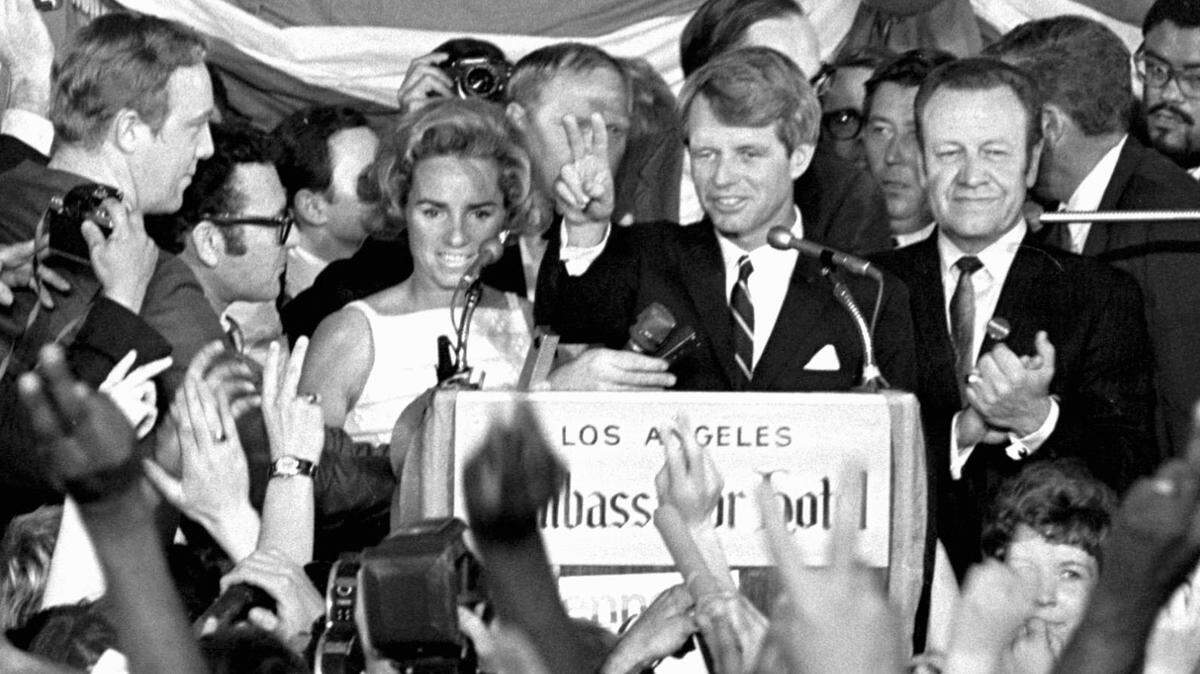
Gov. Gavin Newsom must deny parole to Sirhan Sirhan, who murdered my father, Robert F. Kennedy, on June 6, 1968, at the Ambassador Hotel in Los Angeles.
I was 8 years old when Daddy was taken from us through a politically-motivated assassination.
It was the night of the California primary, which my father had just won. I was sent back to our hotel. The next morning, I turned on cartoons, as all kids do. It was this moment — there, sitting on the carpet, staring up at the television screen — that I learned my father had been shot along with five other people.
Much has been said and written about the work that Robert Kennedy’s assassination left undone: an election he wanted to win, a war he wanted to stop in Vietnam, the pain he wanted to soothe. Some of that effort has been carried on by others. But there is part of his unfinished work that cannot be done by others.
That is his work as a loving husband to my mother and as a father to me and to my 10 brothers and sisters. For indeed, one of the murder’s great cruelties is that it leaves the work of love undone.
Yet upon his conviction, our family asked the judge to not sentence Sirhan to death.
As the leader of RFK Human Rights, a non-profit dedicated to social justice, I have worked hard to change our criminal legal system, to make it less about vengeance and more about healing. I believe that our nation’s overuse of imprisonment is abominable.
I am an ardent proponent of decarceration and fervently believe that every single person who is suitable for parole should be paroled. As a Catholic, I believe in forgiveness — which is a spiritual act by the victim, not because the perpetrator is deserving of release, but because the victim is deserving of peace.
Everyone deserves an opportunity for change, but this must start with acknowledging a wrong was committed; taking responsibility for the harm; apologizing; and engaging in the hard work of changing oneself so society is secure in knowing that the perpetrator will not harm the community again.
After many decades, one only need to look at Sirhan’s statements to see that he has not taken these steps. He wrote in his diary over 1,000 times: “RFK must die.”
Sirhan was found guilty of premeditated murder on the basis of overwhelming evidence about a crime committed in a room packed with witnesses and captured on film.
In recent years, he and his supporters have embraced conspiracies, which have been disproven by both judicial review and independent analyses. Sirhan still cannot acknowledge, apologize or try to atone for what he has done.
Remorse is integral both to the parole process and to the very notion of criminal rehabilitation itself, because if an offender does not understand his crime, what is to prevent him from committing a similar act?
This is what my 93-year-old mother Ethel Kennedy meant when she wrote that Sirhan “should not have the opportunity to terrorize again.”
My opposition to Sirhan’s parole is rooted in my support for criminal legal reform. Because if parole is to address our nation’s problem of mass incarceration effectively while we create a better, more humane system based on compassion and hope, then the parole system has to be sound, trusted and safe.
There are too many long-serving inmates suitable for parole and we should work tirelessly for their release. But Sirhan is not one of them. And I believe that even after all these years in prison, he still poses a great threat to public safety.
Sirhan Sirhan should not be paroled.