
My parents survived the Holocaust. Whoopi Goldberg’s comments show need for more education
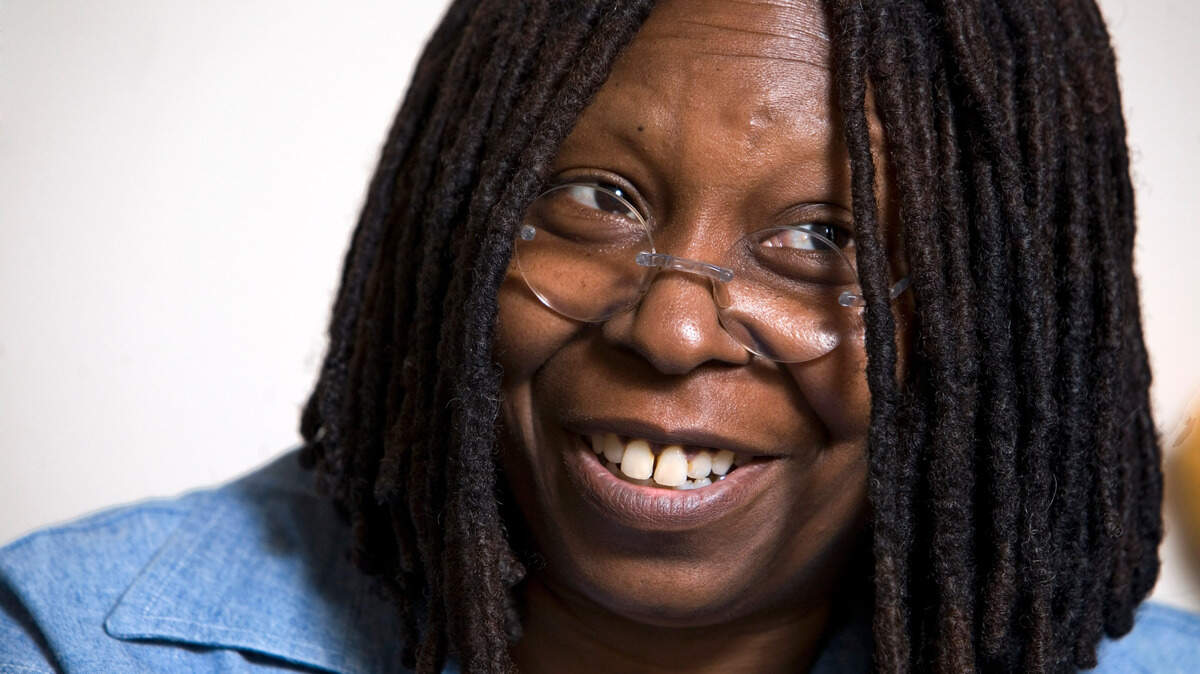
Whoopi Goldberg’s recent claim that the Holocaust was not about race created a firestorm — and an opportunity for the world. The talk show host opened the door to more basic education about this destructive time in history.
My grandparents, aunts, an uncle and countless other relatives were among the 6 million Jewish people who were slaughtered during the Holocaust. Adolf Hitler and his followers had so much hatred for people they believed to belong to an inferior race. Hitler “characterized the effect of a Jewish presence as a ‘race-tuberculosis of the peoples,’ ” according to the U.S. Holocaust Museum.
My father, William, born in Holland, survived four years in concentration camps, including Auschwitz. My mother, Esther, who was born in Poland, lived because she posed as a Christian orphan with false identity papers to back her claim.
Thanks to Goldberg’s sharing of her lack of knowledge about the Holocaust’s race connection, there is proof that the historical information has not registered and more needs to be done.
“We are in a diminished moment of public consciousness about the Holocaust,” Ethan Katz, co-director of the Berkeley Antisemitism Initiative, recently said on PBS NewsHour. “The history of the Holocaust tells us that if we begin to exclude people because of their race or their religion or how they look, that those can be taken to such destructive ends.”
A survey commissioned by the Conference on Jewish Material Claims Against Germany found that about one-quarter of 11,000 respondents under the age of 40 weren’t sure if the Holocaust really happened, if it was a myth or just an exaggeration. One in 10 respondents in the national survey said they had never even heard of the word “Holocaust.”
Words like Holocaust matter.
We know all too well in Sacramento how hatred led to fires at local Jewish places of worship in 1999, when two brothers set three synagogues on fire after murdering two gay men in Redding. I was on a hit list the FBI found in the brothers’ apartment before they were captured. Our community was on alert until the perpetrators were captured and convicted. People of all faiths stood together against hatred, strong in the belief that an act of hate against one group affects us all.
The misinformation spread by Goldberg couldn’t have come at a more opportune time, with acts of hate skyrocketing nationwide.
I’ve spent over 30 years talking to students about the history of antisemitism and the Holocaust as well as my parents’ stories of survival. After students ask questions, share insights and participate in discussions, I ask them an important question: “Will you remember the Holocaust when I am gone?”
Since I am approaching 69 years of age and the survivors in my family have passed away, I talk to students about the importance of memory and about how survivors promised those who were dying in concentration camps that they would not be forgotten.
The lessons of the Holocaust are relevant today. We would all be well served to spend time trying to accurately understand what happened during the Holocaust so that history does not repeat itself. Knowledge is power, and it’s the best weapon against misinformation and injustice.