
Why ‘Hank the Tank’ isn’t the only bear on a collision course with California’s humans
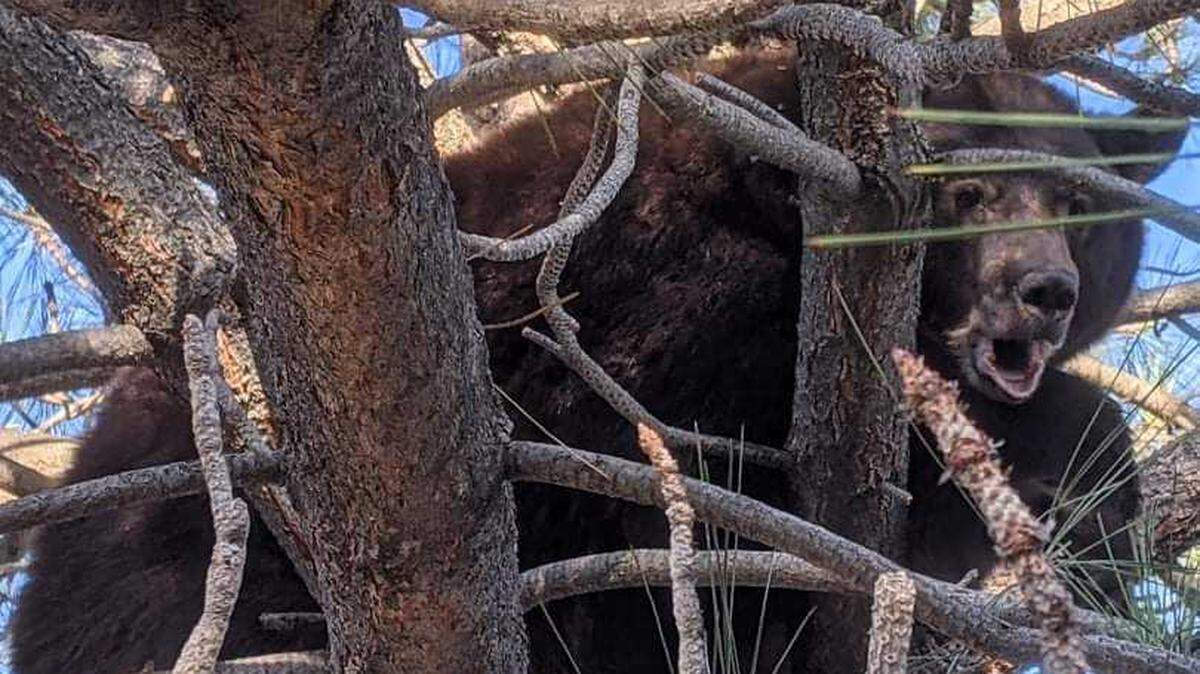
A specter haunts Californians — the specter of black bears crashing their July 4th parties, eating their dogs, breaking into their homes and stealing their buckets of wings. Unless you’ve been hibernating in a den for a year, you’ve probably heard a lot about encounters between California residents and increasingly brazen bears.
California’s bears and lions are its newest climate refugees. They’re thirsty, hungry, sick and desperate, reluctantly migrating toward our cities as we continue recklessly building toward their mountains.
Consider this chronology: In June, a 17-year-old girl pushed a mother bear out of her backyard near the San Gabriel Mountains before she and her two cubs ate the teen’s dogs. Later that month, a bear and three cubs shocked beach-goers in South Lake Tahoe when they fearlessly bathed near a dozen people. Just last weekend, the New York Times published a story about an “exceptionally large” 500-pound bear that’s ransacked dozens of homes in South Lake Tahoe. Locals call him “Hank the Tank.”
In July, a bear attacked three men (and their snacks) on Mount Wilson in LA County. In August, a bear wandered the aisles of a San Fernando Valley grocery store.
In October, a San Dimas school — located two miles and one interstate away from the San Gabriel Mountains — went into lock down when a bear approached campus. Days later, in nearby Sierra Madre, a homeowner found a bear eating leftover KFC on his kitchen counter. And in November, a 500-pound bear “crashed through” some suburban Petaluma backyards before running for cover 85 feet up a redwood.
But bears aren’t the only natives getting restless. Once elusive, the state’s mountain lions are increasingly making their presences known.
This August — for the first time in over 25 years, per KTLA — a mountain lion attacked someone in LA County. State officials killed the lion after it wounded the head, neck and torso of a 5-year-old boy playing in the front yard of his home near Calabasas in the Santa Monica Mountains. Within 20 minutes of that lion’s death, two more lions appeared on scene.
In October, two North Bay Area schools went into lockdown when a sick lion stalked near their campuses. Suffering from a “neurological condition,” state wildlife officials euthanized that lion later that week. In November, a lion was seen near water tanks on CSU Channel Islands’ campus in Ventura County, weeks after another sighting. On Thanksgiving, a San Bruno mom saw a lion outside her home in late afternoon. She saw two the night prior. And this January, a lion charged a hiker in northern LA County.
Bears and lions don’t answer surveys, but biologists have an explanation for the increased encounters with once-reclusive bears and lions last year: the changing climate.
Even by recent standards, last year was extreme — 2021 was the driest year since 1924; and it was the hottest summer in state history. Nearly 9,000 wildfires destroyed 2.5 million acres — land where bears and lions once drank, ate and slept.
For the last 20 years, Caltrans biologists have recorded the numbers of bears hit by cars and left for dead along a 108-mile stretch of state highway through the eastern Sierras. And in 2021, more bears died crossing that highway than any other year.
“I can’t think of a worse situation for wildlife — bears running for their lives from fire and then getting whacked by cars,” UC Davis director of road ecology Fraser Shilling told the Los Angeles Times. “It’s a biological tragedy compounded by the fact that humans are responsible for the climate changes.”
The growing body count of bears along our highways is California’s canary in the coalmine — a stark warning that climate change is radically reshaping the already-fragile coexistence of three predators, and setting them on a fatal collision course.
This story was originally published February 23, 2022 at 6:00 AM.