
‘Follow the damn law.’ A Black cyclist’s scary encounter with a white Placer County cop
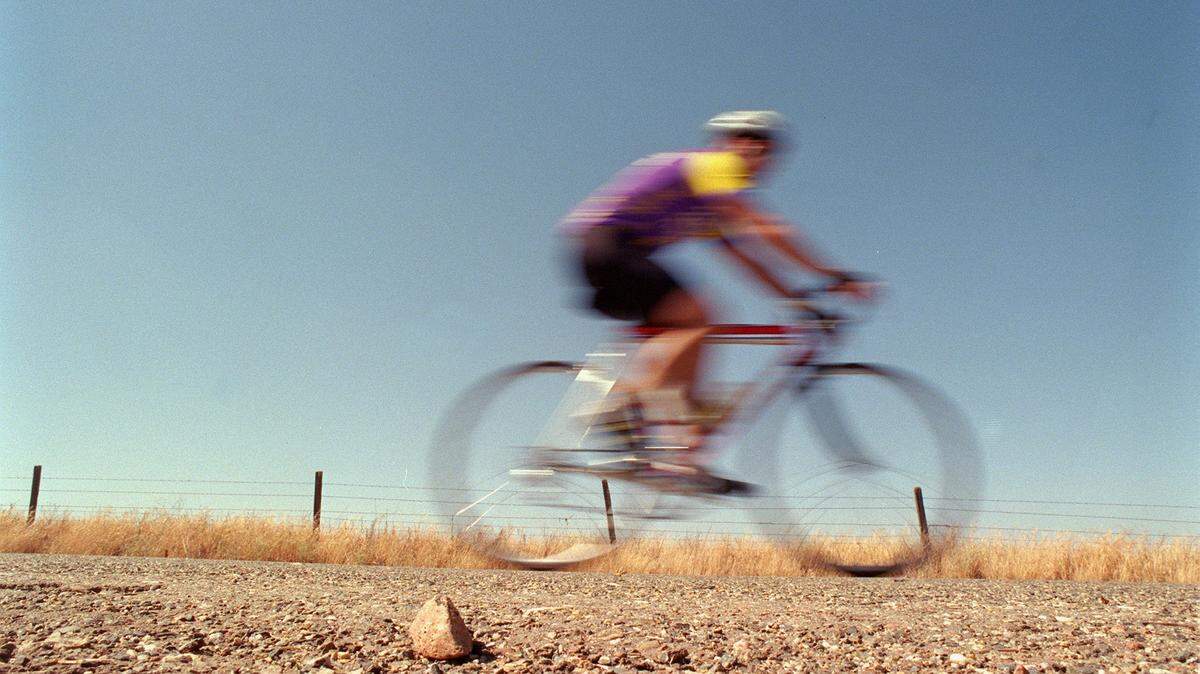
“Are you or are you not supposed to follow the goddamn rules of the law?” the officer yells at me from his motorbike.
I lift my hands off my handlebar. “Yes sir, you are.”
“Then why the hell did you not do that?”
I glance at his flush face, glaring at me through sunglasses. “Do you mean the stop sign?” I ask.
“That’s obviously the intersection you went through.”
I look at the asphalt. I want to say I didn’t stop because there was full visibility and not a single car in sight; that I’ve been riding this flat road since fifth grade and it’s the quietest neighborhood in Auburn, even after they erected the Placer County Justice Center we’re standing under; that maybe I’d forgotten, for an hour-long ride, that in eyes like his, I’m just a Black kid on a bicycle.
Instead, I apologize: “I’m sorry. I should have stopped.”
The police officer, who is white, wasn’t finished. “Do you know motorists hate people like you, riding around like you’re in the goddamn Tour de France?” I squint into the setting sun, arms by my side, sweat cooling under my winter cap. I think about my dad, one of Auburn’s first Black orthopedics. About Ahmaud Arbery, killed while exercising on a street in Georgia not unlike this one, by three men perhaps not unlike this man. I think this officer must hate his life and would ruin mine if I give him the chance.
“Do you want a $300 ticket?” he finally asks. “Do you?”
“No sir.”
“Then follow the damn law.”
He speeds off. I pedal forward slowly. A woman outside her Camry waves, as if to say, “I’m sorry, what a jerk,” or “I was here just in case.” I wave and pull over again, to write down what the officer said. The January sun has fallen below a Ponderosa pine grove and my fingers have been numbed by the coldness so I have to dictate into my phone, shivering as I repeat his tirade out loud.
At home, I tell my mom that I won’t let him ruin my first ride of the year. But that night, anger bubbles up as I eclipse the Highway 49 speed limit. I’m already a “lawbreaker,” I might as well behave like one. I don’t think about the people I endanger — my parents’ church friends, my retired elementary teachers, my niece and nephew’s school buddies; or about potential wildlife on the road — coyote pups, black bear cubs, a doe or fawn; or of everything I have going for me — a Berkeley bachelor’s degree, a Stanford MBA, the forest and education nonprofits I co-founded, people who love me, hopes I have for the future. Instead, I’m flooded with anger, hurt and pain.
I exit the highway, horrified as reality sinks in. This is what the system does. It treats good citizens like villains until they become villains. In the process, everyone loses. Not just people of color, but teachers commuting home, families driving to dinner, school buses dropping kids off. Everyone becomes less safe. Everyone loses a good citizen.
I know too many stories like this. My college best friend, a dread-locked electrical engineer, was followed by so many department-store security guards that he started stealing, “just for the challenge,” until he was thrown against a glass door and handcuffed to a K-Street-Mall-bench outside Macy’s. My cousin, a UCLA psychology and Black studies major, was pulled over so many times — once by an officer demanding he recite his VIN number to prove he hadn’t stolen his own Subaru — before eventually dropping out and selling weed.
“The criminal system doesn’t just go after criminals, it makes and defines criminals,” said Alexandra Natapoff, author and law professor at UC Irvine. Low-level misdemeanors like loitering, jaywalking, spitting and littering “aren’t about whether anybody did anything wrong or bad or harmful,” Natapoff said, but about enabling authorities to “sweep people of color into the criminal system.”
The system has always been broken. Despite recent protests, we’ve seen only a smattering of guilty verdicts, body cam requirements and bans on chokeholds and no-knock warrants, not lasting reform. Misdemeanors still disproportionately criminalize low-income and people of color; law enforcement spending is rising nationally; significant funding hasn’t been reallocated to social or mental health services; police continue to shoot as many people of color; and the cuss-someone-out-for-not-stopping-their-bicycle-at-an-empty-stop-sign culture persists. America continues to turn good people into criminals.
We need fundamental culture and policy changes. We need to continue fighting for reform, not just band-aids. Everything is at stake: our communities, neighbors, families and futures.