
California’s updated fire safety standards must consider the needs of rural communities
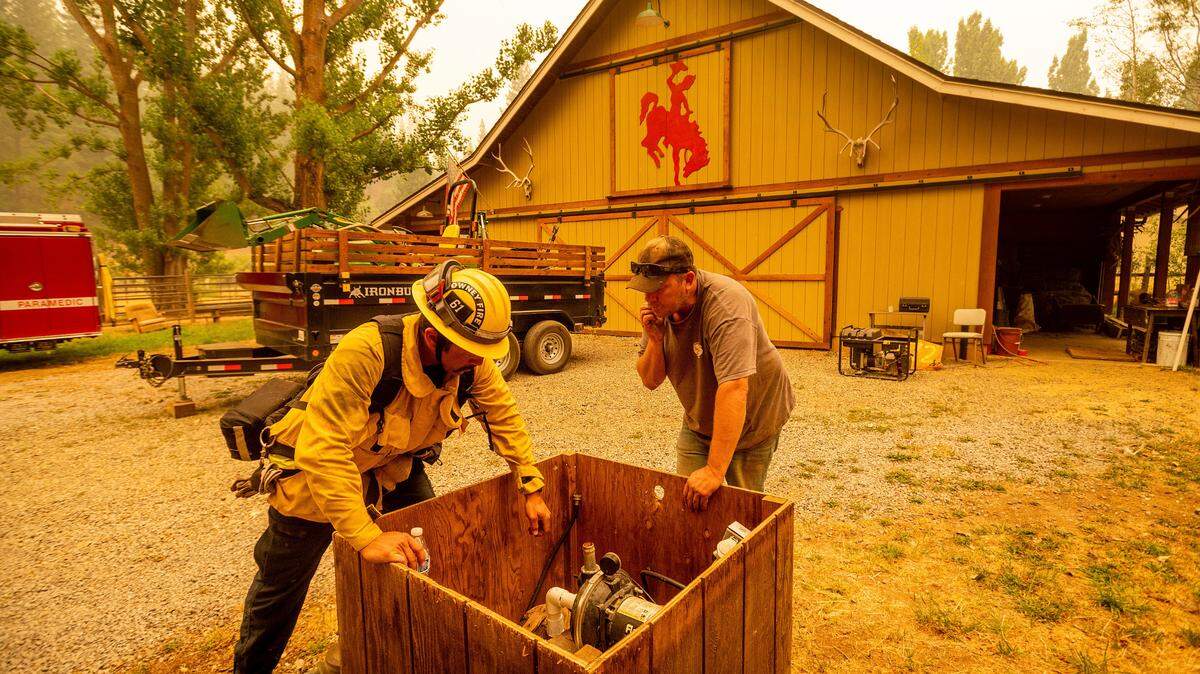
As historic drought conditions and record heat persist in California, we must move quickly to identify and pursue opportunities to improve wildfire resilience for communities in fire-prone areas. This means adopting new state standards that promote building and rebuilding in ways that put fire safety first while enabling the creation of good-paying jobs and economic opportunity for Californians who live and work in rural regions.
As representatives of the thousands of men and women who make up Operating Engineers Local 3, the largest construction trades local in the country, we strongly support statewide efforts to promote responsible, fire-safe development in rural communities.
Like so many Californians, the safety of our members — heavy equipment operators and mechanics, surveyors, construction inspectors, highway maintenance workers, police officers and other public employees — depends on the establishment of sound policies in the state’s wildland-urban interface.
Under the direction of the state Legislature, the California State Board of Forestry and Fire Protection is undertaking the complex task of updating and expanding the state’s Minimum Fire-Safe Regulations. These regulations will govern wildfire protection standards for buildings and roads across California. We appreciate the constructive dialogue and engagement being led by the board with statewide and regional organizations like ours.
As the board works to finalize the new rules — which were last updated in 1991 — we believe it is critical that they provide a pathway for local officials, fire agencies and project developers to adapt to changing conditions and implement creative fire-safe solutions. Local leaders and public safety organizations know their communities best and should have a voice in how these guidelines are applied to projects in their jurisdiction.
A one-size-fits-all approach that fails to consider the unique characteristics of rural lands and innovative, fire-safe development practices and technologies would have the chilling effect of stifling new development and harming local economies. Allowing for flexibility so that the fire safety goals of these regulations can be met through alternative means, such as additional access to water supplies, emergency backup power systems and the undergrounding of utility infrastructure, would encourage new, creative solutions tailored to meet the unique needs of individual communities.
There are proposed projects with the potential to set the bar for smart, fire-resistant development in the wildland-urban interface. These master-planned communities rely on the latest research and advancements in fire science to provide protection from wildfire and strengthen community resilience. They are designed to protect the community using both proven practices and cutting-edge technologies, including fuel breaks, dedicated open space and early wildfire detection systems.
Enabling this type of responsible development in California’s rural areas is vital to the future of these communities. Rather than focusing solely on increased density in California’s urban cores, we must pursue equitable solutions for fire-safe rural development that will bring new housing and much needed jobs to these communities.
More needs to be done to protect Californians who live in the wildland-urban interface to ensure rural communities aren’t left behind. Innovative and effective fire-safe measures that many projects are deploying today and continuing to develop will be key to the future of these communities. The Board of Forestry should seize the opportunity to build upon and strengthen the draft regulations by embracing new and creative solutions that will make development in rural regions safer than ever.