What’s preventing meaningful federal gun regulation? It’s not the Second Amendment
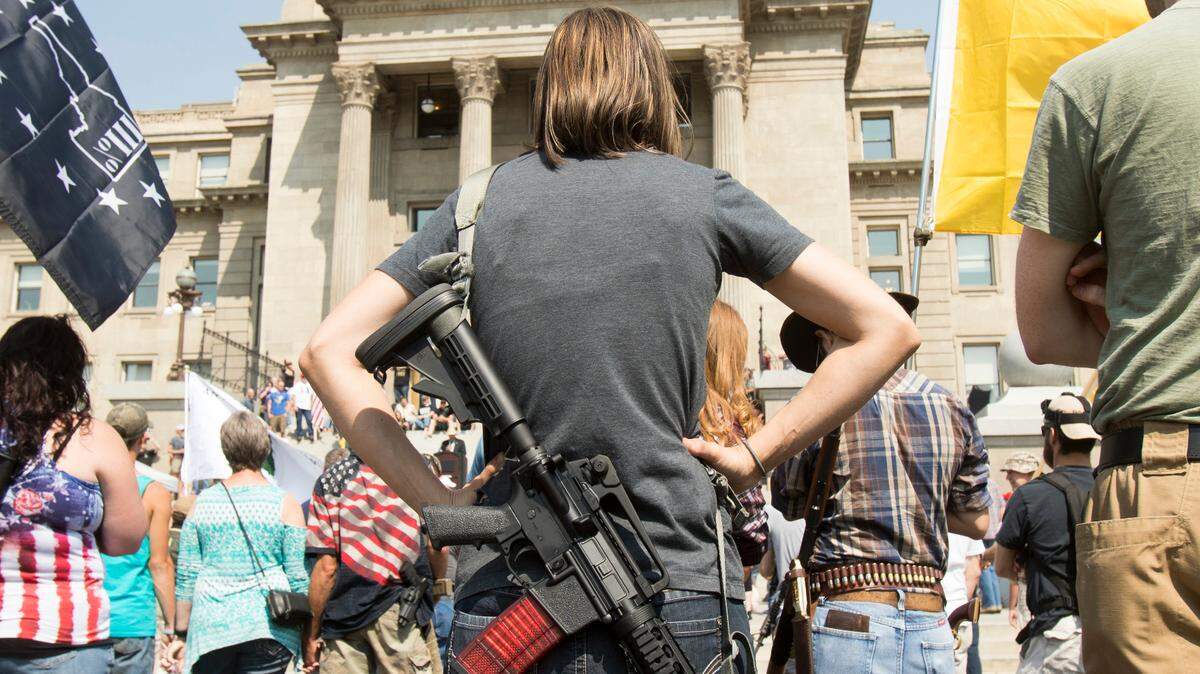
The recent mass shootings in Uvalde, Texas, and Buffalo, New York, revived urgent calls for greater gun control and another attempt to answer them in Congress. But most Republicans reject such efforts, hiding behind the Second Amendment.
It’s important to recognize that this is a false fig leaf. It’s Republicans’ conservative ideology, not the Constitution, that’s preventing the enactment of legislation that really could make a difference.
The Second Amendment says: “A well regulated Militia, being necessary to the security of a free State, the right of the people to keep and bear Arms, shall not be infringed.” The purpose of the provision is clearly stated in the text: The amendment concerns a right to have guns for the sake of ensuring a “well-regulated militia.”
Indeed, from 1791, when the Second Amendment was adopted, until 2008, not one federal, state or local gun regulation was declared unconstitutional by the Supreme Court. In the handful of Second Amendment cases the Supreme Court heard during that time, the justices ruled that it means what it says: Americans have a right to possess guns for militia service.
But in 2008, in District of Columbia v. Heller, the Supreme Court declared a gun regulation unconstitutional for the first time ever, striking down a Washington, D.C., ordinance that prohibited private ownership or possession of handguns. In the 5-4 decision, Justice Antonin Scalia wrote that the Second Amendment protects a right to have guns in the home for security.
But the court was clear: The Second Amendment does not absolutely bar gun regulation. No right in the Constitution is absolute.
Scalia’s opinion says the government can regulate who may or may not have a gun, such as by prohibiting anyone with a felony conviction or mental illness from doing so. It also says the government can regulate where people have guns, banning them from airports or schools, for instance.
Importantly, Scalia found that the government could regulate the types of weapons people possess, too. His opinion is explicit: The Second Amendment is limited to a right to possess weapons “in common use at the time.” He said this “limitation is fairly supported by the historical tradition of prohibiting the carrying of ‘dangerous and unusual weapons.’ ”
Thus the Second Amendment, as interpreted by the Supreme Court, does not preclude many needed reforms. It does not prevent the government from banning assault weapons such as the AR-15, which has been used in many of the worst mass shootings in the United States, including those in Buffalo and Uvalde.
The Second Amendment has never been found to prevent background checks for firearm purchases. Closing background check loopholes would help keep weapons out of the hands of dangerous people.
Until recently, every court upheld laws preventing those under the age of 21 from purchasing certain types of guns. But last month, the U.S. Court of Appeals for the Ninth Circuit ruled 2-1, with judges nominated by former President Donald Trump making up the majority, that a California law prohibiting those under 21 from purchasing semiautomatic weapons was unconstitutional.
Simply put, however, the government can still do much to regulate guns — from banning assault and semiautomatic weapons to requiring universal background checks — that would raise no constitutional issues. Politicians who invoke the Second Amendment as an excuse for not adopting such laws are wrong. Even if the Supreme Court expands Second Amendment rights — as it may later this month — it shouldn’t keep the government from enacting such reforms.
I’m not sure when conservatives became advocates for the National Rifle Association and the gun lobby. But they must defend their views based on the merits rather than the Second Amendment, which provides no support for their extreme position.