Supreme Court’s conservatives cling to history — except when it doesn’t fit their agenda
The flurry of conservative Supreme Court decisions last month share a common and misguided view that historical practice — specifically the adoption of the Bill of Rights in 1791 and the ratification of the 14th Amendment in 1868 — should determine the meaning of a constitutional provision today. This insistent focus on history makes no sense in applying a document written for a vastly different society and risks basic constitutional rights.
In case after case, the conservative justices have based their decisions on history. In expanding the scope of the Second Amendment and striking down New York’s law limiting the carrying of concealed weapons in public, the court found, “Only if a firearm regulation is consistent with this nation’s historical tradition may a court conclude that the individual’s conduct falls outside the Second Amendment’s ‘unqualified command.’ ”
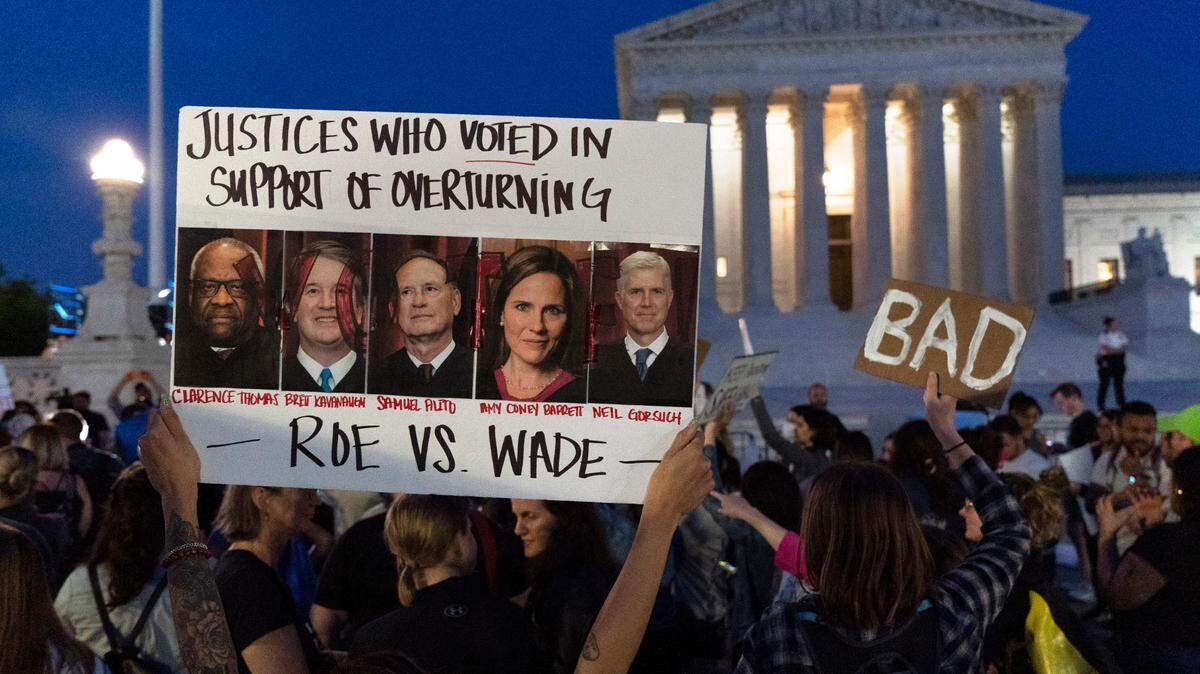
Ruling in favor of a high school football coach who wanted to pray on the field after games, the court ruled that the meaning of the First Amendment’s religion clauses should be determined by “historical practices and understandings” that existed in 1791. In overruling Roe v. Wade, the court looked at abortion regulation beginning in England and the American colonies, stressing the absence of historical protections.
Should the meaning of the Constitution be limited to when it was adopted and ignore all history since then? It’s ridiculous to think that we should look to the laws of 1791 and 1868 to ascertain whether there should be a right to public prayer or abortion.
It’s highly doubtful that we would even want to follow certain practices enshrined in the Constitution. The same Congress that ratified the 14th Amendment also voted to segregate the Washington, D.C., public schools, indicating that government-mandated segregation was constitutional. When the 14th Amendment was adopted, married women couldn’t own property and had no protection from discrimination.
In overruling Roe, the court found that a right should be protected only if it’s in the text of the Constitution, part of its history or safeguarded by a long, unbroken tradition. But this puts in jeopardy numerous rights safeguarded under the liberty of the due process clause, including the right to abortion as well as the right to marry; to procreate; to keep custody of one’s children and control their upbringing; to purchase and use contraceptives; to engage in private, consensual same-sex sexual activity; and to refuse medical care.
None of these rights can be justified through the court’s historical lens. Indeed, Justice Clarence Thomas, in a concurring opinion in the abortion decision, expressly urged the court to overrule the precedent protecting same-sex marriage as well as the right to purchase and use contraceptives and engage in private homosexual activity.
Why do conservatives focus on history? They claim it constrains what judges can do. But such constraints are illusory.
Historical practice is often inconsistent, allowing justices to pick the examples that support the conclusions they want. For instance, the court dismissed many laws regulating concealed weapons and gave no weight to the fact that the New York law they overturned has existed since 1911. The conservatives on the court ignore history when it does not help their agenda.
Next term, the Supreme Court is expected to overrule decades of precedents allowing colleges to engage in affirmative action. The conservative justices would thereby ignore that the Congress which ratified the 14th Amendment adopted many race-conscious programs that today would be considered affirmative action.
Long ago, Chief Justice John Marshall said, “Ours is a Constitution intended to endure for ages to come, and subsequently, to be adapted to the various crises of human affairs.” The Roberts Court’s exclusive focus on history ignores this command.