An obsolete law contributed to the events of Jan. 6. Here’s how Congress should fix it
The top priority for the lame-duck session of Congress should be to revise the Electoral Count Act of 1887, the federal statute that governs the procedures for Congress to certify presidential elections.
The 2020 election revealed the problems with this 19th century law, and a bipartisan reform — negotiated especially by Sens. Susan Collins, R-Maine, and Joe Manchin, R-W.Va. — urgently needs to be enacted.
Even though the bill has bipartisan support, there is fear that the incoming Republican-controlled House of Representatives might not pass it in the next session of Congress, believing a Republican presidential candidate could benefit from the ambiguities of the current law.
Now — with a Democratic House and apparently enough votes in the Senate to overcome a filibuster — is the time to pass this legislation.
The Electoral Count Act grew out of the disputed presidential election of 1876, after which Democrats agreed to give the presidency to Republican candidate Rutherford B. Hayes, who had lost the popular vote, in exchange for an end to Reconstruction. The act was not clear when it was adopted, and its problems have only become more manifest over time.
The reform bill would make many important changes, but there are still places where it should be revised before it is enacted.
Most important, the law would make it explicit that the vice president, when presiding over a joint session of Congress to certify the election of the next president, plays a purely ceremonial role. The bill states that the vice president has no authority to “solely determine, accept, reject or otherwise adjudicate or resolve disputes” over electors. This is an important clarification, but it should also be clear that the vice president has no authority to delay the determination of the president.
The bill would also change the number of objectors required to halt the proceedings. Under the 1887 law, it takes only one objector in the House and one in the Senate to bring the counting process to a halt and require congressional deliberation. This makes it easy for obstructionists to significantly delay the counting of electoral votes. The legislation raises the threshold to 20% of each chamber. This is better but still leaves too much room for mischief.
In January 2021, 139 Republican House members, nearly one-third of the chamber, objected to certifying Joe Biden’s election. That suggests that 20 percent is not enough to avoid needless debate and that the required share should be increased to at least 33%.
The bill also does not do enough to clarify the basis for challenges to a state’s electors. It allows members of Congress to object on the basis that electors’ votes are not “regularly given,” a phrase from the 1887 law, but it does not define what “regularly given” means, opening the door to frivolous challenges. The act should be clear as to the grounds for challenges to electors.
The bill would identify each state’s governor as responsible for submitting the certificate of ascertainment identifying the state’s electors, unless otherwise specified by the state’s laws or constitution in effect on Election Day. Congress could not accept a slate submitted by a different official. This is desirable because it would eliminate the potential for multiple state officials to send Congress competing slates.
The bill also says that “the laws of the state enacted prior to Election Day” are decisive when it comes to the legality of a state’s certification of electors. Every state has a law that provides that the electors from that state are to reflect the winner of the popular vote. In other words, the new law would clarify that a legislature can’t decide which candidate gets its electors after Election Day.
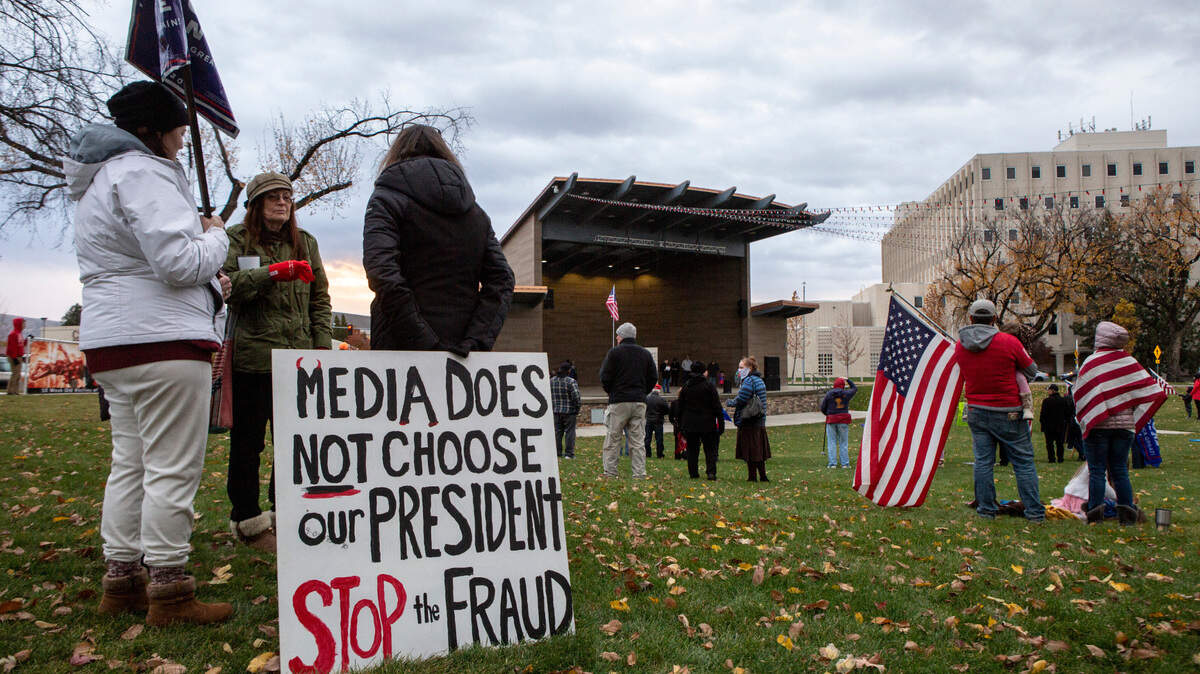
In 2020, Donald Trump and his allies tried to get state legislatures to allocate their electors to him notwithstanding the popular vote. It is essential to prevent legislatures from defying the will of the voters in this way.
Revising the Electoral Count Act will not remedy other problems in our electoral system, especially the many state laws designed to disenfranchise minority voters. Congress must also pass legislation to further protect voting rights, but that seems unlikely given the likelihood that Senate Republicans would filibuster such a bill.
But the perfect should not be the enemy of the good. At the very least, the Electoral Count Act needs reform, and it should happen in the next month.