
It’s no longer a matter of if but when a catastrophic flood will hit Sacramento | Opinion
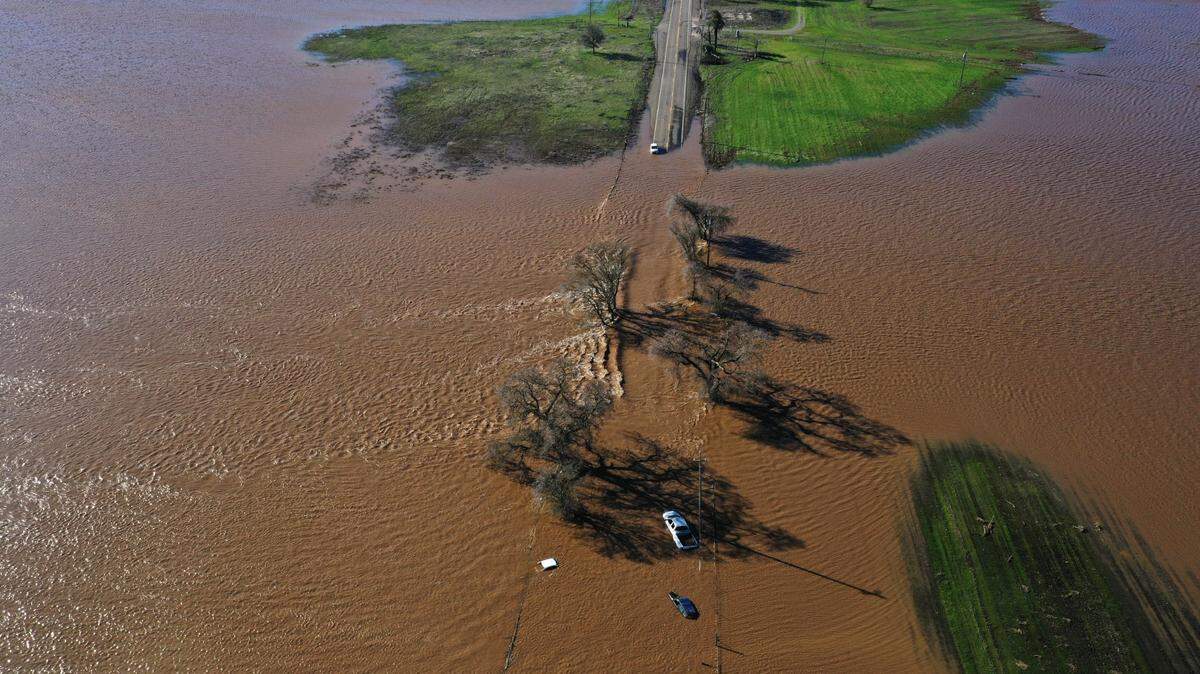
The Sacramento region’s flood crisis has made national news, with coverage focused on destruction, closed streets and the loss of property and life. Of course, the silver lining is that these storms have nearly filled our depleted reservoirs.
But these storms are significant for another, overlooked reason: They serve as a wake-up call for a public that has been lulled into a false sense of security by the long periods of drought California routinely experiences. Nevertheless, as officials responsible for flood protection, we affirmatively know that it’s not a matter of if, but when, Sacramento will experience a massive flood.
The barrage of storms since New Year’s Eve has altered a somewhat abstract concept into a harsh reality — that’s the true transformative power of wind and water.
If Reclamation District No. 1000’s levees fail, the City of Sacramento, the State Capitol and the surrounding areas of Natomas, La Rivera, Arden-Arcade, Del Paso, Land Park, South Land Park, Oak Park, West Sacramento, Greenhaven, College/Glen, Northgate, Rosemont and Rancho Cordova would suffer tremendously from the devastation of flooding.
Reclamation District No. 1000 provides flood protection and public safety by maintaining over 40 miles of levees surrounding the basin’s perimeter to keep floodwaters from the Sacramento and American Rivers. The district also operates and maintains hundreds of miles of canals and seven pump stations in the interior to collect and safely discharge the rain that falls within the Natomas Basin back into the river.
The grave reality of possible levee failure is a significant concern for District 1000, which, since 1911, has protected the public and property for the greater Sacramento region. We maintain eight pump stations to export stormwater from our neighborhoods into surrounding river systems and more than 42 miles of exterior levees to safeguard our basin from being overtaken by the swollen rivers of the Sacramento, American and Feather watersheds.
We have an action-oriented plan for a flood-safe future for Natomas, and have been working tirelessly for more than two-and-a-half years to educate the public, implement necessary repair programs and work with local, state and federal officials to prepare for future weather events. Our crews have been working around the clock, inspecting levees and pumps and making vital repairs to keep our families and communities safe.
As we get through future storms, there are four things we would like every resident, business owner and government official to consider:
First, the Natomas Basin is the second-most dangerous flood threat after New Orleans in terms of potential for catastrophic flooding and loss of life.
Second, we can expect more extreme storms. Scientists have predicted that our changing climate will result in stronger weather patterns, and a “mega storm” could be destined to slam California in the coming years.
Third, strong levees aren’t enough. Imagine that the levees form a giant bathtub. At some point, if you don’t get the water down the drain, you’re going to flood the bathroom. In the aftermath of Hurricane Katrina, New Orleans had fortified its levee system but failed to upgrade pumps, drainage systems, backup power supplies and other infrastructure needs. Along came Hurricane Ida, which exposed this vulnerability; the storm caused $65 billion in property damage and cost at least 26 people their lives.
Fourth and finally, the Natomas Basin is on borrowed time. District 1000 is now the most urbanized reclamation district in California. Some of the pumps we are using are from the 1910s, and the district has not had a rate increase in 30 years. Repairing and replacing pumps, pipes, backup power, monitoring systems and other infrastructure have been deferred for too long, which is why Reclamation District 1000 is seeking approval from those in its service area to fund critical flood protection needs.
Our levees have held strong, our crews are working tirelessly and we are thankful for the responsiveness from federal, state, county and city officials and our local utility companies who understand the severity of our situation.
We cannot prevent storms, but together we can prevent a flood disaster.