
How can anyone trust U.S. Supreme Court justices who won’t abide by an ethics code? | Opinion
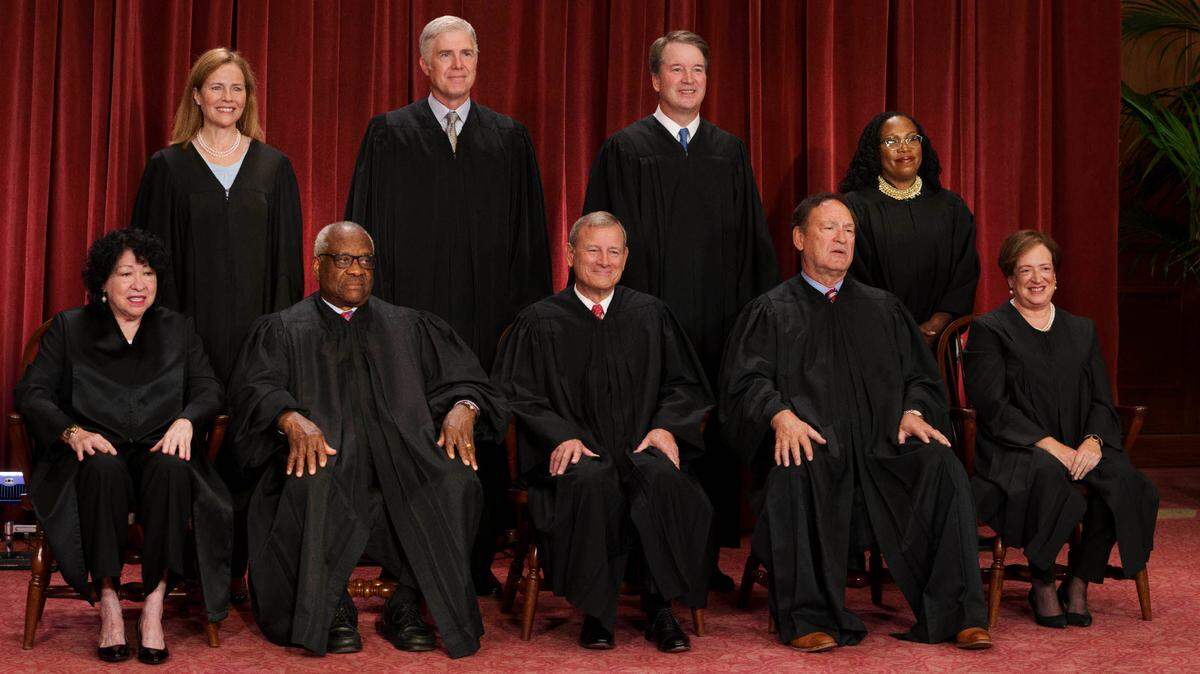
It was shockingly inappropriate for Justice Samuel Alito to express his view that it would be unconstitutional for Congress to require the Supreme Court to enact an ethics code. After the Senate Judiciary Committee passed a bill on July 27 which would mandate this, Alito immediately gave an interview with the Wall Street Journal’s Editorial Board in which he said that such a law would be unconstitutional.
A Supreme Court justice should not be expressing views about the constitutionality of pending legislation, especially when it’s about regulating him and his court.
It is inexplicable and just plain wrong that the only judges in the United States who do not have to abide by an ethics code are the most important and powerful ones: Supreme Court justices. Revelations this year of questionable ethical conduct by several of the justices shows the imperative need for such ethical rules; for a place the justices can go to seek ethical advice; and for an enforcement mechanism when justices violate the rules.
ProPublica, for instance, revealed that Justice Clarence Thomas had received luxury vacations, money from selling property and funds for his grand-nephew’s tuition from Harlan Crow, a conservative real estate developer. None of this had been disclosed. ProPublica also revealed that Alito had taken a luxury vacation paid for by billionaire Paul Singer. This, too, was never disclosed.
Meanwhile, Justice Neil Gorsuch sold property to the head of a law firm that regularly appears before the Court, but left blank the identity of the purchaser on a disclosure form. And, most recently, it was revealed that the chambers of Justice Sonia Sotomayor pushed the selling of her book when she was speaking at events.
The justices, of course, could and should adopt an ethics code on their own. The absence of one is a self-inflicted wound that contributes to the court’s historically low approval ratings.
But if the justices won’t adopt an ethics code, then it is appropriate for Congress to mandate one. Sen. Sheldon Whitehouse introduced such a bill, the Ethics, Recusal and Transparency Act, which would require the court to adopt a code of conduct for the justices and implement procedures to handle complaints of judicial misconduct. It would also require the Supreme Court to impose more rigorous rules for the disclosure of gifts, travel and income received by both the justices and their law clerks.
This should not be remotely controversial. It is the same type of regulations already apply to federal and state judges, and to elected officials at all levels of government.
So it is a sad reflection of our polarized times that the vote in the Senate Judiciary Committee was 11-10, exactly along party lines. The bill seems destined to fail in the Senate because of a Republican filibuster and to die in the Republican-controlled House of Representatives.
Ethical standards, though, should have nothing to do with partisanship. Everyone, liberal or conservative, should want a court that is above reproach. The fact that the most serious ethical improprieties have involved conservative justices has made the effort for ethical rules seem partisan. But that is short-sighted and obscures the need for Supreme Court justices to follow the same ethical standards as other judges and elected officials.
Notably, the Ethics in Government Act of 1978 requires government officials — including Supreme Court justices — to disclose many kinds of financial interests and transactions. The statute applies to any judicial officer.
Separation of powers does not mean that a branch of government operates entirely independent from the others. Congress, for example, regulates many aspects of the Supreme Court, including its size, the salary of the justices and the budget of the court. Congress, of course, cannot direct how the court decides cases or act in a way that undermines the court’s functioning, but an ethics code would not undermine the court’s independence in any way.
A code of ethics is long overdue, and the justices are just hurting the institution they serve by resisting one.
This story was originally published August 2, 2023 at 6:00 AM.