
Some of California’s newest laws in 2024 are too open to interpretation from bad actors | Opinion
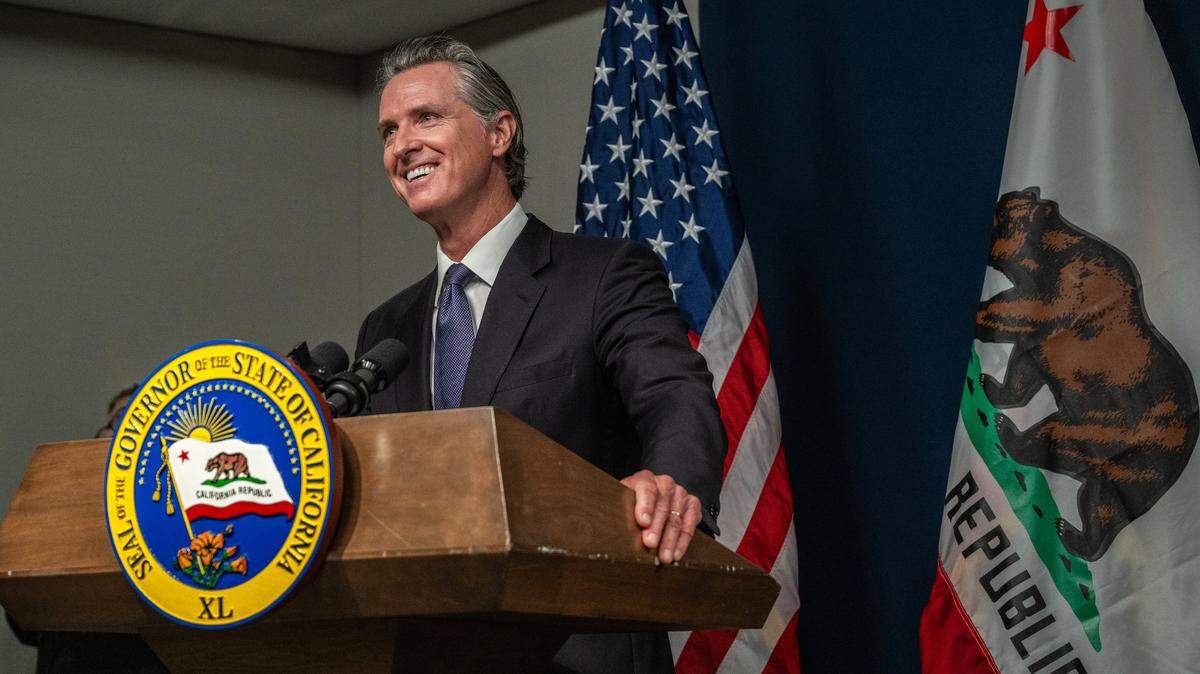
California Gov. Gavin Newsom and Florida Gov. Ron DeSantis’ battle of optics reached a fever pitch last November when they debated live on Fox News. But the Florida-California debate isn’t just a matter of personalities, it’s a matter of real policy.
In the past three years, Newsom and California lawmakers have positioned themselves as offering a legislative alternative to DeSantis’ agenda, passing a slate of bills to rival Florida’s immense output and influence, particularly on free expression issues.
With Congress gridlocked, it is state-level policy and laws that dominate the playing field. Model legislation, from lobbyists and legislators, offers fill-in-the-blank bill templates that enable legislators to easily duplicate bills across the country. This includes policy on free expression-related issues — the subject of a pair of PEN America reports, which I co-authored, released late last year.
Newsom and his legislative supporters have embraced the role of legislative trendsetter, labeling many recent laws “models for the nation.” These are bills that impact our speech online and the teaching of history in schools. Indeed, some of them have expanded protections for free expression in California, but some of the state’s exported laws lack the safeguards to work in other states.
Take Newsom’s flagship legislation: an anti-book-banning law, passed in September, that establishes financial penalties for any school district in the state that does not “accurately portray the cultural and racial diversity of our society.” It’s easy to understand why lawmakers chose an enforcement mechanism with teeth: Just two months before the law passed, Newsom successfully levied the threat of a $1.5 million fine to defeat a southern Californian school district’s proposed ban on a textbook featuring Harvey Milk, the state’s first openly-gay elected official.
But such a strategy could backfire and further the very conservative tactics it aims to extinguish.
Last May, Vox identified a “rising Republican movement to defund public libraries” for their refusal to comply with book bans. And last August, multiple 2024 Republican hopefuls floated the idea of defunding the federal Education Department altogether. In these instances, fines aren’t the deterrent we think they are — they’re the incentive.
Even absent nefarious intentions, states from New York to Ohio have increasingly slashed public funding for libraries, so it’s not a leap to fear that in this precarious climate, some localities could use a financially punitive anti-book-banning bill to simply eliminate services for schools and libraries or cut them altogether.
The state’s Age-Appropriate Design Code Act (AADCA) is another example of a law that is wide open to interpretation depending on the state. Drawing on the UN Convention on the Rights of the Child, the act aims to reduce minors’ exposure to “potentially harmful” content online by requiring new privacy and reporting standards for social media companies.
But the law has a glaring omission: nowhere does it define what “harmful” content actually is. In some cases, these distinctions may feel intuitive — the law limits data collection and sets default privacy settings for minors. But the law’s ambiguous language can be interrupted widely; what one state legislature views as beneficial for children’s well-being (for example, a video featuring a same-sex couple, or information about sexual health and contraception) could be deemed “harmful” by another.
In California, this uncertainty risks incentivizing businesses to “play it safe” and pull back the information offered to all users.
California’s impulse to leverage its own legislative laboratory as a model for bills that expand rights protections is laudable, and some of the state’s newest laws can stand as-is. But a new model for legislative leadership is overdue: one that values precision over pace; explicitly acknowledges where bills that work in some states can go wrong in others; and promotes a goal, not a single boilerplate solution.
California already has the tools and experience to do this. Last summer, lawmakers decided to delay a new local news funding bill after advocates expressed concerns that the bill in its current form would disproportionately benefit large corporations and drive out online news access.
California leaders might argue that it is not its job to make airtight policies for Minnesota, but perhaps it is the responsibility of a policy leader to flag that their laws may need amendments to work in other environments.
It is often said: “As goes California, so goes the nation.” If Newsom and California lawmakers intend to heed this call, they’ll want to make sure they can stand by the nation’s direction.