
Older adults — including those in long-term care facilities — have a legal right to vote | Opinion
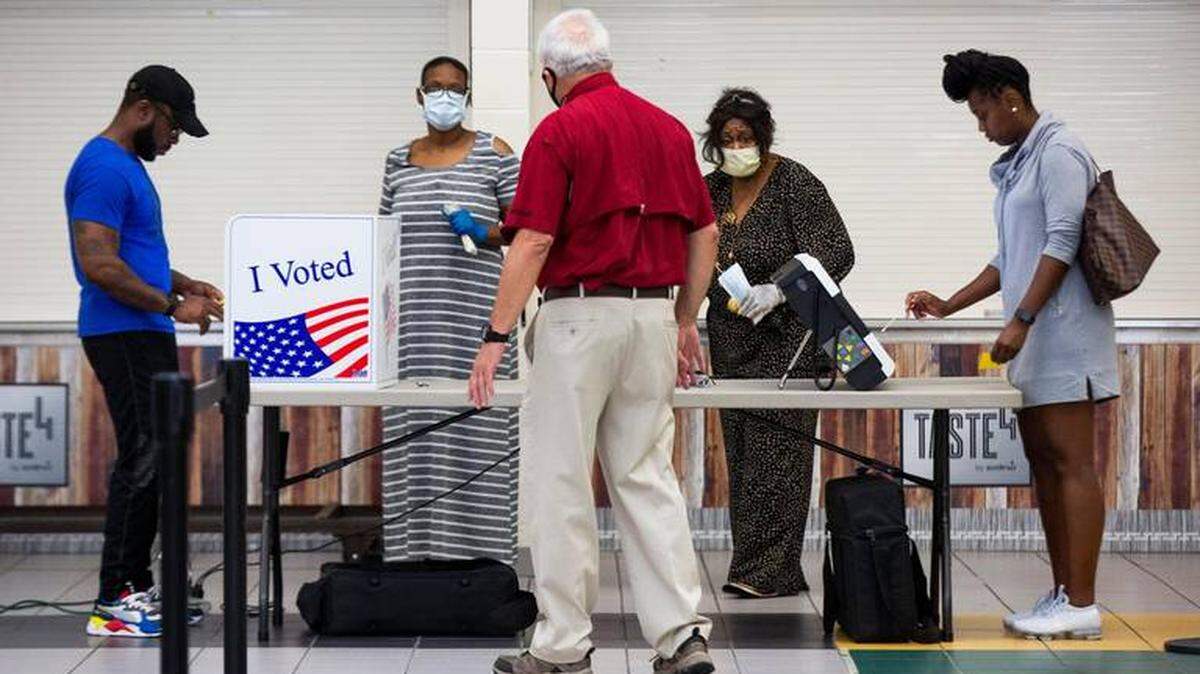
An older Californian gives up exactly zero rights upon moving into long-term care. And that includes the right to vote.
Yes, every citizen in a nursing home or residential care facility can absolutely participate in the upcoming Nov. 5 presidential election. What’s more? Long-term care staff have a specific obligation under both state and federal law to help older adults and people with disabilities participate in the voting process.
I’m the State Long-Term Care Ombudsman in California, and my job is to advocate and help resolve issues involving care, safety and personal preferences for the more than 300,000 older adults and adults with disabilities who live in long-term care facilities. To residents, this is their home — where they feel safe, comfortable and supported by dedicated, conscientious caregivers.
Unfortunately, my agency’s ombudsman representatives sometimes find that long-term care residents and staff aren’t familiar with the law and mistakenly think residents’ rights are somehow different when life’s journey leads to long-term care.
In a conversation with a large facility, I was dismayed to hear that providing rides to a voting station wasn’t on anyone’s radar.
This isn’t in keeping with the intent of state and federal law.
In our current super-heated election season, experts have weighed in on the importance of politicians courting voting blocs, whether it be women, suburbanites, independent voters or those who haven’t yet made up their minds. Yet the AARP says it’s voters over 50 who “will decide the 2024 elections.”
A subset of that demographic is the group I’m involved with: long-term care residents. Many of these residents once volunteered at polling stations or were active in political campaigns. Some were elected officials themselves.
A number of these residents never missed voting in an election until they moved into a facility. Most are rule followers who adapt to a facility’s eating and sleeping routines, not realizing that, by law, they have a right to determine when they eat, wake and receive visits from loved ones.
Experience has taught us that too many long-term care residents don’t know they have a right to ask for and receive neutral, nonpartisan help with voting in a variety of possible ways, including assistance in registering to vote and transportation to polling places.
In my family, voting is a precious right. I came to the United States from Mexico City legally at the age of 2 and won the right to vote when I later became a naturalized citizen. By law, I can never run for president, but I can vote — and I do!
California has all-mail voting, and counties have already begun mailing ballots. Four generations of my family will proudly cast ballots this year: my 91-year-old father, me, my 40-year-old son and my 21-year-old grandson. Similar stories of families honoring the voting tradition are playing out across the state.
The Office of the State Long-Term Care Ombudsman encourages all long-term care residents to learn about their rights, and calls on every facility to consider how it can best help residents participate in the democratic process (without influencing voting decisions, of course).
Goodwill is created when long-term care staff adopt an approach to have vans take residents to polling places on Election Day (and making sure residents know staff is available to help with the voting process, including by reading mail ballots and other election materials). Staff can also help ensure that residents are registered to vote by the Oct. 21 deadline, and they can help residents who recently moved in to fill out voter change of address forms.
When long-term care facilities empower residents to engage in the voting process, they honor the people they serve, enabling them to age with the dignity and respect they deserve.
This story was originally published October 17, 2024 at 9:39 AM.