
Gov. Newsom and California leaders must prepare for battle against Donald Trump | Opinion
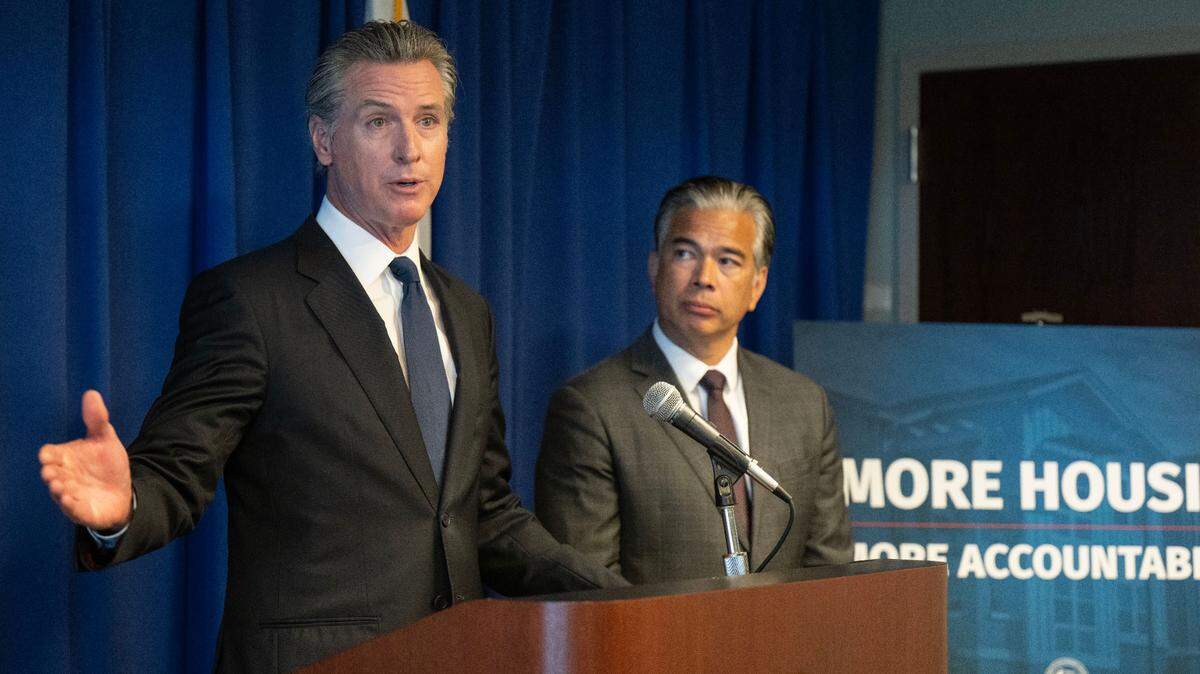
California will play a crucial role in challenging efforts by Donald Trump to move the country in a decidedly more conservative direction. Between 2017 and 2021, the California Attorney General filed 123 lawsuits objecting to Trump administration actions. Today, Gov. Gavin Newsom called a special legislative session to ensure funding for these efforts during the next four years.
This is exactly as it should be. There is a huge gulf between the policies that Trump says he will pursue and the values of California. Although Trump won the popular vote for president on Tuesday, he decisively lost in California. Kamala Harris received over 57% of the vote in California, defeating Trump by more than 1.7 million votes.
In areas such as immigration, environmental protection and reproductive justice, California is sure to go to the courts to resist what the Trump presidency will try to do.
In many areas, California will rely on what is called the “anti-commandeering” principle: the federal government cannot force states to adopt regulations or administer federal mandates. The Supreme Court used this principle to hold that the federal government could not force state and local governments to conduct background checks before issuing permits for firearms.
More recently, the court held that Congress could not force states to increase Medicaid eligibility with the threat of losing all federal Medicaid assistance if they did not comply. In these and other cases, the court said it violates state sovereignty for the federal government to impose such mandates on state and local governments.
It is expected that the Trump administration will again try to force local police, schools and even hospitals to cooperate with federal immigration authorities and turn over undocumented individuals. California is sure to sue and argue that this is impermissible commandeering.
California will challenge the legality of changes in policies by the Trump administration as exceeding its authority or not following proper procedures. For example, when the Trump administration repealed the Deferred Action of Childhood Arrivals (DACA) program, the University of California brought a challenge that it won in the Supreme Court. The new Trump administration is likely to again try to repeal DACA, and this will certainly be challenged by California yet again.
In his campaign, Trump has promised to relax environmental standards, including to allow more offshore drilling. California will challenge the legality of these actions and act to uphold its own, stricter environmental rules.
A recurring issue will be the extent to which federal law preempts state and local laws. A basic principle of constitutional law is that when there is a conflict between federal law and state or local law, the federal law wins out. However, there is often disagreement over what constitutes a conflict. States can always provide more protection of rights than federal law or the Constitution. In the area of abortion, for instance, California’s Constitution assures a right to abortion even though there is no longer a federal constitutional right.
But there is a real prospect that the federal government will try to limit abortions. The Heritage Foundation’s Project 2025 says the new administration should act to eliminate medically induced abortions. Last year, 63% of all abortions in the United States were medically induced rather than surgically performed.
Although Trump disavowed Project 2025 as a candidate, if there is a Republican House and a Republican Senate, there is a real possibility of the government passing a federal law prohibiting all abortions in the U.S. California is sure to be a leader in bringing a challenge to such efforts to restrict abortion rights and access, arguing that the federal government lacks the authority to do so and contending that it does not preempt California’s law.
These, of course, are only a handful of examples. And there is much that the Trump presidency will do that cannot be challenged in the courts. If Trump ends military aid to Ukraine, California is powerless to stop it. If Congress adopts the Trump tax reform and tariffs, that will be hard to challenge in the courts.
But so much of what Trump has proposed is of dubious legality. Whenever California or its residents are affected, expect to see Newsom and California Attorney General Rob Bonta leading legal challenges.
Perhaps most of all, California will play an essential role in the next four years in expressing dissent. Those in California, including our elected officials, must speak out against Trump policies that violate the law and that harm people’s lives. We cannot be silent in the face of policies that put members of our community in fear, that degrade our environment, threaten the planet and take away basic rights.
Newsom and Attorney General Rob Bonta are on exactly the right course in planning now to challenge Trump’s policies.