
How do California’s bridges and road conditions measure up nationally? | Opinion
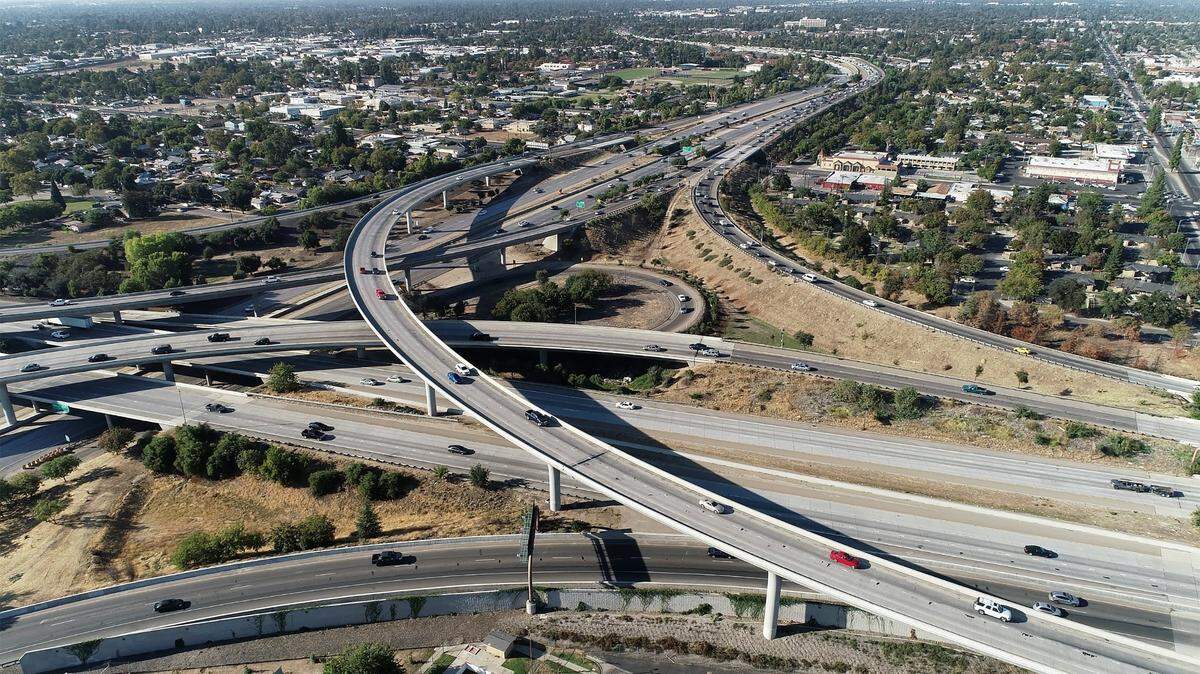
Most Californians have a negative view of highway and road conditions in the state, perhaps informed by the most recent pothole drivers hit on the way to work. While the state’s roads and bridges are still lacking in comparison to the national average, Californians might be surprised to learn that our highways, roads and bridges have improved over the last 10 years.
The U.S. Department of Transportation provides detailed data on the condition of highways and roads for each state. Highway and road surface conditions are measured using an International Roughness Index, an objective measure of road conditions.
So how does California compare to the nation as a whole? Highways and roads in the state showed improvement since 2014 (except for our rural interstate highways).
In rural areas of the state, over the 2014 to 2023 time period, interstate highways worsened while freeways markedly improved. Arterial roads also improved. In urban areas, interstate highways and freeways improved. Yet while most state highways and roads improved over the period, the condition of California highways and roads is still inferior to national averages.
States conduct an annual inspection of bridges. Each bridge is classified as being in either good, fair or poor condition. Nationwide, 7.3% of bridges were rated to be in poor condition. In California, the percentage of bridges in poor condition declined from 11.2% in 2014 to 6.7% in 2024. There has been considerable improvement over the last 10 years; but our performance is still not as good as the national average.
California’s highway, road and bridge maintenance programs have improved the transportation infrastructure over the last 10 years. High levels of truck traffic — especially in urban areas — are a major source of highway and road surface damage over time. Vehicle surface damage is based upon weight per axle (this being the highest for large trucks). However, electric cars are heavier than gasoline cars, and the same can be said about electric trucks. As the number of these vehicles continues to grow, there will be more highway and road damage.
Since a well-maintained transportation system is essential to a healthy economy, state funding for basic transportation maintenance should be a budget priority.
Gov. Gavin Newsom’s proposed budget for the next fiscal year includes a little over $2 billion for bridge, highway and road maintenance. This represents a $624 million decline from the current fiscal year. This is a short-sighted way to balance the budget.
The Legislature should prioritize basic transportation maintenance and restore these funds to the transportation budget.