
Investing in prison rehabilitation programs will make California safer | Opinion
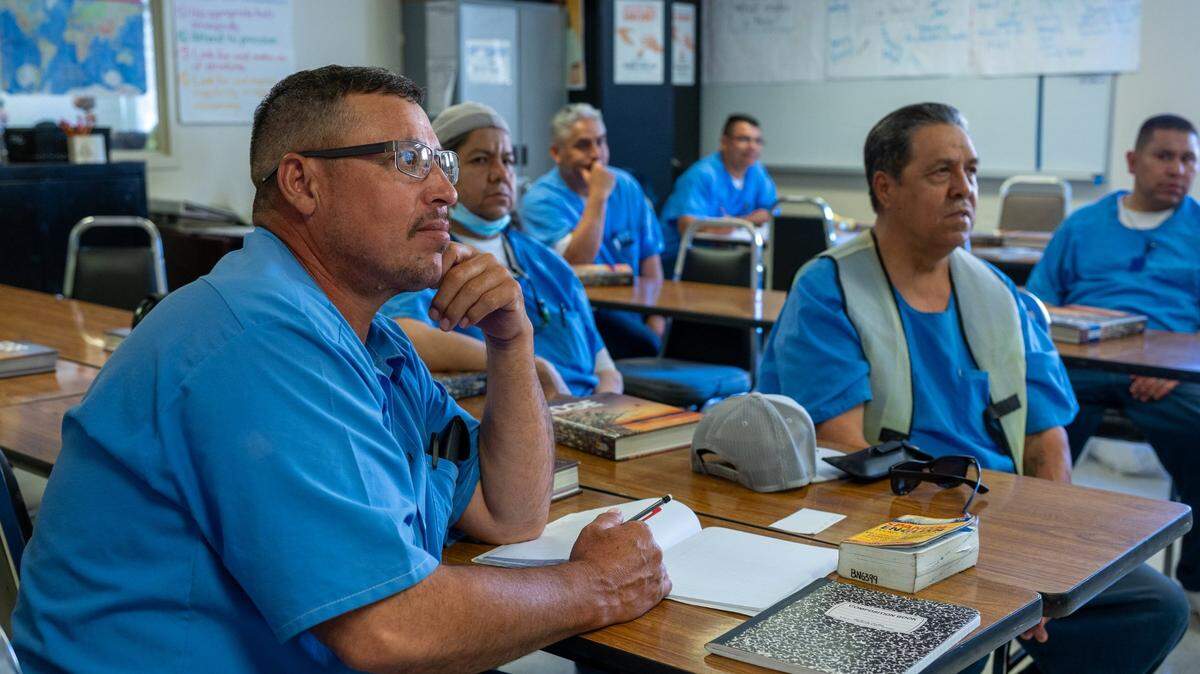
For a long time, the idea of rehabilitation programs inside prisons has generated lots of eye-rolling and scorn. We designed our prison system based on a perceived reality that rehabilitation is not effective. But the facts tell a very different story.
I worked inside California’s prisons for 23 years, ultimately becoming director of the Division of Adult Institutions, which meant I was directly responsible for managing 32 institutions, over 70,000 staff members and nearly 100,000 incarcerated people. I retired in 2024.
I learned what works and what doesn’t inside the prisons. Does rehabilitation work in prisons? Yes, it does, and we have the data to prove it.
Currently, California is making final decisions on where to allocate our tax dollars. We should be investing in community-based rehabilitative programs, which require sufficient funding to continue the successes we’ve seen in the past few years.
The latest report from the Department of Corrections and Rehabilitation’s Office of Research shows that participation in community-based organization programs reduces the recidivism rate by essentially half. This means that instead of nearly half of people being released from prison subsequently returning to incarceration, only about a quarter do. Besides the savings in incarceration costs, that means fewer people being wrenched from their families, jobs and communities.
California must double down on rehabilitation and fully fund the Rehabilitative Investment Grants for Healing and Transformation (the RIGHT grant), which provides a modest amount of money to nonprofit organizations doing crucial work within prisons. It’s an investment in a safer society, in a smaller prison system and successful reentry. These are goals and outcomes we should all be able to get behind and support.
Less than 1% of the prison budget goes to community-based organizations offering quality programs in prisons. But I have seen how effective these programs are in helping incarcerated individuals improve themselves.
During my time working in prisons — including as warden at San Quentin — I witnessed their powerful impact on participants, other inmates and prison staff. This creates an ecosystem of rehabilitation, where one program leads to another, fostering true and lasting transformation inside and outside of prison walls.
Early in my career, I was skeptical and wondered if investing time, energy and money in rehabilitative programs was worthwhile. Having had the privilege of participating in several rehabilitative programs as a guest over the years, I am convinced that it’s the smartest way for California to move forward.
After all, the majority of incarcerated people will return to our neighborhoods. How would you like them to behave? Do you want them to return punished or prepared?
I have seen firsthand how an investment in evidence-based programming can transform one’s thoughts, beliefs and actions. Individuals who embrace rehabilitation return to our communities equipped to be productive members of society. Programs like Guiding Rage Into Power, a year-long healing and accountability program that helps students understand the origins of their violence and develop skills to track and manage strong impulses rather than acting out in harmful ways, offer a powerful example. This well-developed program provides consistent, efficient services from prison to prison. It is an investment behind prison walls that ultimately transfers to our neighborhoods as these individuals are released.
This is the model prison system we need to build. This is true public safety.
Today, I interact professionally and socially with several formerly incarcerated individuals who were originally sentenced for serious crimes. They are business professionals, skilled professionals and philanthropists. They all demonstrate mature insight into their past and currently live inspiring lives as fully functioning citizens in our communities. I count a few of them as family friends.
Our state budget is a moral document, reflecting what we believe and strive for in a society. Rehabilitation does work — I’ve seen it with my own eyes, and I know it needs to be a centerpiece of Gov. Gavin Newsom’s California Model, aimed at transforming public safety.
Investing in quality community-based rehabilitation programs is a good investment for a safer future.