
Political violence can be prevented, new research from UC Davis indicates | Opinion
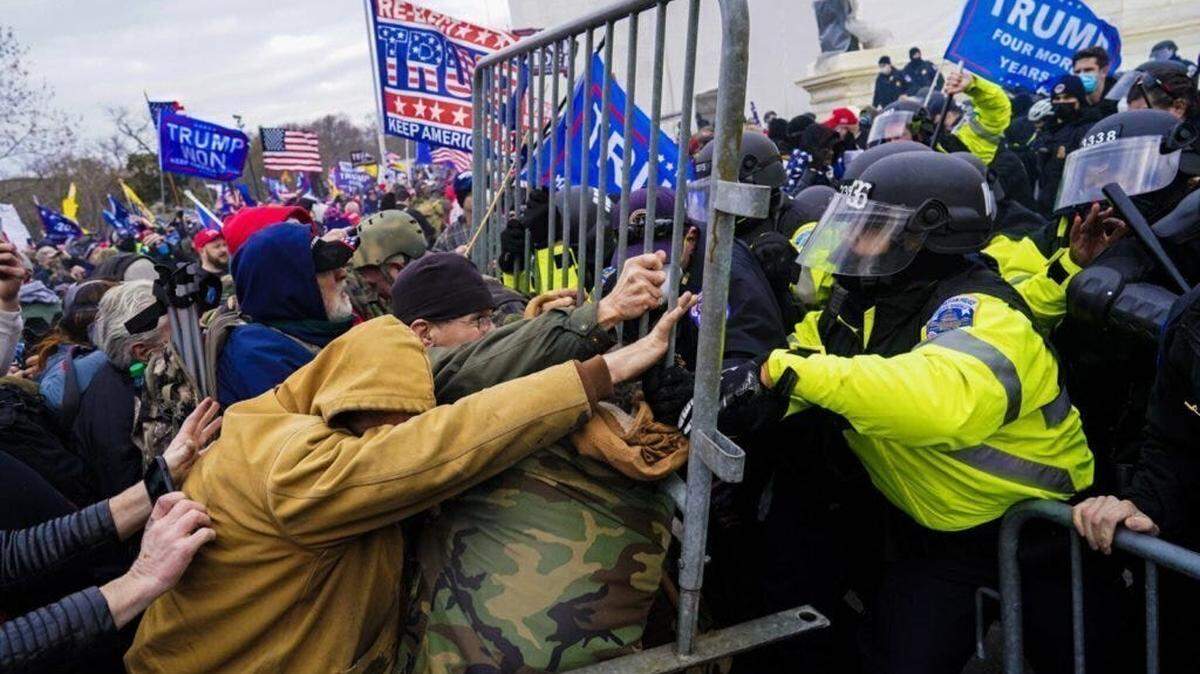
We know the bad news well enough: Violence targeting elected officials is on the rise. The attack on lawmakers in Minnesota last month that left two dead and two injured is but the most recent example. There is increasing political violence initiated by the federal government, arising from its efforts to deport millions of people and suppress dissent.
But this is only part of the story. Research by our group and others has repeatedly found that there is also room for hope and clear guidance for actions all of us can take to prevent political violence from spiraling out of control.
Our group at UC Davis has conducted a survey of the American public’s views on political violence each year since 2022, gathering data from the same people over time to allow for accurate monitoring of trends. Participants are members of the Ipsos KnowledgePanel, recruited through an address-based, equal-probability sampling system such that — with statistical weighting — they accurately represent the adult population of the United States.
The survey is conducted online (panel members who do not have Internet access are given the necessary equipment and service, free of charge). Ours has been an unusually large survey, with nearly 13,000 participants in 2022 and response rates of at least 84% each year thereafter.
In 2022, two-thirds of our respondents rejected political violence altogether, though we gave them more than a dozen opportunities to endorse it. This proportion rose to 75% in 2023, and, contrary to our expectations, did not fall in 2024 — an election year, when concern for violence was high. In 2022, an are-you-kidding-me 14% of our respondents — one adult in seven — strongly or very strongly agreed that “in the next few years, there will be civil war in the United States.” But agreement fell to 6% in 2023 and stayed there in 2024.
What’s more, of the minority of our respondents who endorse political violence in principle, the vast majority (roughly 80%) are unwilling to engage in such violence themselves. We explored this more deeply in 2024 and got more good news: Of the small percentage (about 4%) of respondents who thought it very likely they would engage in combat if civil war broke out, a remarkable 45% said they would change their minds if urged to do so by their families; 20% to 30% were open to persuasion by friends, respected religious and community leaders and the media.
We can work with this. The vast majority of us who reject violence must make our positions loud and clear to our families and friends and to the public at large.
There are clearly identified groups at high risk for committing political violence, and engaging directly with these individuals deserves extra effort. In our surveys, these groups have included young men; MAGA Republicans; endorsers of many forms of fear, hatred and enmity toward others (racism, hostile sexism, homophobia, transphobia, xenophobia, Islamophobia and antisemitism); and people who approve of violent extremist organizations and movements such as the Proud Boys, Christian nationalism and the militia movement.
Our actions will produce some awkward conversations, and not all of them will be successful. But even when we don’t affect individual behavior, our collective efforts will help create a climate of intolerance for violence in our social networks and in our society. Preventing the normalization of violence can, by itself, reduce the risk that violence will occur.
But that reduction won’t be to zero. Our second responsibility is, “If you see something, say something.” In most cases, those who are planning violence tip their hands, and any one of us could be that person who prevents a tragedy by calling 9-1-1 and relaying key information to those in a position to do something about it.
Violence initiated by the government is a special case, and we’re likely to get much more experience with it in the near future. Our third responsibility is not to oppose violence with violence.
In this country, at this time, violent opposition will almost certainly accelerate a downward slide into authoritarianism. Our model must be the civil rights movement, not the American Revolution. Those who confront violence with nonviolence hold the moral high ground, and their example mobilizes others to join them.
There is no room on the sidelines this time. For the United States to survive — let alone to thrive — we must remain a nation that does not resolve its differences through violence. Each one of us now faces this question: “What will I do to make that happen?”