
California’s death penalty is bad business. Newsom can help dismantle it | Opinion
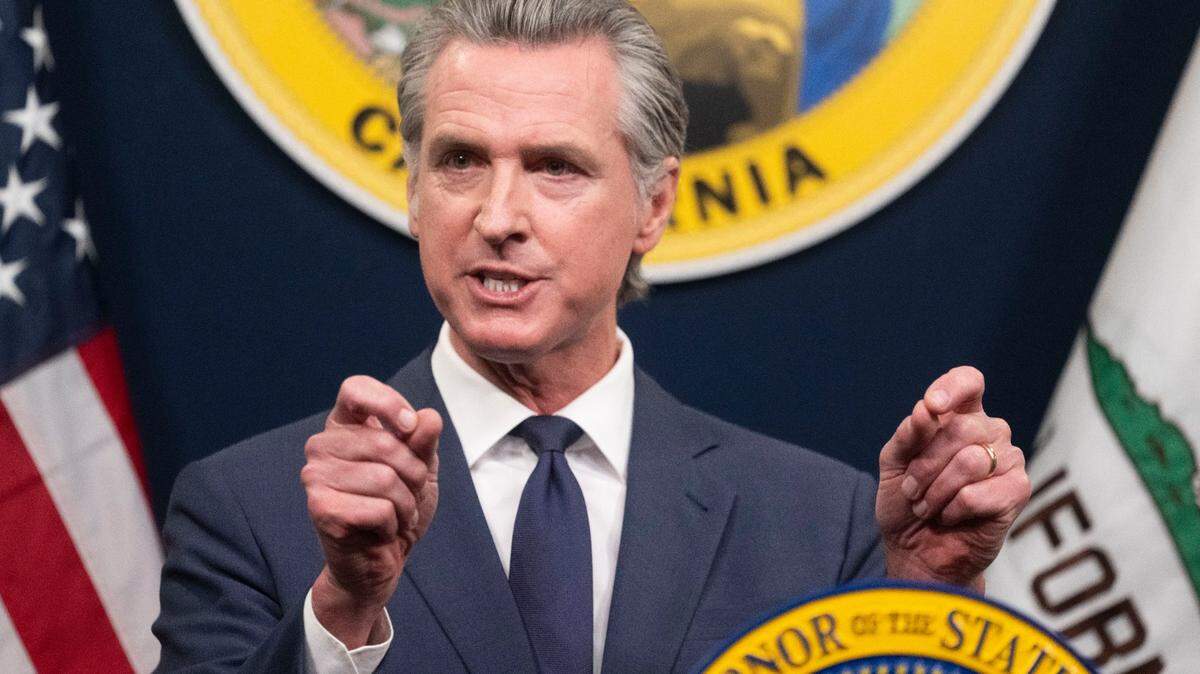
California should get rid of death row altogether and, instead, commute every death sentence in the state to life without the possibility of parole.
When Gov. Gavin Newsom declared a moratorium on executions in California in 2019, he called our state’s death penalty “by all measures, a failure.” Six years later, his estimation still holds true: Last year alone, California became home to the 200th death row exoneration in modern U.S. death penalty history, and a series of state and federal court cases peeled apart the state’s constant and flagrant racial bias in death sentencing.
As an executive and investor, I find it unthinkable that we continue to pour public resources into such a fundamentally broken system. If any company or product I evaluated had an error rate comparable to the death penalty — where for every eight people executed, one person has been exonerated — I would never invest.
Yet California takes the opposite approach, investing tens of millions of dollars each year, racking up enough death sentences to give us the largest death row in the Western Hemisphere, despite not executing anyone for almost two decades. A recent analysis by The Sacramento Bee estimates that California death penalty prosecutions in the last five years alone have led to court costs of more than $300 million, all while Newsom’s execution moratorium has been in place.
Because death penalty cases are more complex and can last more than four times longer than non-capital cases, this significantly increases legal expenses — from juror and attorney compensation to court personnel and other related costs. In fact, the Conference of Chief Justices estimated that individuals on California’s death row who require court-appointed counsel would cost the state more than $600 million.
All this expenditure is going toward a system that’s not only practically nonfunctional, it’s also unfit for its purpose. Despite death penalty proponents arguing its deterrent effect on crime, states with the death penalty consistently report higher murder rates than those without. In reality, capital punishment diverts valuable taxpayer resources from priorities like education, mental healthcare, child abuse prevention and infrastructure — areas vital for economic growth, societal well-being and, yes, public safety.
The message this sends to businesses and investors is troubling. California, now the world’s fourth largest economy, should be a beacon of innovation, efficiency and good governance. Instead, our commitment to a broken death penalty system suggests a preference for arbitrary decision-making over evidence-based policy, reckless spending over fiscal prudence and state-sanctioned retribution over fairness and justice.
It is contradictions like these that have led over 500 business leaders around the world, including myself, to sign a declaration advocating for the worldwide abolition of the death penalty.
To be sure, Newsom has already made great strides in this direction during his tenure, signing laws addressing racial bias in California’s death penalty and creating protections for people with intellectual disabilities. The governor has even taken steps to dismantle San Quentin’s death row by moving people with death sentences into general prison populations throughout the state.
But we can’t ignore the unfortunate reality that moratoriums can be undone, death rows can be repopulated and executions can resume. We’re seeing it happen right now: Earlier this spring, Louisiana undid a 15-year execution hiatus and restarted the machinery of death. South Carolina did the same last year. If California were to undergo a similar shift, many of the nearly 600 people on death row would instantly be at risk of execution, regardless of everything we know about the unreliability and bias of death sentencing in our state.
Newsom has the power to erase the risk of California someday backsliding into executions by taking steps to commute every death sentence in the state to life without the possibility of parole. Just weeks ago, local and national civil rights leaders gathered at the state Capitol to deliver a statement signed by nearly 200 organizations urging the governor to use his constitutional authority to do exactly that.
There is precedent for this: More than half a dozen governors have granted universal clemency to everyone sentenced to death in their states. And last December, then-President Joe Biden and North Carolina Gov. Roy Cooper collectively commuted over 50 sentences within their respective jurisdictions before leaving office.
Life sentences work: they cost less than executions, keep communities safe and prevent the killing of people who were unfairly and wrongfully sentenced.