
California cannot allow dormant prisons to be used as ICE detention centers | Opinion
U.S. Immigration and Customs Enforcement is terrorizing our state. Earlier this month, immigration agents and National Guard troops swept into MacArthur Park, frightening families and disrupting a summer camp.
The raids coincide with a huge increase in ICE’s budget, which is set to balloon by at least $75 billion through 2029, making it the largest-funded federal law enforcement agency in the country. To carry out this expansion, ICE needs cages, and California’s idle prisons look ready‑made.
In preparation, Gov. Gavin Newsom signed Assembly Bill 137 into law, barring any state prison declared “excess property” from ever again holding people for incarceration or immigration detention. Now, the state must use that power.
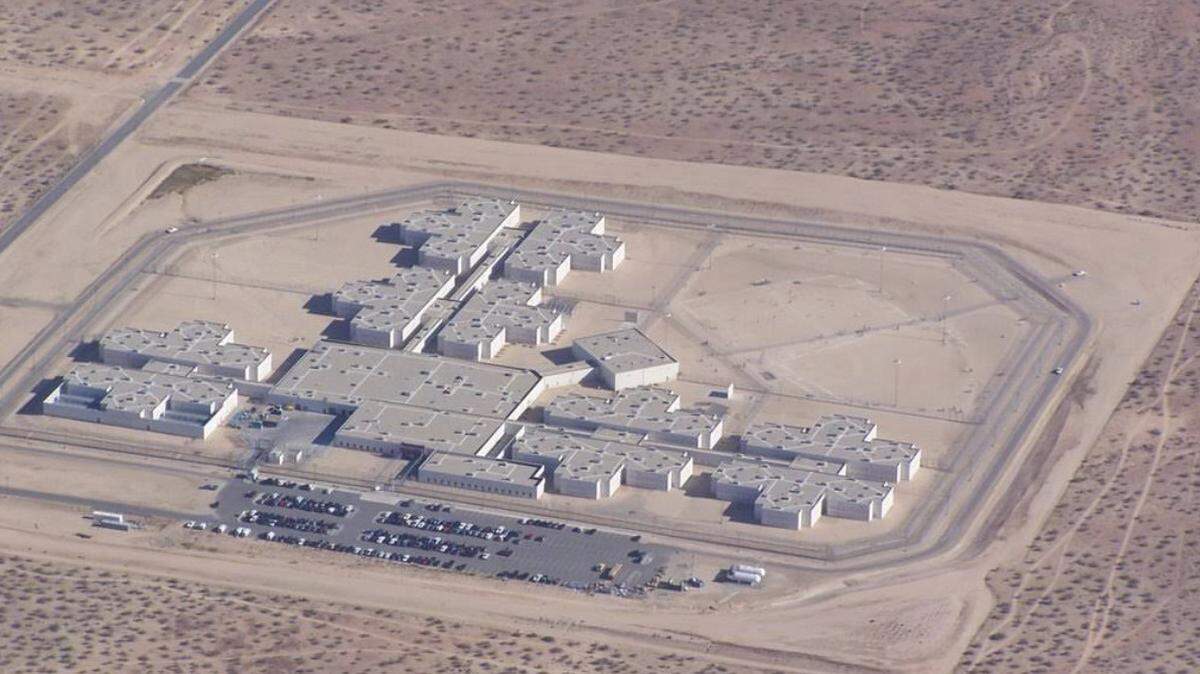
Three state prisons — Chuckawalla Valley in Blythe, California Correctional Center in Susanville and Deuel Vocational Institution in Tracy — stand empty yet still staffed and lit. That means infrastructure stays live, staff are on-site and facilities are maintained, despite no one being held inside. Deuel Vocational Institution is already for sale, but the other two prisons remain in limbo, unshielded by AB 137 and exposed to federal leasing or emergency agreements that could reopen them with a signature and no public input.
The risk is real: In California City, ICE and CoreCivic are reviving a shuttered private prison as the state’s largest detention site with no public bidding and little local notice. If one dormant prison can flip that fast, others can, too. The state cannot afford to leave its back door open.
Newsom’s administration has floated three reasons to delay declaring these vulnerable facilities “excess property” and thereby protecting them from a potential ICE takeover under AB 137. First, it argues that no executive order is required to place California Correctional Center and Chuckawalla Valley under AB 137 protection because only the Legislature can approve a prison sale.
The problem is that ICE doesn’t need a sale: It can enter through inter-agency agreements, emergency declarations or contracts with private operators, none of which require legislative approval. Declaring a facility “excess property” under AB 137 forecloses those workarounds and rests on firm legal ground (courts have previously upheld the state’s authority to control how its land is used).
Newsom’s administration says the closed prisons offer “flexibility” in case of wildfires or climate emergencies. That claim collapses under scrutiny: Chuckawalla Valley has been cited for extreme heat, baking at 115 degrees Fahrenheit without modern cooling. A 2023 study found that most California prisons fall far below international ventilation norms, and California Correctional Center is no better. When the Dixie Fire nearly engulfed it in 2021, smoke filled the prison grounds, power failed and incarcerated people were handed N95 masks while sitting in ash-filled, unventilated cells.
These idle prisons are nobody’s refuge; they are liabilities.
The Newsom administration also suggests that both Chuckawalla Valley and California Correctional Center be placed into the AB 137 process because they support nearby active prisons (the former shares infrastructure with Ironwood, and the latter shares it with High Desert). Rather than spend millions on disentangling those systems (a $14 million allocation for new water wells at Ironwood already appears in the 2025–26 budget), the simpler and more responsible solution is to close those two prisons, too. The Legislative Analyst’s Office (LAO) has already recommended closing at least four more prisons to reduce waste and avoid capital costs.
High Desert and Ironwood are strong candidates. They’re expensive, poorly utilized and tethered to sites the state has already shut down.
Keeping prisons on life support in this condition has already cost Californians more than $300 million — money spent during a multi-year structural deficit of at least $24 billion that has yet to be fully addressed. These are dollars that could go to housing, healthcare, fire prevention or reentry programs.
Empty prisons on standby with cages ready to be filled is a danger that’s happening right now. And if not migrants, who will they hold? A system built to detain “criminals” has steadily widened to include green-card holders, protesters and political dissenters. The line seems to be moving quickly. That’s why this moment is bigger than just “prison capacity management.” It’s about what kind of state we intend to be during this unprecedented time.
AB 137 gives California the legal leverage to hold the line, but only if officials use it. The directive is clear: State leaders must declare Chuckawalla Valley, California Correctional Center and any prison scheduled to close under the 2025–26 budget “excess property” now; record deed restrictions barring future detention use; invite community proposals for housing, healing or other public benefit; and, where no transformation is possible, tear the prisons down.