
Some California families still struggle to access Transitional Kindergarten | Opinion
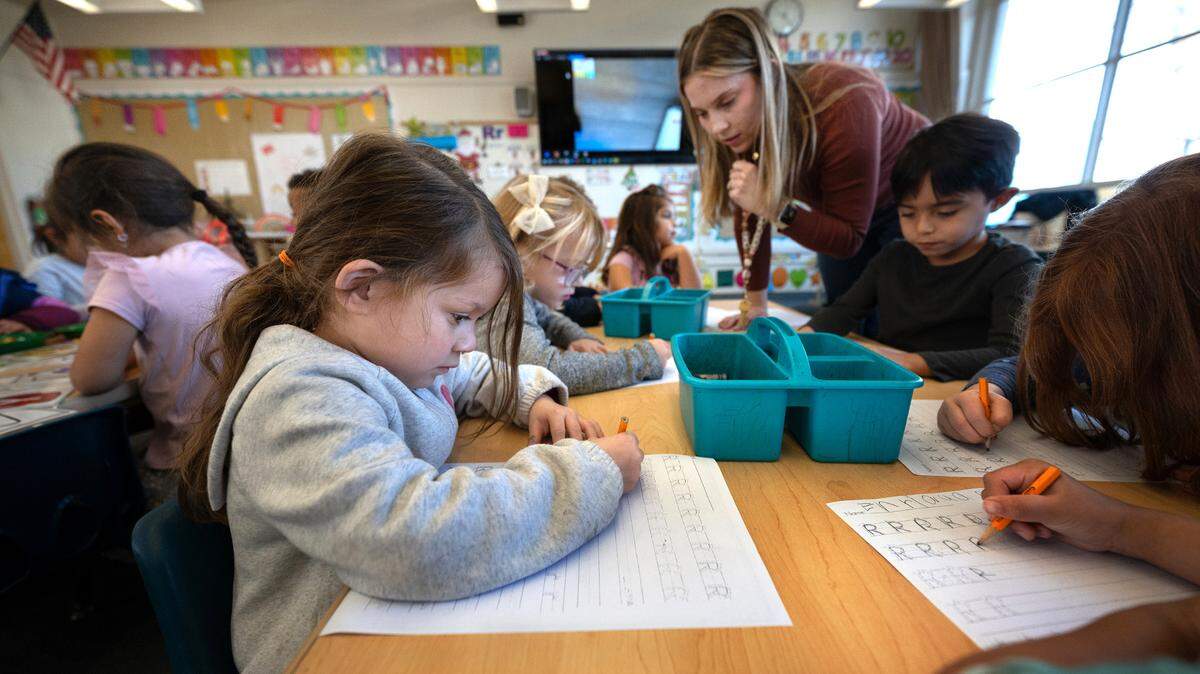
This school year marks a big milestone for California families: More children than ever are eligible for free early learning programs through the state’s expanding Transitional Kindergarten (TK) system. Every 4-year-old in California is eligible this year.
Transitional Kindergarten (TK) is a free pre-kindergarten program in California’s public schools where all children who turn four by Sept. 1 are eligible to participate the year before entering kindergarten, allowing them to learn, play and develop their social skills together.
For parents, many of whom pay upwards of $20,000 a year for child care, the state’s expansion should evoke a collective sigh of relief: In 2023, 90% of parents said they wanted TK and would use the program. But the promise is only real if families know about it and can navigate the enrollment process and find programs that fit their lives.
As researchers and experts in early childhood, we see the value of TK and also understand there are obstacles that prevent families from accessing it. Recent responses from the Stanford Center on Early Childhood’s RAPID Survey Project show that most California parents whose children are currently enrolled in TK say the program supports their child’s learning and social development and prepares them for elementary school.
Parents say the program frees up family income for essentials like rent, groceries or even paying down debt. One Los Angeles area parent explained that enrolling their son in TK would finally allow them to start paying off student loans — one example of how free early childhood education access enhances a household’s economic stability.
Despite these clear benefits, some families are left out. One-third of eligible California parents surveyed said they weren’t sure if they qualified for TK. Many parents express interest in enrolling their children in TK, with 90% in 2024 saying they’d likely do so if they had more information. This indicates there’s more to be done to effectively communicate about TK.
New families are eligible for TK each year, and parents may be unaware of the program since their child is not rising from a previous grade. Using trusted messengers like teachers, community groups and pediatricians will help us reach more families effectively.
Districts and schools must share information about TK in ways that reach families of all backgrounds and languages. We all have a role to play in getting that information out as we adopt a full new grade into our public system.
Converting awareness of TK into enrollment can be challenging. One in five families faces issues like limited hours, transportation difficulties and a lack of nearby options. State and local leaders — who care deeply about young children, TK success and accessibility — must now assess whether TK programs align with families’ realities: Are the programs centered on the developmental needs of young children? Do they offer before- and after-school care? Are programs equitably available across communities?
Beyond basic awareness, some families struggle with availability and find themselves with too few options close to home or programs that offer limited hours.
Even for families who successfully enroll, the program doesn’t always fit their needs. Almost 80% of current TK families find suitable hours, but others scramble to find supplemental care. For working parents, the gaps converge before and after the school day and during breaks, creating logistical and financial stress. Expanding affordable, subsidized full day care that aligns with family schedules is a necessity for an equitable TK system.
When seats are available and families are ready to take advantage of TK, the transition can feel unnecessarily complicated. One San Francisco parent expressed that “the transition from full-day preschool to partial-day TK is clunky and hard to manage.” We must prioritize creating early learning programs that meet every family’s needs.
RAPID parent voices make it clear: Parents want TK, and prioritizing awareness and accessibility is crucial to achieving universal TK in California. We need to bridge the gap between eligibility and usability so every child can access the benefits of Transitional Kindergarten.
Abigail Stewart-Kahn is the managing director of the Stanford Center on Early Childhood. Jackie Wong is the executive director of First 5 California. Both authors co-chair the RAPID California Advisory Council.