
Here’s why California parents — like mine — opted for homeschooling | Opinion
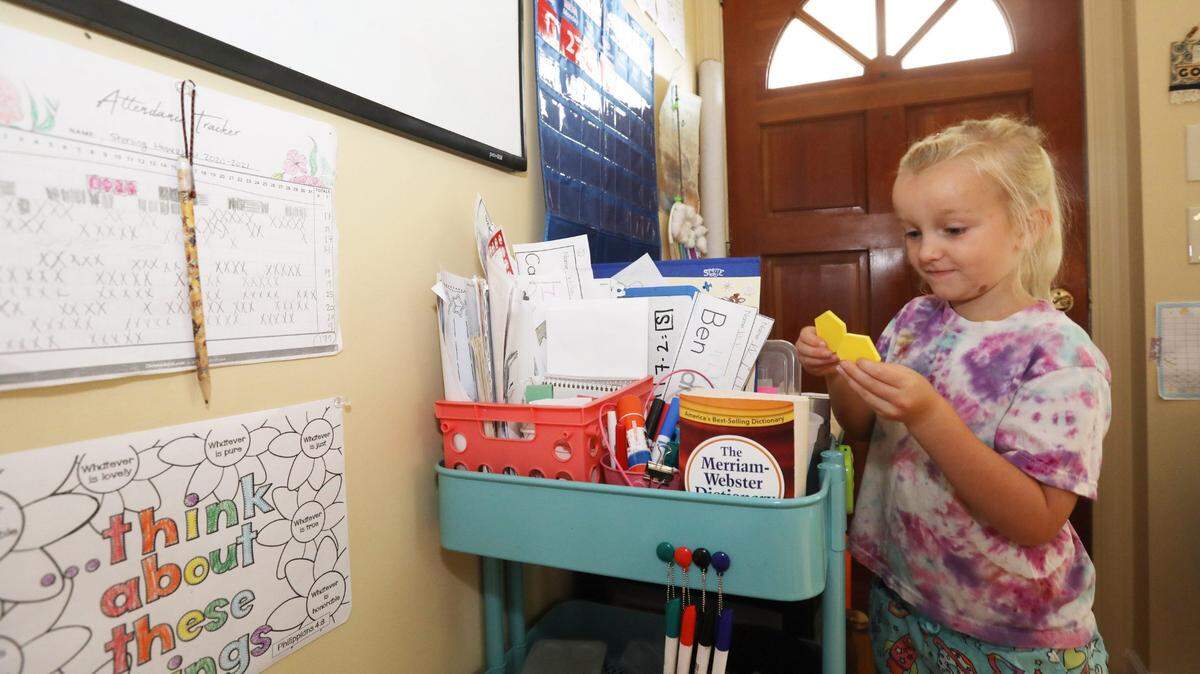
Back in the 1990s, when I was 10 years old, my family joined the California educational counterculture: We became homeschoolers. I never went to prom and never had a high school science class. I was homeschooled from the time I was 10 until I left the state for college on a full academic scholarship.
From my perspective, we slipped into homeschooling seamlessly. My parents remember being concerned about pushback from “the authorities.” Homeschooling is legal in California today, and a form of homeschooling was legal back in the 1990s. My parents, like many of their peers, took the legal path of registering their own private school with the state (I was the only student).
My dad painstakingly taught me how to read when I was five. Later, my mom taught me math from New York high school workbooks from the ’60s.
Like a lot of ‘90s era homeschool parents, mine created their own curriculum: I read a hodge-podge of books — mainly novels — including the “The Chronicles of Narnia” and “Nancy Drew,” college-level history books at 11, Agatha Christie at 12 and Shalom Aleichem at 13.
Both the positives — and negatives — of homeschooling are obvious in my own childhood experiences. Outside critics are quick to label homeschoolers socially awkward, and call homeschooling an educational “joke” that fails to provide kids with the skills necessary to succeed as adults. I’m still not sure how “success” should be measured. I was alone a lot of the time, I never really learned how to fit in and strangers still criticize me for “failing” to marry (I’d like to think that book hasn’t been written yet).
Yet, academically, I was a success: When I took the SATs, I was in the 94th percentile nationwide. But I also had a low grade case of “imposter syndrome.” I spent my first year of college assuming someone would find out I didn’t really belong. I ended the year with a 3.8 grade point average — and I stayed in the homeschool closet.
The nuts and bolts of adulting came easy to me. I’ve found my own jobs, bought my own car and even set up an individual retirement account. Along the way, I never talked — or thought — that much about my childhood in the homeschooling counter-culture of California.
But COVID changed everything. A couple of million California parents were unexpectedly thrust into the 2020 world of homeschooling, and these new COVID-era homeschool parents wanted to know how “bad” homeschooling was for a kid.
For the first time, I was being asked questions I’d spent a lifetime avoiding.
With the exception of a few homeschooling families who wrote books about their experiences and became minor celebrities in the ‘80s and ‘90s — most notably the Colfax family of Northern California — most of the homeschooling families of my generation were eager to keep a low profile. We let outside critics define us. And we often let outsiders misrepresent us.
In retrospect, I think that was a mistake. If we had all had a more open conversation about education a quarter of a century ago, millions of California families today might be in a better position to help their kids today.
Empirically, the California K-12 system is failing millions of kids a year. According to the 2024 National Assessment of Educational Progress (NAEP) report, only 31% of fourth grade students performed at or above NAEP achievement levels.
“California has been lagging behind other states for decades and has a chronic ‘achievement gap’ between poor or English-learner students and those from more privileged circumstances,” according to CalMatters.
With results like that, it shouldn’t surprise anyone that more families than ever before are desperately looking for alternatives. Too often, however, homeschooling is still treated like a fringe choice. And, increasingly, it is being treated as a uniquely political, suspiciously retroactive and distinctly “right-wing” choice.
Reducing the public discussion about homeschooling to a purely political argument does a massive disservice parents who choose homeschooling, individuals who were homeschooled and parents thinking about opting for this alternative path.
We all miss out when we reduce serious concerns about education to a partisan political argument.
Sarah Nagle, a former California homeschool kid with a degree in American history from San Francisco State University, has lived in Northern Marin County for most of her life.
This story was originally published September 14, 2025 at 1:36 PM.