
California's decade-old conversion therapy ban now faces Supreme Court | Opinion
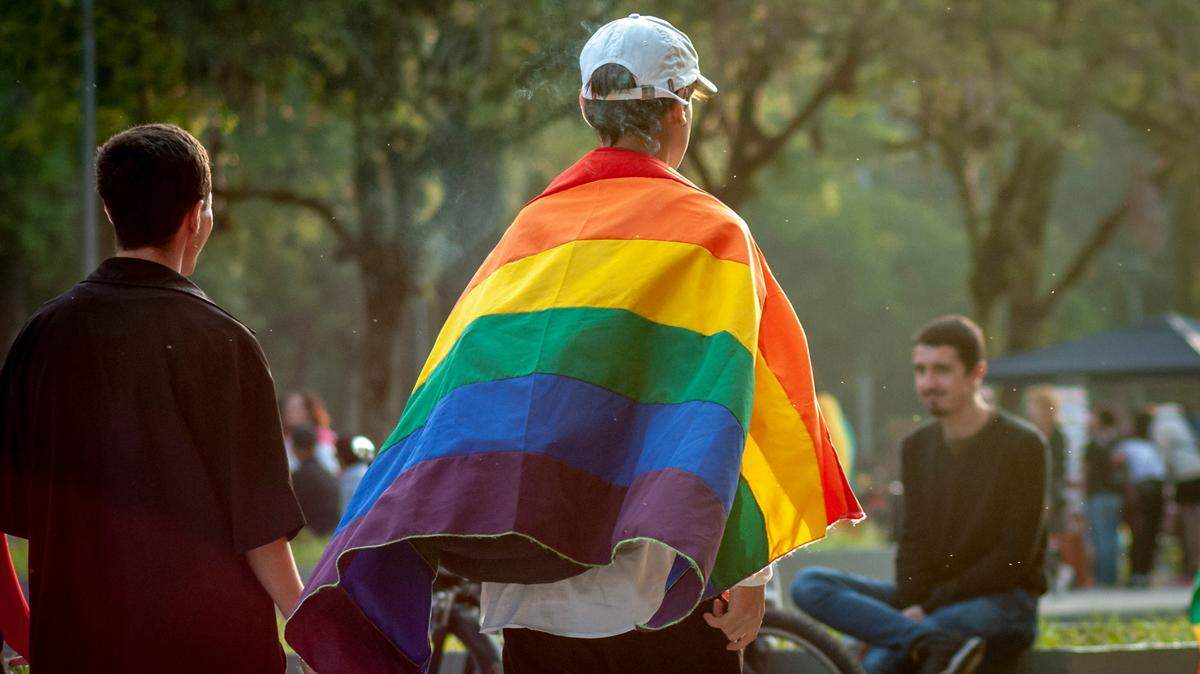
At 15, Alex Cooper came out as a lesbian to her Mormon parents. Instead of receiving support, she was lied to and sent to a conversion therapy program, where her parents signed over guardianship and parental rights.
For eight months, Alex endured grueling and abusive practices: She carried a backpack filled with rocks weighing up to 40 pounds to simulate the “burden” of being gay, stared at a wall for up to 18 hours at a time and witnessed two other young people forced to fight each other to be more “manly,” while a counselor punched them if they didn’t comply.
Over the past decade, states have taken action to ban conversion therapy (also referred to as sexual orientation and gender identity change efforts). California led the way in 2012 by prohibiting licensed mental health providers from performing these efforts on minors through professional conduct regulations, and more than 20 states have followed. Others have used consumer fraud laws, most notably in New Jersey’s JONAH v. Ferguson in 2015, which ruled that marketing conversion therapy as a cure was illegal deception.
Now, all that progress is at risk.
This term, the Supreme Court heard arguments for Chiles v. Salazar, a challenge to Colorado’s ban of conversion therapy. The plaintiffs argue that talk-based sexual orientation and gender identity change efforts are “pure speech” protected by the First Amendment, and that restricting this speech is unconstitutional viewpoint discrimination.
In other words, if a therapist’s conversion therapy practices involve any conversations, the state cannot regulate them — even if those practices are deemed harmful, unethical and medically unsound.
Ineffective and costly ‘treatments’
Alex’s story is not unique: An estimated 700,000 LGBTQ+ individuals in the U.S. have been subjected conversion therapy. These practices, aimed at changing a person’s sexual orientation or gender identity, emerged when psychiatry pathologized LGBTQ+ identities and were once recognized as treatments, including electroshock, chemical castration and institutionalization.
Religious leaders later marketed prayer and repentance as “therapy.” Today, there are more than 1,300 practitioners of sexual orientation and gender identity change efforts nationwide — over half of them in religious settings.
But scientific consensus is clear: Conversion therapy efforts are not only ineffective, they significantly increase a person’s risk for depression, anxiety, post-traumatic stress disorder and suicidal ideation. Economically, these harms impose a societal burden estimated at $9.23 billion annually in health care costs and lost productivity.
Dangerous practices
Given the constitutional framing of Chiles v. Salazar as a free speech case, legislative solutions remain uncertain. However, it is crucial to recognize the far-reaching consequences if the Supreme Court rules that conversion therapy is protected speech under the First Amendment.
Such a decision would place conversion therapy beyond professional and legal oversight, severely limiting states’ ability to enforce existing protections.
Specifically, the ruling could invalidate professional conduct bans on conversion therapy in more than 20 states, including California; undermine consumer protection laws that prevent deceptive and fraudulent conversion therapy practices; widen existing legal loopholes that allow unlicensed and religious providers to offer conversion therapy with minimal oversight; and establish a broad constitutional shield for harmful practices simply by labeling them as “speech,” setting a dangerous precedent for future regulation of public health and safety.
The implications of this last point, in particular, reach far beyond LGBTQ+ health and sexual orientation and gender identity change efforts.
If therapists can avoid oversight simply by labeling a practice as talk-based, regulators may be powerless to act when providers promote disordered eating, discourage cancer treatment, deny suicide interventions or substitute ideology for evidence-based care.
Ultimately, this ruling will decide not only whether states can ban conversion therapy, but also whether speech-based health care and therapeutic counseling can be guided by ideology rather than evidence.
Tens of thousands of people like Alex carry lifelong scars from enduring conversion therapy. The ruling in Chiles v. Salazar will determine if states retain the power to protect young people from harm or allow dangerous practices to persist under the guise of free speech.
As the court’s decision approaches, it is essential to understand what’s at stake, not only for LGBTQ+ youth, but for the future of regulating speech and health care practices nationwide.
Jacky Chu is a medical student at Stanford University School of Medicine and a public health student at UC Berkeley interested in the intersection of public health and policy affecting marginalized communities.