
The state surveillance centers feeding info to the federal government | Opinion
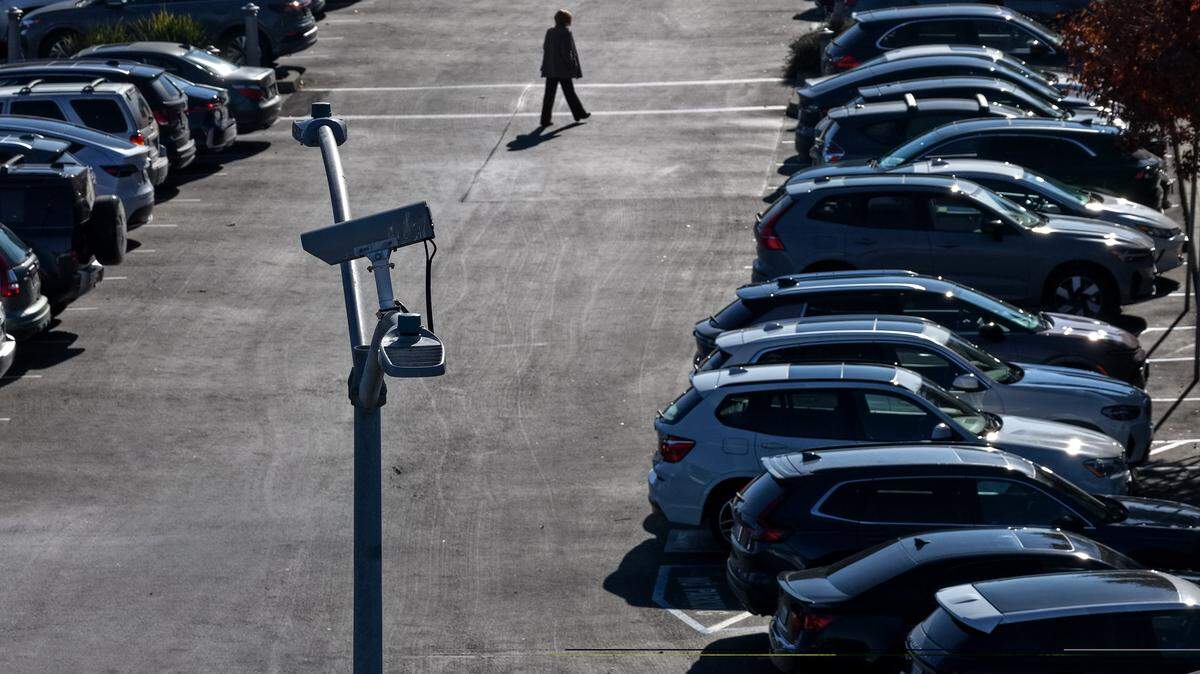
You may have never heard of a Fusion Center, but a Fusion Center has likely heard about you. These shadowy post-9/11 government data surveillance centers developed by the Department of Homeland Security (DHS) are in every state, with six in California alone (including two in Sacramento).
Government Fusion Centers were supposed to focus on preventing terrorism. Still, in the past two decades — with little formal oversight — their surveillance and targeting activities have expanded exponentially and increasingly turned inward. Fusion Center surveillance infrastructure is designed to hoover up massive amounts of information about who we are, where we go, what we do, and who we know from many parts of our lives and funnel it to different levels of government.
While owned and operated by states and local entities, Fusion Centers often incorporate federal, state, and local law enforcement personnel, as well as select private-sector representatives. Since 9/11, the DHS has supported the creation of a national network of 80 fusion centers.
While the federal government initially promoted these cooperative partnerships as hubs to collect, analyze and distribute counter-terrorism information, many Fusion Centers expanded their missions to include domestic surveillance activities related to any crimes or hazards — nebulous terms which can be susceptible to broad interpretation and make these centers ripe for misuse.
While some local and state leaders are taking necessary steps to stand up for rights and protect community members, few of these leaders have taken a hard look at what state Fusion Centers are doing, who is working there and how and why local and state information may be flowing to the federal government.
Now is the time for that hard look.
While state Fusion Centers might have served some collaborative purposes in prior years, in the current climate there is a very real risk that they are doing far more harm than good. The risks are very real to community members from the firehose of information amassed by Fusion Centers from social media surveillance, face surveillance, video camera and license plate surveillance, and other surveillance technologies in cities and towns across our states. This is primarily funded by federal grants and often deployed with minimal local democratic oversight and then made accessible to the federal government.
We know that ICE already exploited license plate surveillance to target immigrants, and Fusion Centers have collected vast amounts of information about vehicle locations. In recent months, it has been publicly revealed that federal agents were continuing to access license plate surveillance information from local law enforcement, including in Southern California, despite California state law prohibiting sharing with out-of-state entities.
U.S. Border Patrol has also been monitoring millions of American drivers nationwide in a secretive program to identify and stop people whose travel patterns are deemed suspicious, and license plate surveillance was being used to surveil people during periods of political activism in California and beyond.
The risk of Fusion Centers to people’s rights and safety are not new. Michael German, a former special agent for the FBI, has been speaking out and publishing important research about the threat of Fusion Centers for nearly two decades. But these risks are now immediate dangers: Trump and others in his administration are actively weaponizing the federal government against dissent, using the Department of Justice to engage in political retribution against former government officials that speak up and encouraging a “war” on judges.
To be sure, the existing state Fusion Center infrastructure could continue to assist with information sharing within states like California. Counter-terrorism efforts also remain necessary, especially as international relations are further destabilized under the Trump administration.
That said, it’s important to understand that there are serious questions — including previously raised by Congress — about whether Fusion Centers have provided any meaningful assistance to federal counter-terrorism efforts. What is clear is that the information collected by Fusion Centers has been used to monitor people engaged in First Amendment-protected activities and to track minority communities and protest movements.
There has also been rising concern from a majority of Americans across the political spectrum about how the U.S. government uses their information – with concern rising from 64% in 2019 to 71% in 2023. State leaders who have a commitment to protecting rights and safety should be taking action to force Fusion Centers out of the shadows, asking the hard questions about what Fusion Centers are doing and why, and shutting down the flow of state Fusion Center information to the federal government.
Nicole Ozer is a national expert on legal issues at the intersection of rights, technology and democracy, including privacy and surveillance, artificial intelligence and digital speech. She is the executive director of the Center for Constitutional Democracy at UC Law San Francisco and a Public Voices Fellow on Technology in the Public Interest with The OpEd Project.