
Trump’s latest abuses of clemency are genuinely scandalous | Opinion
President Donald Trump has exercised his clemency power at a rate unmatched by any other recent president. He has already pardoned or commuted the sentences of almost 1,600 people in his first 11 months in office.
If he keeps up this pace, he will grant clemency more than 6,000 times over the course of his four-year term. By comparison, his predecessor, Joe Biden, granted clemency 4,245 times during his four years in office. And, in his first term, Trump only issued 144 pardons and commuted 94 sentences.
Clemency in the Trump Administration is being used to reward loyalty or to secure it — not as a device to ensure that mercy has a place in our legal system. As CNN reported, the president “has upended a system within the Justice Department that presidents relied on for decades to carefully vet applicants and deliver periodic pardon recommendations to the White House.”
The president’s emphasis on loyalty as the standard for granting clemency would have appalled the people who wrote the Constitution and requires that we consider reforms to protect against the kind of abuses that have characterized Trump’s use of that authority.
Recall what Alexander Hamilton wrote about clemency power in 1788: “Humanity and good policy …dictate... that the benign prerogative of pardoning should be as little as possible fettered.” Without that power, “justice would wear a countenance too sanguinary and cruel.”
Hamilton expected that those who exercised that “benign prerogative” would do so with “scrupulousness and caution.”
Scrupulousness and caution, however, have hardly been the watchwords for the way Trump has used it. Under his administration, the New Yorker’s Benjamin Wallace-Wells writes that “a kind of pardon economy has bloomed … (P)ardon seekers were ‘shelling out to hire lawyers and lobbyists who tout access to those in the president’s inner circle.’” The amounts of money that have exchanged hands are substantial.
That is more like the way things are done in the court of a corrupt monarch than what should happen in a constitutional republic.
Consider the pardons the president issued on the first two days of December:
Pardoned for loyalty
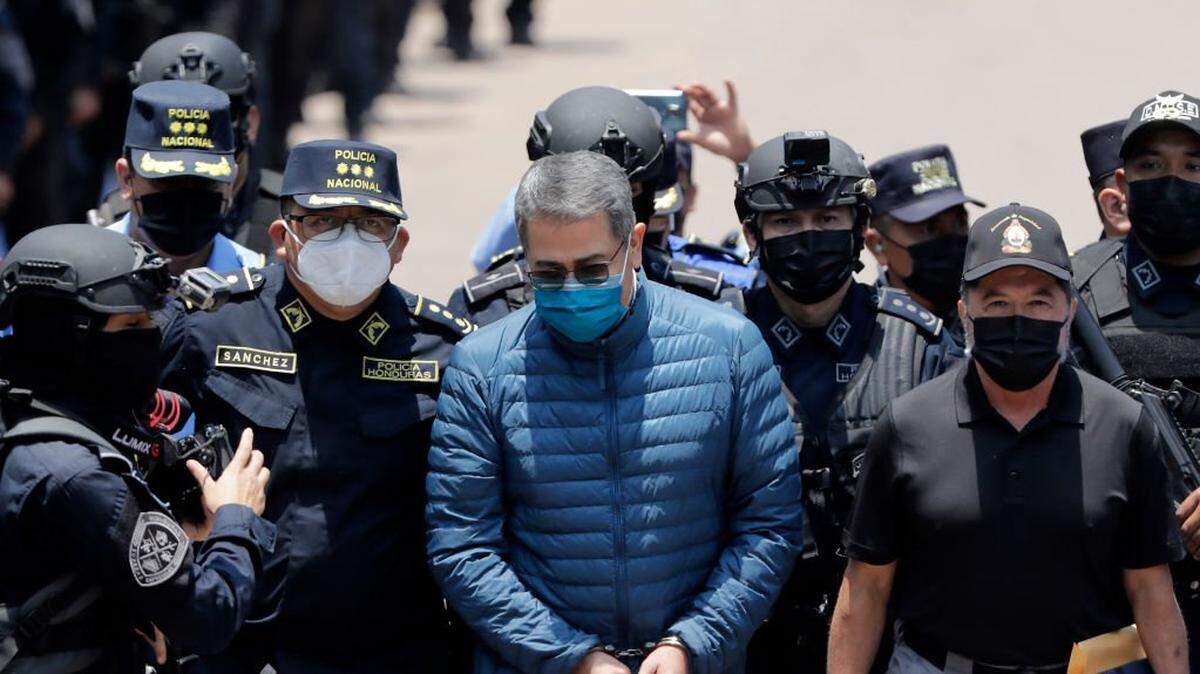
On Dec. 1, he freed Juan Orlando Hernández, the former president of Honduras, who in June of last year was sentenced to 45 years in prison and fined $8 million for “Conspiracy to import cocaine into the United States …(and) possessing machine guns and destructive devices in furtherance of the cocaine importation conspiracy.”
The Washington Post reports that Hernández ran “his country as a vast ‘narco-state’ that helped to move at least 400 tons of cocaine into the United States.”
The president illustrated his highly personalistic approach to clemency when he explained that he had pardoned the drug trafficker because “many people that I greatly respect” told him that Hernández had been “treated very harshly and unfairly.”
One of them, Roger Stone, a longtime crony of the president, played a key role. Axios says that “Stone wrote three separate Substack posts calling for the pardon of Hernández.”
On Nov. 28, Stone forwarded a letter from Hernández to the president. It described what Hernandez claimed was his persecution by the Biden Justice Department, and flattered Trump profusely.
“I have found strength from you, sir,” Hernández wrote, “your resilience to get back in that great office notwithstanding the persecution and prosecution you faced.”
Elizabeth Oyer, former pardon attorney in the Department of Justice, told Axios that “The pardoning of drug kingpins is virtually unheard of.” The Hernández case, she says, illustrates “the erosion of the traditional clemency vetting system, replaced by a process increasingly shaped by money, access and political influence.”
Pardon of a corrupt politician
In another abuse of the pardon power, on Dec. 2, the president pardoned Texas Representative Henry Cuellar and his wife, who had been charged but not yet tried for money laundering, wire fraud and conspiracy to commit bribery. Trump did so after Cuellar’s daughters wrote him what the president described as a “beautiful letter about their parents.”
But Trump’s grace didn’t get him what he really wanted. Soon after the pardon, Cuellar announced that he intended to seek reelection as a Democrat rather than switch parties. The president did not hide his displeasure, writing on Truth Social that the move demonstrated a “lack of LOYALTY.”
“Oh well, next time no more Mr. NICE GUY,” Trump added.
Brazen. Shocking. What would Hamilton think?
History has disproved Hamilton’s faith that giving the president the exclusive power to grant clemency would lead to its responsible exercise. That’s why at the federal level we need to follow the examples of several states which require a clemency board to sign off on any proposed use of that power.
Sadly, in this area — as in others — the Trump presidency requires use to take a hard look at our political institutions in order to ensure against abuses by future presidents.
Austin Sarat is the William Nelson Cromwell professor of jurisprudence and political science at Amherst College.