
Why Rob Reiner’s death feels like the loss of a family member | Opinion
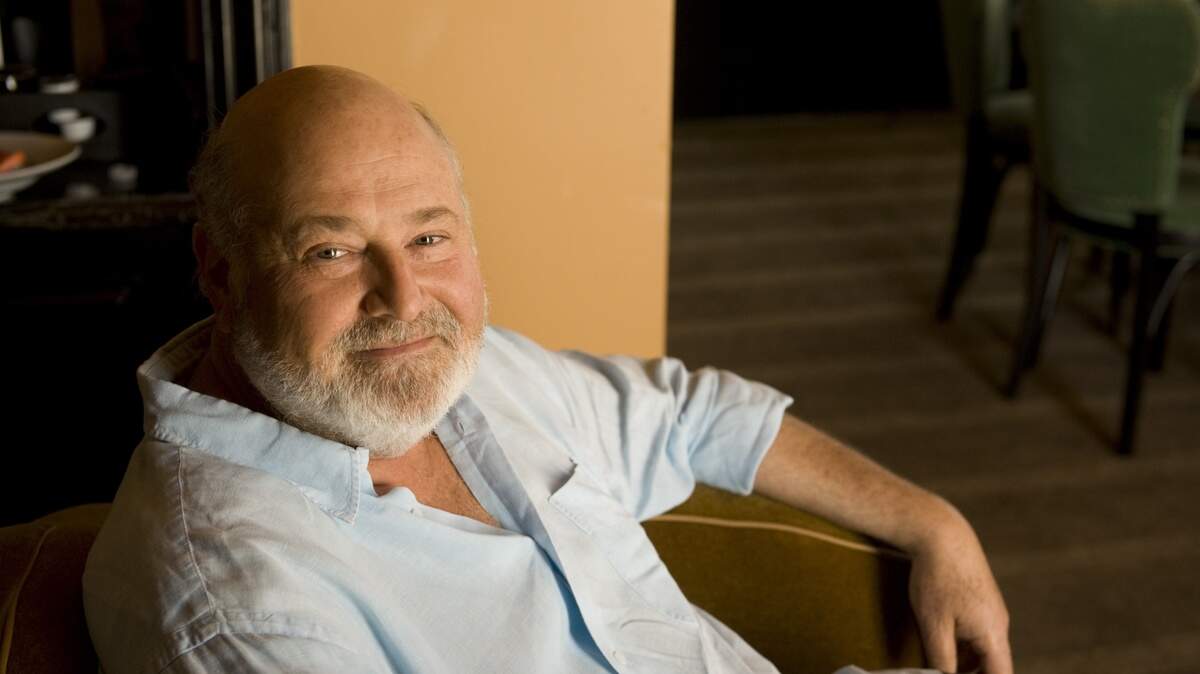
On the first night of Hanukkah, as I pulled my menorah and candles out from a cupboard, a New York Times alert pinged: “The actor and director Rob Reiner and his wife have died.”
The couple was found stabbed to death in their home on Sunday afternoon. Their son, Nick, has been arrested on suspicion of murder. The horrific news bookended a weekend already full of tragedy: On Saturday, two students were killed in a shooting at Brown University, and on Sunday, 15 people were murdered by two gunmen at Australia’s Bondi Beach during a Hanukkah event.
While those events were shocking, the death of Reiner and his wife, Michele Singer Reiner, feels incredibly personal — it feels like the loss of a family member.
Reiner’s work includes some of the best movies ever made: “When Harry Met Sally…,” “The Princess Bride” and “Stand by Me.” These are movies that somehow defy the test of time and age — Cary Elwes’ “As you wish” from Princess Bride is somehow just as charming and magical now as it was for me at age 10.
These movies have shaped the lives of generations of people. Endlessly rewatchable, Reiner — through his work — returns to our lives over and over again, like a member of the family.
Reiner’s death isn’t just devastating because of the excellence of his work, but because of the life-affirming nature of his movies. It was as if Billy Crystal was channeling Reiner’s spirit in his famous “When Harry Met Sally” final monologue:
“I came here tonight because when you realize you want to spend the rest of your life with somebody, you want the rest of your life to start as soon as possible.”
Yesterday, as celebrities and fans alike shared their stories about the Reiner couple on social media, I learned that the ending of “When Harry Met Sally...” loved by millions only exists because the Reiners fell in love.
In the original version of the movie, Harry and Sally don’t end up together. But after Reiner met his wife on the set of the 1989 film, screenwriter Nora Ephron rewrote the ending.
Imagine that: Reiner and his wife never met, and Harry and Sally don’t have a wedding with an enormous coconut cake and an optional side of chocolate sauce. It’s the happy ending we all hoped for — and one of the best romantic comedies in movie history.
As a child, I loved Reiner’s 2010 movie, “Flipped,” the story of a young girl and a young boy whose complicated relationship changes over the course of several years. In many ways, the movie (based on a 2001 novel by Wendelin Van Draanen) is about withholding judgment and keeping your heart open.
“Flipped” is about childhood, and about the hard, adult lessons we learn as children — reminiscent of Reiner’s earlier work, the 1986 movie “Stand By Me,” an adaptation of a Stephen King novella.
In his movies and the stories he chose to adapt, Reiner seemed to be sending a message: Childhood isn’t wholly innocent, but the hard lessons learned as children shouldn’t turn us into hardened adults.
And a hardened adult he was not: A new generation of young people met Reiner through his appearances on Disney Channel (on “Hannah Montana” and “Wizards of Waverly Place”) and, later, on ten episodes of “New Girl.” Reiner often played a soft-hearted goof — a wise and lovable older father figure.
Beyond the screen, Reiner was a political activist and an advocate for LGBTQ+ rights, Democratic causes and early childhood education. According to an article in this newspaper, Reiner was a leading voice behind the opposition of California’s Proposition 8, which banned same-sex marriage in 2008 before later being overturned in federal court. He co-founded the American Foundation for Equal Rights and helped pass First 5 California, an initiative that funded early childhood development programs by using a tax on tobacco products.
In Reiner’s work, in his activism and in the life that he lived and the person he appeared to be, he clearly believed in living life to the fullest. His work depicted full, complicated and often beautiful lives onscreen, and he used his influence to secure fuller, happier, safer lives for others.
Hanukkah is known as the festival of lights. It’s a time to look for the light during dark times. May Reiner’s life and legacy be a light for us all, and may his memory be a blessing.
This story was originally published December 15, 2025 at 2:49 PM.