
Californians have the right to rescue animals from torture | Opinion
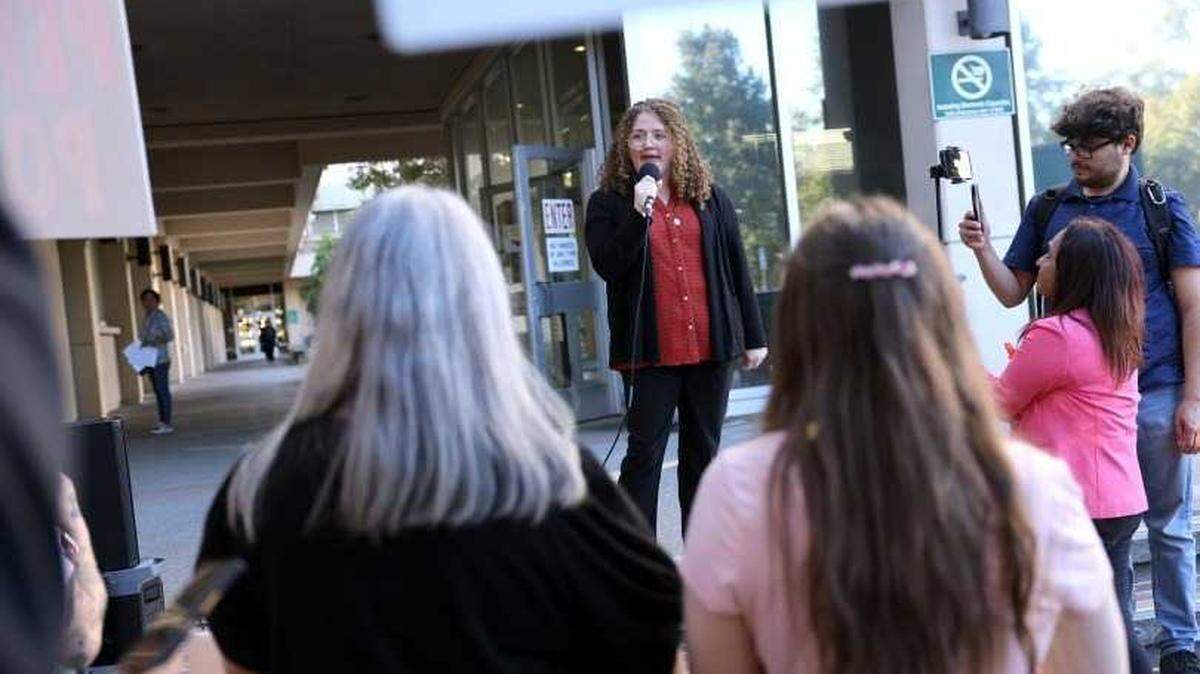
In December, a Sonoma County court sentenced Zoe Rosenberg, a 23-year-old UC Berkeley student, to 90 days in jail. She was sentenced not for harming animals, but for rescuing them.
Rosenberg’s conviction and sentence are wrong, unjust and inconsistent with California law.
Rosenberg was convicted of felony conspiracy and three misdemeanors after removing four sick and injured chickens from Petaluma Poultry, a Northern California supplier to Trader Joe’s, where investigators had documented severe abuse.
That abuse was not a secret to authorities; in 2018, Sonoma County Animal Services investigated one of Petaluma Poultry’s contractor facilities, seizing 15 birds for medical evaluation by a county veterinarian.
The report was bleak. Six birds were already dead. The remaining nine were all unable to stand, covered in excrement and seriously ill. Some could not open their eyes; others had wounds so deep that muscle and bone were exposed. Sonoma County Animal Services referred the matter to law enforcement for prosecution, but no charges were ever filed.
Over the next six years, investigators from the animal rights group Direct Action Everywhere — including Rosenberg — documented similar conditions, including birds collapsed from illness and injury, and left to die. In the slaughterhouse, they filmed birds improperly stunned and flailing as they were sent toward scalding tanks to be boiled alive.
Much of this conduct appears to violate California cruelty laws. Yet, despite years of evidence, law enforcement did not intervene. (Trader Joe’s continues to sell “organic” and “free range” chicken from Petaluma Poultry.)
In 2023, after years of law enforcement inaction, Rosenberg participated in an “open rescue” at one of Petaluma Poultry’s facilities. Open rescue is intentionally public. Rescuers document what they see and, if prosecuted, seek to demonstrate to a jury — and the public — that the rescue was justified and necessary to prevent serious harm to the animals.
Central to that strategy is the “necessity defense,” a long-standing legal principle that permits an individual to commit a lesser crime in order to prevent a greater harm. For example, if you trespass onto a neighbor’s yard to save a drowning child in a pool, the law recognizes that saving the child’s life justifies trespassing.
But in Rosenberg’s case, the Sonoma County court ruled that the necessity defense can never apply to animals. As a result, the jury was barred from hearing her argument or seeing her evidence of the brutal conditions that prompted her rescue.
That interpretation is illogical, morally indefensible and rejected by legal scholars. It categorically denies animals the possibility — the right — to be rescued, no matter how extreme the situation. Under this reasoning, even if a person were sadistically torturing an animal, rescuing the animal would not be legally justified if it required committing any minor infraction.
The crimes Rosenberg was found guilty of were coordinating with others to trespass, briefly interrupting business operations and putting trackers on vehicles, but those were not ends in themselves. They were the only practical way to expose what they believed were crimes authorities had failed to address and to rescue animals left to suffer imminent harm. That is exactly what the necessity defense is for, when breaking a minor law is the only way to prevent a greater harm.
I believe a jury likely would have agreed, although no one can know for certain. Either way, Rosenberg’s case highlights a legal inversion; those who expose illegal cruelty face jail time, while those responsible escape scrutiny.
Instead, our laws should reflect basic decency. Law enforcement should prosecute facilities that abuse animals in violation of California law, not criminalize their rescuers. And if that fails to happen, our courts should allow juries to hear necessity defenses in animal-rescue cases like this one.
Fundamentally, our legal system should reflect a simple truth: Rescuing an animal is an act of compassion — it is not a crime.
Michael Freeman is a volunteer with organizations working to prevent animal cruelty. Visit freezoe.org to petition Gov. Gavin Newsom to pardon Zoe Rosenberg.