
Americans must understand the historic context of Venezuela invasion | Opinion
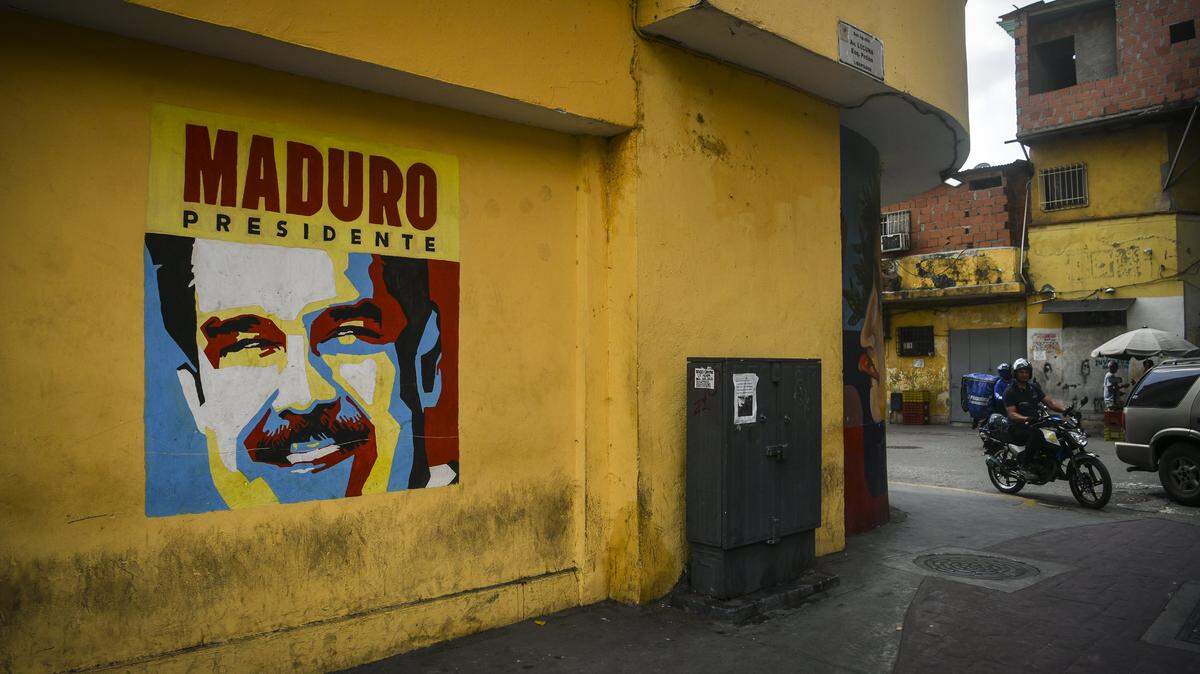
On Jan. 3, the U.S. deployed military force on Venezuelan soil to remove the country’s autocratic president, Nicolás Maduro. The media is ablaze with debates about the policy implications and likely illegality of this action. It was certainly a brazen move by the Trump administration, though they likely anticipated little domestic resistance.
Part of this is due to partisanship, but it also relates to how little most Americans know about Venezuela — or Latin America overall.
Prior to the attack, how many Americans knew that the fentanyl entering the U.S. does not come from Venezuela or Colombia? Or that the Cartel de los Soles, the “terrorist cartel” of which the Department of Justice claimed Maduro was the head, does not exist? (The DOJ admitted as much post facto.) Or that Maduro was one of numerous leaders in the region who have systematically used state violence against its citizens — including those from the political right who President Donald Trump has lavishly praised?
Americans could be forgiven for a lack of clarity on Latin America. It is, after all, an extremely complex region whose most unifying characteristic may be its diversity of landscapes, languages, cultures and economies. It’s vast in every sense of the word, and its history is, indeed, complicated. Few U.S.-born Americans receive any formal education on Latin America, with the most common entry point being college-level electives (though state-level measures like Assembly Bill 101 have sought to partially rectify this here in California).
Yet, the unique position that we all occupy when our leaders intervene unilaterally in other countries requires that we understand our role. The stakes are especially high here in California, where more than half of our college-aged students come from families with Latin American roots.
American imperialism
Amid its diversity, one of the connecting features of Latin America has been a deep history of U.S. interventionism — or, as it is more commonly understood in the region, U.S. imperialism. Maduro’s predecessor, Hugo Chávez, famously expressed this sentiment when he gifted former President Barack Obama a copy of the bestselling book “The Open Veins of Latin America” in 2009.
Latin Americans want the U.S. public to understand, and grapple with, this history.
There is no shortage of precedents for the Trump administration’s actions in Venezuela, to the point that commentators cannot land on a single one to point to. Some have cited the 1989 invasion of Panama that led to Manuel Noriega’s trial in a U.S. court on drug charges. Others point to the Cold War National Security Doctrine, in which the U.S. propped up right-wing dictators and sought to overthrow leaders from the left. Some have gone even further back to consider the 19th century Monroe Doctrine or the early-20th century gunboat diplomacy of Theodore Roosevelt’s famed corollary.
Each of these comparisons has its merit, but when considering them collectively other through lines appear. Most notably, each of these policies has been undergirded by self-serving caricatures of the region. Yellow journalists and political cartoonists of the early 20th century supported U.S. military forays into the region by alternatively representing Latin American countries, as well as the Philippines, as white women (in need of saving) or nonwhite children (in need of disciplining).
Mid-century cold warriors equated Latin American nationalism, which was rooted in deeply local histories, with Soviet-sponsored communism. Under this rationale, the U.S. frequently supported or directly carried out the overthrow of democratically elected leaders. Proponents of the Drug War conveniently erased the centuries-old history of coca-leaf use and production by Indigenous Andeans in order to justify aerial fumigation and mass incarceration, with long-lasting consequences.
Trump administration’s mindset
At the core of the Trump administration’s National Security Strategy is the belief that the United States can and should have access to Latin American territory and resources. This mindset motivates its portrayals of the Caribbean as a lawless expanse of narcotrafficking and conflates the Pacific Ocean or the U.S.-Mexican border with the Caribbean. (The same way it counts on the general public knowing very little about the Arctic Circle when Trump makes claims about Greenland.)
The administration treats this deep history of U.S. actions in Latin America as a justification for unilaterally intervening in the affairs of our sovereign neighbors. We would be better served to learn from it, as these caricatures have historically worked in favor of elites and corporations interested in plundering Latin America or exporting ideology.
The old adage that “knowledge is power” really rings true in our classrooms, as students have shown that they’re not easily fooled by jingoist rhetoric. As one of our students said at the end of a course last month: “Now I feel like I know the real story of this hemisphere and I can never un-know it. I can’t watch the news in the same way anymore.”
Of course, classrooms are merely one type of space where critical debate and learning can occur. The onus is on us to collectively engage one another in ways that belie partisan or social-media talking points — we owe it to ourselves and to our neighbors throughout the hemisphere.
Lily Balloffet and Jeff Erbig are professors of Latin American History at UC Santa Cruz.