
Why Olympic ice hockey will be a geopolitically charged tournament | Opinion
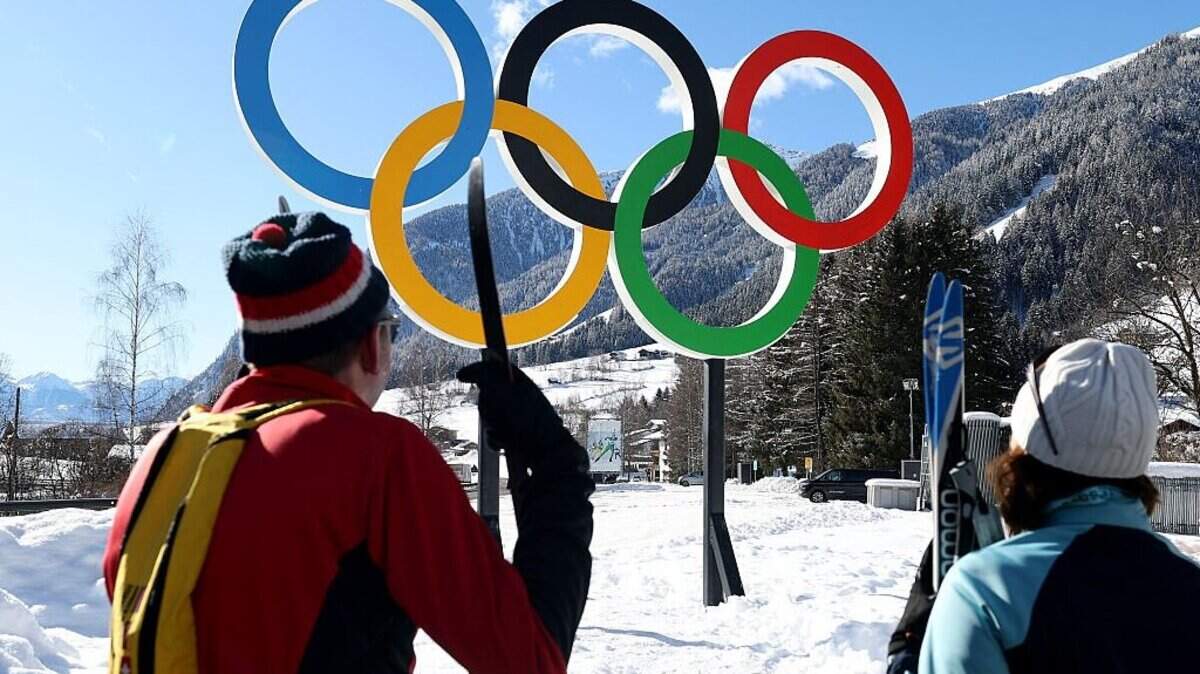
Everyone knows sports can get political, but this year’s international hockey at the Olympic Winter Games offers more politics than usual.
Take the U.S.-Canada rivalry: In last February’s National Hockey League’s 4 Nations Face-Off, what is ordinarily a friendly rivalry became something much bigger. Played amid escalating threats from newly-inaugurated President Donald Trump against Canada, in which he referred to Canada as “the 51st State,” Canadian fans and players alike were ready for a fight when the puck dropped. Even before the first US-Canada game began in Montreal, Canadian fans booed the U.S. national anthem. The game then exploded, with an incredible three different hockey fights between U.S. and Canadian players in the first nine seconds of the game. Trump sent a message of support to Team USA. Meanwhile, in Canada, politicians of all stripes embraced the Canadian team as a symbol of defiance against U.S. threats.
No politician benefited as much from Canada’s victorious run in the 4 Nations Face-Off as Canadian Prime Minister Mark Carney, who took office soon after Canada’s victory in the 4 Nations final. Carney embraced the hockey phrase of “elbows up,” appearing in a video wearing a Team Canada jersey to promise that “there will always be a Canada.”
Elbows up is a good metaphor for the kind of aggressive defense that Canada is now playing in the global arena, with Carney’s recent visit to China showing his determination to hedge against Washington.
Now comes the biggest international ice hockey tournament in years: The 2026 Winter Olympics in Milan, Italy. So far, the road to the 2026 Winter Olympic Ice Hockey Tournaments has been defined by the highly anticipated return of NHL players to Olympic hockey for the first time since Sochi 2014 and anxiety over whether the new hockey stadium in Milan would be finished in time. But as the women’s hockey tournament begins this week, to be followed by men’s hockey on February 12, it is clear that this tournament will be the most geopolitically loaded hockey tournament since the end of the Cold War. Geopolitics are no stranger to Olympic ice hockey. Every American with even a passing interest in the sport knows the story of the 1980 “Miracle on Ice,” when Team USA beat the Soviet Union.
However, that any of the games this year will be geopolitically charged is a sign of how much the Western Alliance has unraveled just one year into the second Trump presidency. The U.S.-Canada rivalry is as heated as ever, with Trump threatening tariffs over Canada’s diplomatic move toward China.
The scheduled Valentine’s Day clash between Denmark and the U.S. also stands out amid the Greenland crisis. Team USA is heavily favored relative to the Danish hockey team, but an underdog Danish victory over the U.S. would certainly have the makings of a Danish Miracle on Ice, defeating the superior team of the threatening superpower.
The Trump administration has also ensured that controversy over U.S. Immigration and Customs Enforcement will follow Team USA to Milan: Officers from ICE’s Homeland Security Investigations division will go to Milan as part of the U.S. security detail. This has understandably produced outrage in Italy. Milan’s mayor was quick to declare ICE “not welcome,” and the controversy is a headache for Italian Prime Minister Giorgia Meloni’s government, which has sought close relations with the Trump administration even as the rest of Europe is increasingly alienated by Trump’s threats and tariffs.
It has been a hard winter for the U.S. and for the Western Alliance in general. From Greenland to Canada, the U.S. is looking more and more like a threat. Amid such a cold winter of bad news, some Olympic hockey should be a welcome distraction. Instead, Milan’s brand-new hockey stadium will be all about politics.
Antonio De Loera lives in Davis. He served as special assistant to U.S. Secretary of State Antony Blinken between 2021 and 2022. In 2025, he was awarded a Latino Changemaker Award by The Sacramento Bee for his work in Yolo County.