
This California legislation would help preserve telework for state workers | Opinion
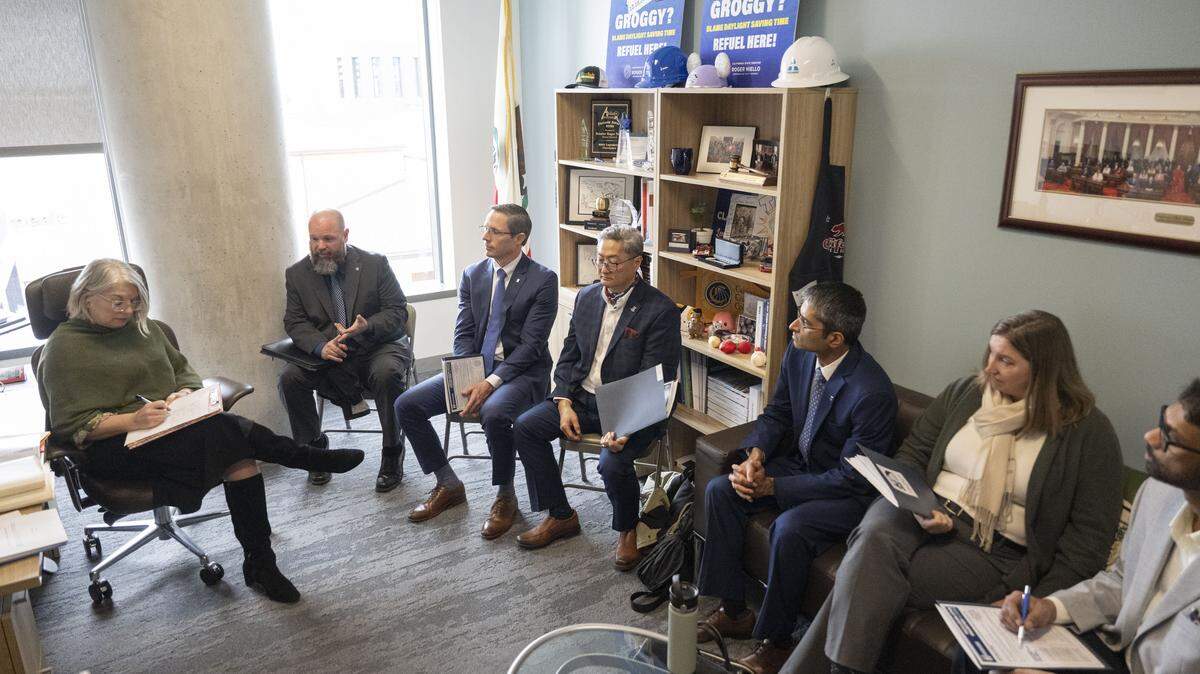
California’s government stands at a crossroads — and the clock is ticking. The Newsom administration has ordered most state employees to return to the office four days per week on July 1, which doubles the current two-day requirement. But does it make sense to end the telework system that saves taxpayers hundreds of millions of dollars annually, cuts emissions and congestion and attracts the skilled workforce our state desperately needs?
Assembly Bill 1729, introduced by Assemblymember Alex Lee, D-Milpitas, and sponsored by the Professional Engineers in California Government, where I serve as president, offers a compelling answer: The measure would safeguard flexible telework for thousands of engineers, architects and related professionals, as well as every state employee who can work remotely.
This isn’t about convenience, it’s about fiscal responsibility, California’s leadership in environmental policy and maintaining the state’s status as a competitive employer during ongoing wage freezes.
According to the state auditor, the current telework policy could save up to $225 million annually by reducing office space and overhead costs. As the state faces serial budget deficits, this is real money that can help close the deficit and leave critical dollars available for schools, housing and health care.
Consider remote work’s environmental benefits: Before the Newsom administration closed its telework impact website two years ago, state data showed that remote work had cumulatively reduced employee commutes by 1.08 million miles — equal to 2,258 round-trip to the moon — and avoided nearly 400,000 metric tons of carbon emissions.
And consider California’s notorious gridlock: Telework saved state employees a cumulative 27.2 million commute hours — equivalent to more than 3,100 years of driving. That improves the quality of life for everyone: Emergency vehicles move faster, delivery times improve and Californians’ collective stress eases.
Gov. Gavin Newsom has argued that state employees must be in the office more to serve the public more effectively. But lots of evidence contradicts this. Most recently, the state auditor’s August report surveyed state departments, and the “results indicated that telework benefited departments by lowering costs, reducing the amount of office space needed and improving recruitment and retention, without negatively affecting productivity or customer service.”
AB 1729 recognizes the benefits of teleworking while maintaining appropriate flexibility. The bill doesn’t mandate universal telework. Instead, it requires agencies to develop telework plans and provide written justification when requiring employees to report onsite. This will allow telework decisions to be made based on operational need, rather than a one-size-fits-all approach that doesn’t recognize the diversity of state work and workplaces.
Telework can also help California compete globally for engineers, environmental experts and countless other skilled professionals who are attracted to flexible work arrangements. When highly sought-after workers can choose flexible private-sector positions, the state’s inability to meet those basic expectations becomes a critical disadvantage.
Making matters worse — given the budget deficit — many state employees will not receive a general salary increase in the fiscal year that starts on July 1.
California prides itself on innovation and forward-thinking governance. Embracing flexible telework isn’t radical, it’s consistent with our values and track record — including the governor’s.
Ferdinand de la Cruz is the president of Professional Engineers in California Government, representing more than 15,000 state-employed engineers and related professionals.