
The Railyards run in my family. A new stadium does the site justice | Opinion
On January 5, 1933, The Sacramento Bee announced the retirement of my great-great-grandfather from the Southern Pacific Company’s Sacramento Railyards.
He worked there for 46 years, starting on June 15, 1886. In that time, he inspected an estimated 2,715,600 railcars and walked roughly 23,000 miles on those grounds. He gave nearly half a century to that land in the heart of our city.
I think about him every time I drive past the Railyards. And I think about him now, because something worthy of that legacy is finally being built there.
I’ll be honest, when Sacramento Republic FC and Wilton Rancheria first announced plans for a 12,000-seat open-air stadium on that site, my first thought was: Sacramento can do better than this.
Not because 12,000 seats is nothing, but because the Railyards aren’t just any site. It’s one of the largest urban infill projects in the country: 244 acres in the heart of our city, with the power to reshape downtown for generations. That kind of opportunity doesn’t come often. It calls for something bold.
And the idea that a 12,000-seat venue could be expanded later? We’ve heard that approach before. Sutter Health Park (then Raley Field) fits into that pattern of building small with the hope of growing later. That’s not always how things play out.
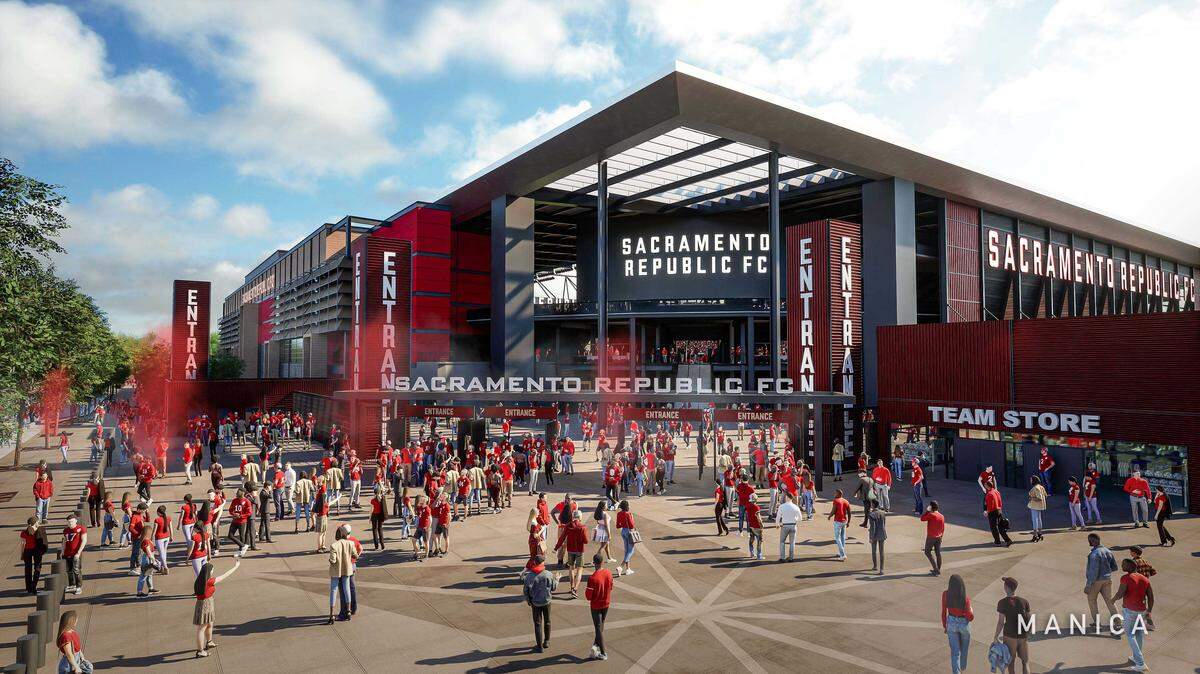
So when Republic FC and Wilton Rancheria announced this week that they’re scrapping the 12,000-seat plan in favor of a 20,000-seat stadium with a full canopy, nearly doubling capacity, it felt different. Bigger. More decisive.
The stadium is one piece of a much larger vision. The Railyards plan calls for thousands of new housing units, retail, hotels, office space, a Kaiser Permanente hospital already under construction and cultural destinations, all designed to effectively double the size of Sacramento's downtown.
Wilton Rancheria purchased a majority stake in Republic FC in late 2024 and stepped into a project that had been struggling to move forward. They could have played it safe, built the smaller stadium and called it progress.
Instead, Chairman Jesus Tarango said: “With this stadium, Wilton Rancheria is reclaiming our space and matching the ambition of the region.”
That line says everything.
The new 20,000-seat venue — capable of hosting 27,000 for concerts and special events — will exceed the capacity of Golden 1 Center. Four massive trusses weighing 3,800 tons will join the downtown skyline and become an integral part of Sacramento’s identity.
This is what one of the nation’s largest urban infill projects deserves: not a placeholder, but a landmark.
My family has watched this city grow and stumble and grow again for five generations, starting on those very grounds. We watched the Kings almost leave and then stay. We watched the Railyards sit vacant for a generation, the land where my great-great-grandfather once walked slowly reclaimed by weeds and chain-link fence.
We’ve cheered for teams that deserved better venues and a city that deserved better investment. What’s happening at the Railyards right now is not incremental progress, it’s transformation. And for my family, it’s personal.
This stadium isn’t Sacramento’s arrival. It’s our argument. And the case doesn’t stop at soccer.
Major League Baseball (MLB) is expanding, and this region deserves to be in that conversation. Nearly 2.5 million people — a passionate, proven fan base. A downtown in the middle of a genuine renaissance. And now, a 20,000-seat stadium at the center of it all.
I say this as a lifelong A’s fan: I’ve loved having them here. But their time in Sacramento has always been a waypoint on the road to Las Vegas, and we knew that going in. Wilton Rancheria, however, isn’t passing through. Their commitment to this region runs deeper. And when you add it all up, MLB would be unwise not to take note of what’s happening in Sacramento.
We have the Kings, we have the River Cats and we have Republic FC — and soon, a stadium worthy of the soccer culture this city has built from the ground up. Sacramento is a sports town.
The Wilton Rancheria — a tribe whose connection to this land stretches back far longer than any railroad — bet $350 million on that fact. They matched our ambition, and, in doing so, they raised it.
My great-great-grandfather gave 46 years and 23,000 miles to the Sacramento Railyards. Four generations later, his family is still here — still watching, still believing. This week, that patience finally felt worth it.
Drake Sapigao is a Sacramento-based public affairs professional and a fifth-generation Sacramentan.