
Roseville school district takes important step to welcome military children | Opinion
The Roseville Joint Union High School District Board, where I serve as a trustee, recently became the first in Placer County — and one of the first in greater Northern California — to achieve Purple Star designation at four school sites. We did not do it because it was required; we did it because a military family should never have to wonder whether their new school is prepared for their child.
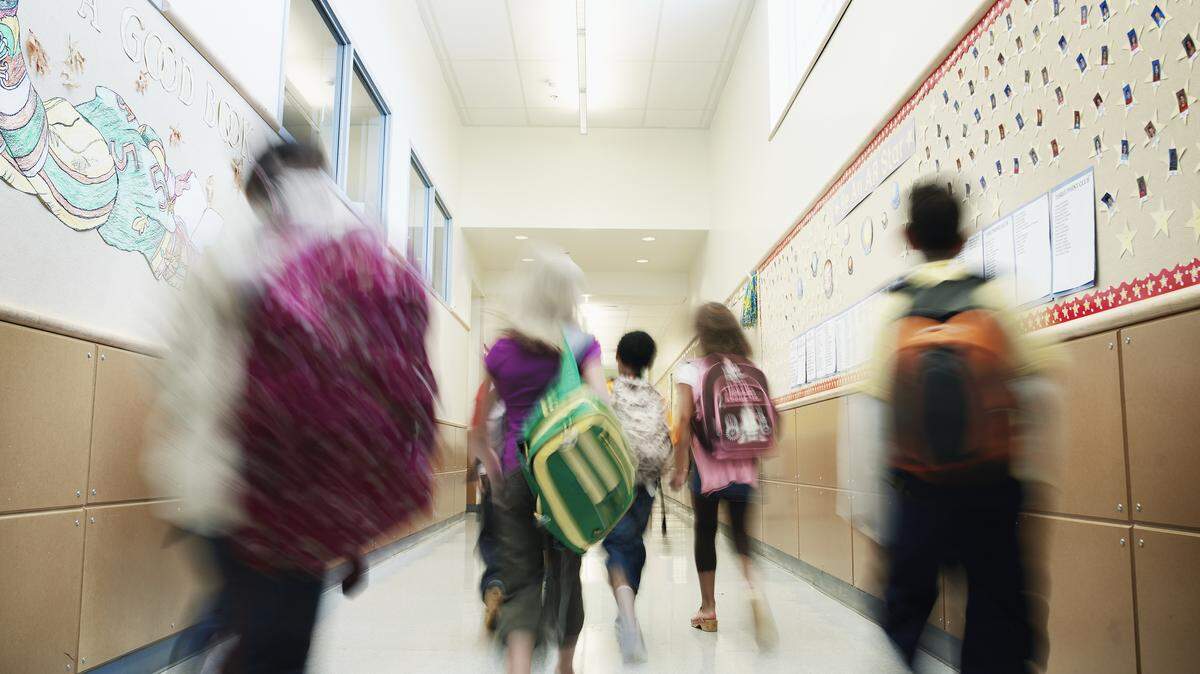
Every school day, somewhere in California, a child walks into a new classroom carrying the weight of a parent’s relocation orders. They’ve left behind their friends, teammates and teachers who perhaps finally understood them. They arrive in a new school district with a backpack full of records from a different state, a different curriculum and a different set of expectations — and they are hoping someone on the other side of the enrollment counter is ready.
Most of the time, schools are not.
California is home to more than 213,000 active-duty service members and National Guard and Reserve personnel, one of the largest concentrations in the nation, and their children attend our public schools. Because military families receive relocation orders with little warning, these students can expect to change schools six to nine times between kindergarten and graduation — three times more often than their civilian peers.
Each move means re-proving themselves. Each move means starting over.
There is a straightforward, no-cost way for California’s public schools to say to these families: We see you, and we are ready. It is called the Purple Star School Designation.
The Purple Star Program was first introduced as legislation in 2021 and permanently added to California law in 2024 under Senate Bill 920, authored by Sen. Kelly Seyarto, R-Murrieta. Administered annually by the California Department of Education, the program publicly recognizes schools that have taken four concrete steps: designating a military family point-of-contact on staff, providing professional development on military-connected students’ needs, maintaining a dedicated webpage with family resources and running a transition program — which can be student-led — to welcome incoming military students socially and academically.
No new funding or mandates are required. Just intentionality that is formalized and then recognized.
In 2025, only 179 California schools held this designation. In a state with more than 10,000 public schools, that is a fraction of 1%. Forty-four other states have Purple Star programs (Florida, for example, has more than 450 designated schools).
California, with its enormous military population and its longstanding commitment to equity in education, should be leading this movement — not trailing it.
The research bears this out, and the practices that serve military-connected students — structured transition protocols, designated liaisons, culturally aware staff — ultimately benefit every student. When schools get better at welcoming newcomers, all newcomers benefit.
This is not a niche program, it is good schooling.
I am calling on school districts across California to act. Apply for Purple Star designation in the next application cycle, which typically opens in fall 2026. Spend the spring and summer getting ready: Identify a staff liaison, build the webpage and start a student-led welcome program. The investment is modest, but the return — in belonging, in continuity, in a student’s belief that this new school actually wants them there — is profound.
Military families don’t ask for much. They serve, they move and they hope. The least we can do is be ready when they arrive.
Pete Constant is a trustee on the Roseville Joint Union High School District Board of Trustees and an associate professor of public policy at Jessup University in Rocklin.