
How California’s political culture is hostile to women running for governor | Opinion
For the past 100 years, the surest path to becoming governor of California has been to first get elected to statewide office. Of the 14 men — and they have all been men — to serve over the last century, five were lieutenant governors, four were attorneys general, and one a U.S. senator.
There were a couple of outliers — celebrity actors Ronald Reagan and Arnold Schwarzenegger — but as a rule a governor’s resume had to include an apprenticeship in a lesser statewide office.
It is not clear, however, whether that trend will continue. Sadly, it seems the state’s stepping-stone offices haven’t paved the way for women.
The good news is that after years of struggle, women have begun to move up the state’s political pipeline. They hold four of the state’s seven constitutional offices and 48 percent of the seats in the Legislature.
Unfortunately, the top of that pipeline remains plugged. Although a record 14 women governors are serving in the country today, California remains one of just 19 states to never have one.
California’s political culture today is not welcoming to women candidates for its highest offices.
In 2019, there was a panel discussion in Sacramento in which Lt. Gov. Eleni Kounalakis, Treasurer Fiona Ma and Controller Betty Yee each asserted her interest in running for governor. All had the requisite experience based on California history. (Full disclosure: I’m helping Ma in her race).
What’s happened since? Kounalakis dropped out to run for treasurer instead. Ma assessed the situation and chose to run for lieutenant governor. Yee entered the race but ultimately dropped out.
A fourth woman with stellar experience also tested the waters. Toni Atkins, who is both a former Assembly speaker and one-time leader of the state Senate, also dropped out.
What these highly qualified women had in common was an inability to raise the massive amount of campaign funds needed to compete for the governorship in a state with more than 23 million voters and 15 television markets.
It’s long been recognized that women candidates, particularly women of color, face a more difficult challenge in raising money from a male-dominated donor network. That has never been more true than in California today, where political purse strings are largely pulled by a tech industry boy’s club that lavishly spends on campaigns. It is a group that has not generally favored women candidates.
Consider that 15 California billionaires concentrated in the Silicon Valley —all men — have combined to spend more than $14 million to promote a candidate for governor who, unlike the four women cited above, has zero experience in state government.
The same effect is exhibited further down the ballot, in the race for lieutenant governor. Ma, the leading woman in the race, surprisingly has raised more money than her two male rivals. But massive independent expenditure campaigns by donor elites, mostly Silicon Valley tech bros, are boosting the men competing against her.
In contrast to Treasurer Ma, her two rivals have never served in a state elected office. It seems apropos that among those who have given the maximum amount to candidate Josh Fryday is a co-founder of Men’s Wearhouse.
Women who seek the state’s highest offices still face cultural obstacles as well. Check out the Sacramento Bee’s recent endorsement of Fryday over the state’s treasurer. It says the male candidate passes the “beer test.” It must be a guy thing, I guess.
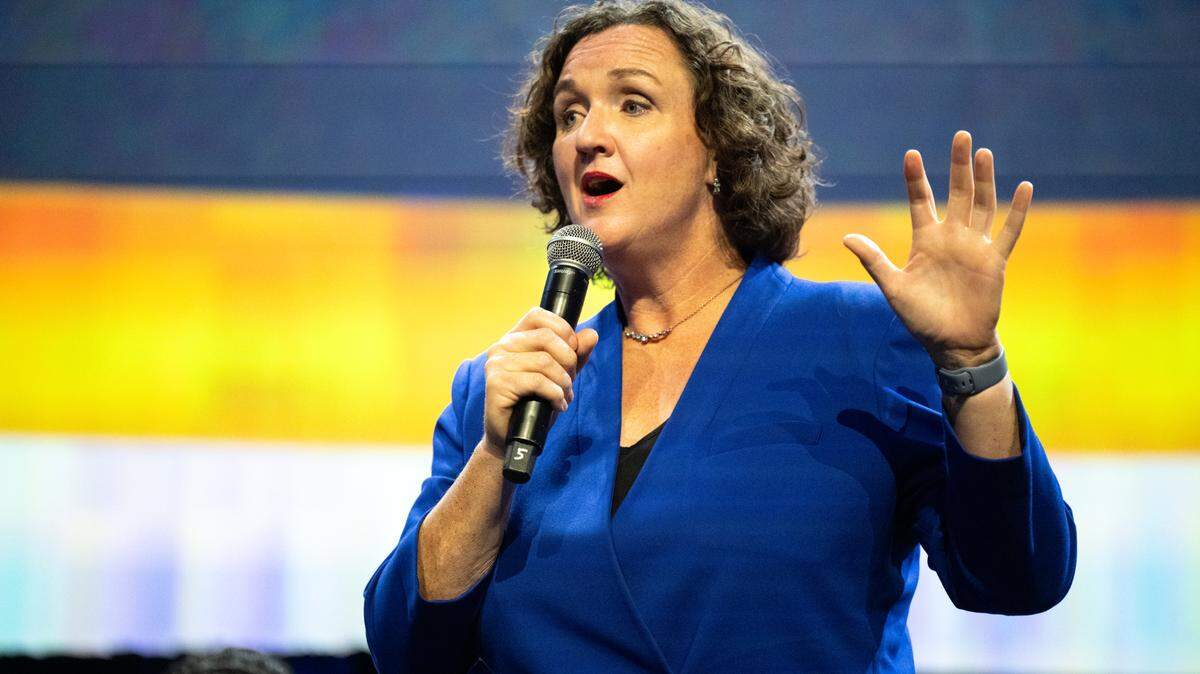
And then there’s former U.S. Rep. Katie Porter, the remaining candidate with a chance to become the state’s first woman governor. She dropped sharply in the polls after videos circulated that some said showed she lacked the “temperament” to be governor.
The temperament test seems to apply only to a certain set of chromosomes. As Porter noted during a recent boisterous debate with her six male opponents, “If these bullies, these boys bullying and bickering, hasn’t been enough to raise questions about their temperament, I would really challenge that.”
Indeed, it is time for all Californians to challenge this notion that women are second-tier candidates.
Steve Maviglio is a political consultant who served as press secretary to former California Gov. Gray Davis and deputy chief of staff to former California Assembly Speaker Fabian Nunez.
This story was originally published May 16, 2026 at 5:00 AM.