
I’ve watched ballot counting first-hand. There is no widespread fraud | Opinion
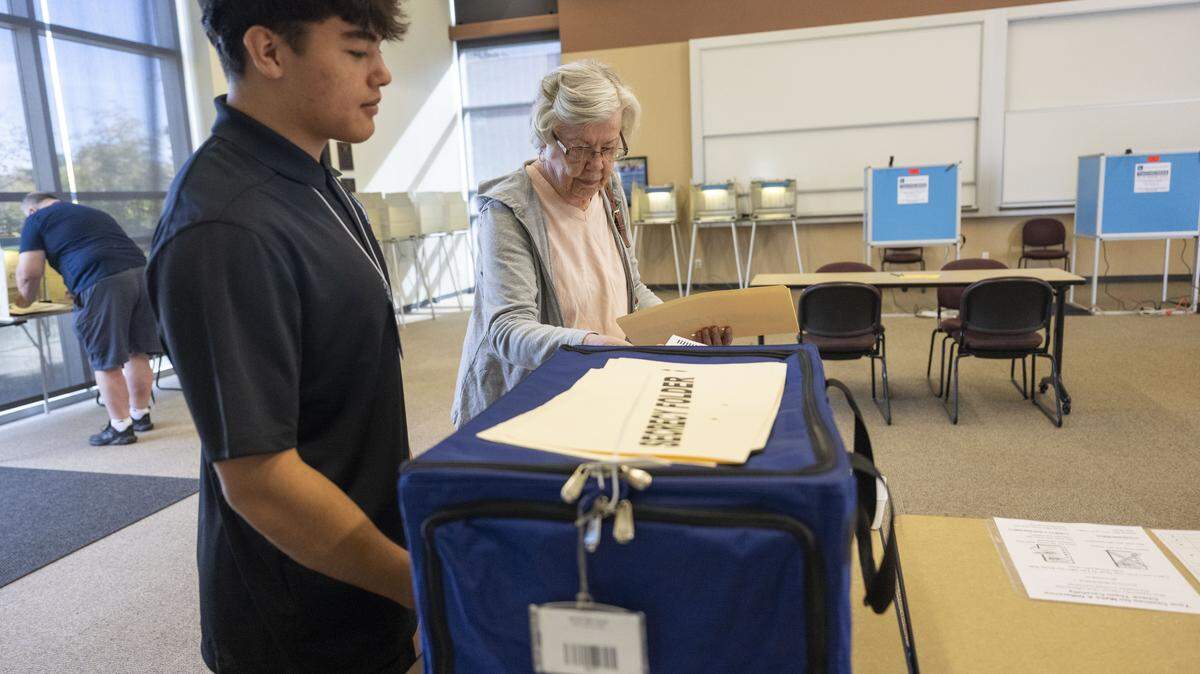
In November 2000, I was in Otero County, New Mexico, observing the manual counting of ballots following the tight race between George W. Bush and Al Gore. It was an unforgettable lesson in elections.
Across the table, I observed a dedicated election worker who clearly loved her community. As she pulled a ballot from the stack, she paused. The voter had selected Bush for president, but then proceeded to vote for every Democrat on the ticket.
This election worker believed no one would vote this way and honestly thought she was doing that voter a favor by moving the ballot into the Al Gore pile. She was a grandmotherly figure who did not understand the rules of voter intent. Disagreeing, I simply raised my hand to object to that ballot. The election officials immediately reviewed my challenge and overruled her.
The system worked exactly as intended because of transparency and oversight. And it has — again and again — throughout the country. Claims of widespread voter fraud are just not true.
Rhetoric aside, when we look at the data, the reality is clear: The vast majority of people convicted of voter fraud are responsible for a small number of votes. These are typically isolated incidents of a person voting on behalf of a deceased relative, a candidate falsely claiming to live in a jurisdiction or an individual who is unaware that they are ineligible due to a prior conviction.
The Heritage Foundation actually keeps an online database of election fraud to highlight vulnerabilities. While their database lists over 1,500 proven instances of fraud, a closer look at the entries reveals that these span decades of elections. The cases often involve local municipal races or individual acts rather than coordinated efforts to tilt a national result.
The Brennan Center for Justice argues that the Heritage database actually proves how safe our elections are. They point out that many of the cases listed are years old, or involve administrative errors rather than intentional fraud. The Brennan Center’s research consistently shows that an American is more likely to be struck by lightning than to commit mail-in ballot fraud. They argue that the tiny number of cases relative to the hundreds of millions of ballots cast proves that existing security measures are working.
I think the facts are on the side of the Brennan Center, as much as that pains me.
The logistical reality is the ultimate firewall. To flip a U.S. Senate seat, a governorship or a presidential race would require a conspiracy of massive proportions involving thousands of co-conspirators trying to vote fraudulently one way or another. In a world where we cannot keep a secret about a surprise party, it is highly unlikely that such a massive operation would remain hidden after all this time.
The truth is that voting by mail with absentee ballots is very safe. California has proven this over decades of implementation. Every signature is verified, and every ballot is tracked.
While some remain skeptical, the facts of the last two cycles are indisputable: President Donald Trump lost the election in 2020, and he won the election in 2024. In both instances, the professional election staff across this country did their jobs with integrity.
Misstating that we have widespread fraud does a profound disservice to those professional staffers. There are a couple of county election offices in this state that I think are not very good at communications and transparency, but I do not question their final election results. Stupid is not the same as corrupt.
When we attack the process without evidence, we threaten the authority of our institutions and erode the trust necessary for a self-governing republic.
We should always be vigilant. We should always audit. And we should always have observers in the room. But we must also be honest about what we find. Most “election fraud” is isolated and is often not about the ballots.
Our institutions are stronger than the conspiracy theories.
Matt Rexroad is an attorney, political consultant and certified fraud examiner.