
2026 Sacramento State graduate questions CSU priorities, spending | Opinion
As a recent graduate of Sacramento State, I leave the university proud of my campus. But I leave with a question California legislators and the future governor should take seriously: Who is holding the California State University accountable?
In my four years, it has felt like the California State University (CSU) system is constantly in crisis. Courses have been cut. There have been layoffs, tuition and fee increases. Campuses have merged, and some departments and degrees have been eliminated. Students, faculty and staff keep getting the same message from the chancellor’s office about how CSU needs more money.
Public higher education does need stable funding, but CSU leaders are hard to trust. When they ask students and taxpayers for more money while approving executive raises, pushing fees, touting enrollment gains on campuses where cuts are still happening and making questionable financial investments, such as spending $17 million to provide free ChatGPT for all students, lawmakers should not simply write a check and move on.
Sacramento State students saw this contradiction firsthand. Last year, about 400 students and faculty walked out over layoffs, course cuts and fee increases tied to a $37 million deficit. Students were told a Student Success Fee could preserve course offerings and warned that without it, there could be a 46% reduction in courses. Students already faced large tuition and fee increases the year before. But the success fee died in a student vote, and many courses still returned after state funding improved.
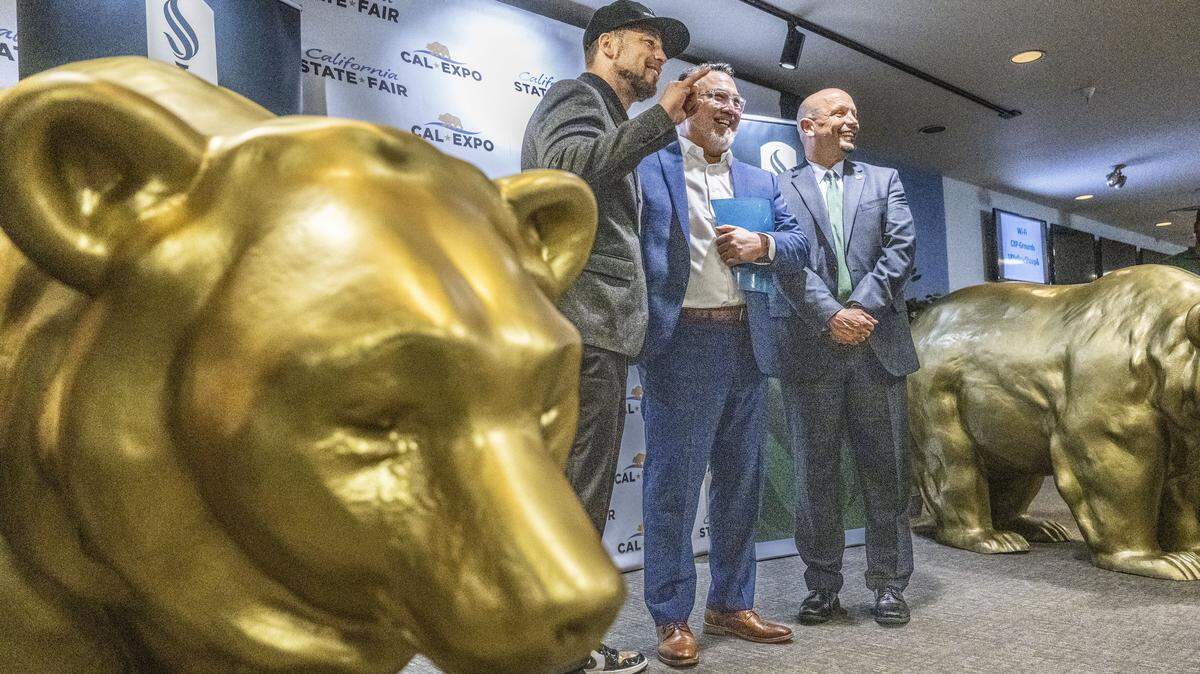
Now, the state’s 2026-27 May Revision proposes more than $365 million for the CSU. This shows why students become skeptical when austerity is treated as inevitable for classrooms and student services, while money seems available for all the wrong things — from removing salary caps for administrators already making half a million dollars to spending $100,000 on a Lil Yachty performance.
This issue is not isolated. State auditors found that CSU management staffing and compensation grew faster than other employee groups; that CSU failed to disclose a $1.5 billion surplus while tuition nearly doubled; and that mandatory campus fees increased 56% while receiving limited oversight. Other audits have found little progress returning Native American remains to tribes, failures to address sexual harassment allegations, and failures in financial oversight. More audits are needed, but CSU actively fights against attempts to conduct them.
At Sac State, the move into the top tier known as the Football Bowl Subdivision by joining the Mid-American Conference (MAC) deepened that distrust. The university promoted $975 million in economic impact and $675 million in broadcast value. But numerous media outlets questioned these numbers as helping the university’s bottom line.
The Sacramento Bee later reported that Sac State would forgo MAC revenue distributions, including TV revenue, during its five-year entry period while paying $18 million in entry fees.
A public university cannot tell students there is not enough money for classes needed to graduate while using inflated numbers to sell an expensive athletics move. Nor can it claim to defend higher education while acting as if football, concerts and brand deals are why students attend college.
Students are not rejecting college because they do not care about education. Many are looking at debt, housing costs, unclear career outcomes, stress and reduced offerings, asking whether college will deliver what it promises. The CSU should answer that by making education more affordable and reliable, not by creating more doubt about its priorities.
As for who is allowing these decisions, presidents and chancellors come and go, but the unelected CSU Board of Trustees is supposed to serve as an oversight body, with authority over fiscal management, human resources, facilities and policy. To many students, faculty and staff, the board feels distant and insulated, especially when many trustees have never worked at or attended a CSU and rarely interact with the average student.
I recently walked across the graduation stage, shook President Luke Wood’s hand and gave my farewell to the university I love (possibly with a few alleged violations of its anti-protest policy on my record). Sac State has given me some of the best faculty, staff and classmates I have ever known: people who are often overlooked and underestimated, but who represent so much of California’s exceptional working class and future.
Michael Lee-Chang graduated from Sacramento State with a B.A. in political science and a minor in Asian studies as part of the graduating class of 2026.