
Congress may overrule standards for farm animals set by California voters | Opinion
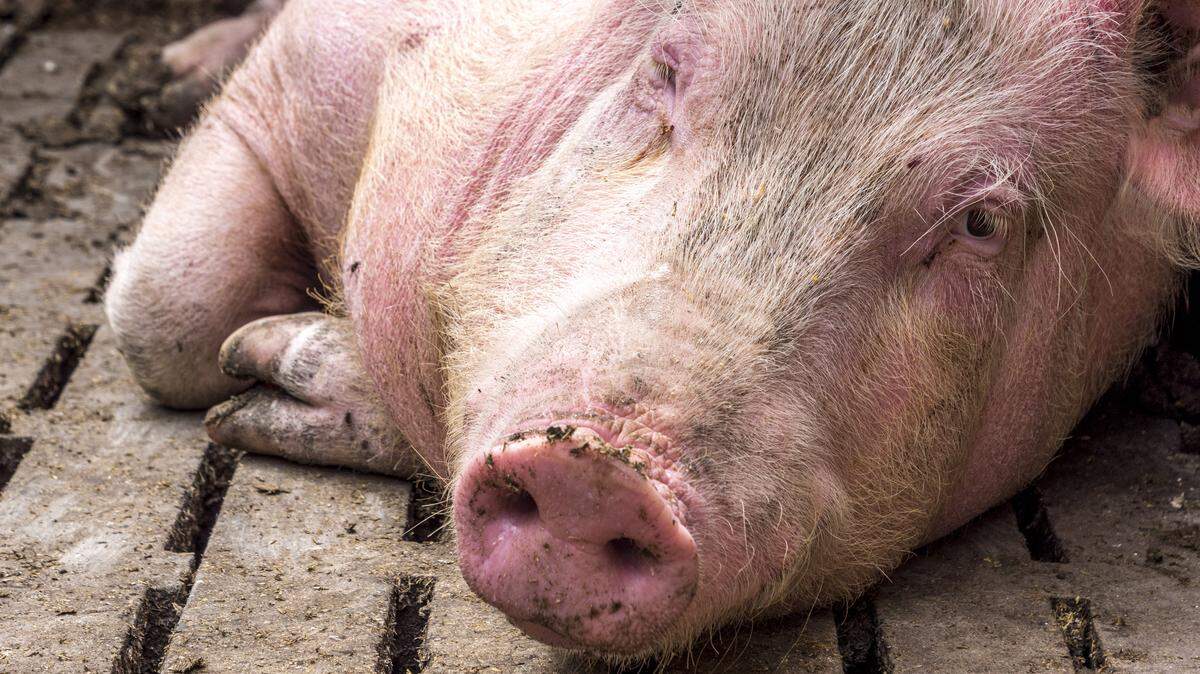
Who should control California’s food supply? Us? Or the federal government?
California’s voter-approved Proposition 12, which set minimum housing standards for products from hogs, egg-laying chickens and veal sold within California even if they were raised out of state, is in jeopardy of being overturned as part of a new Farm Bill debate.
Passed in 2018 with over 60% approval, Prop. 12 requires that breeding pigs (sows), egg-laying hens and veal have — at a minimum — enough space to lie down, stand up, turn around and fully extend their limbs.
When Prop. 12 was proposed, corporate interests that control the U.S. food supply fought its passage and lost. Then, they fought Prop. 12 all the way to the Supreme Court and lost again.
Now, these same corporate interests are rehashing what should be a settled fight. They are trying to sneak language into the Farm Bill — currently under debate in the U.S. Senate — that would revoke Prop. 12 as well as hundreds of state agricultural laws throughout the country.
Ironically called the “Save Our Bacon Act,” this proposal would nullify the will of California voters, undermine states’ rights and threaten the livelihood of small family farms and ranches like mine.
The family farmers I know have already become Prop. 12 certified, are becoming certified or were raising animals this way from the start. According to the U.S. Department of Agriculture, more than a quarter of U.S. hog farms are Prop. 12 certified, or in the process of becoming so.
This fight is about market control. Big Pork lobbying groups have spent money fighting Prop. 12 when they could be simply supporting farmers to transition to the proposition’s standards instead.
As a hog rancher in Columbia, my family’s ranch was one of the first to become Prop. 12 certified for pork. Our Berkshire pigs are raised using low-stress, pasture-based practices, rotated through open pastures and woodlands — a far cry from Big Pork production, where as many as 24,000 pigs may be confined in a single building.
The result is happy, healthy pigs and pork products our customers want to support. Our business has grown from a small, local operation into supplying restaurants throughout Northern California, and (recently) wholesale distribution throughout the state.
We’re succeeding because consumers want humanely raised meat. A 2025 survey found that a majority of Americans find industrial animal farming practices unacceptable for pig, cows and chickens, especially confinement practices.
Every hog farmer who has taken steps to do what is right should be able to capture the market advantage that Prop. 12 certification gives them. It’s a start for a more diversified, resilient farm system that supports better economics and gives consumers what they want.
I’m proof that agriculture can be profitable and humane. Our state voters should be respected, not rebutted by Congress to appease special interests. Our state and local governments have the right to set their own standards.
As a Californian, a rancher and as a veteran of the U.S. Army that fought to protect these rights, I ask that Congress ignores the special interests behind the Save Our Bacon Act, let Prop. 12 stand and respect Californian’s right to make our own decisions.
Samuel Santry is a California hog rancher, U.S. Army combat veteran and co-founder of Sweet Water Farm & Ranch Co. His family’s regenerative ranch is located the Sierra foothills near Yosemite National Park.