
ABC’s Trump settlement doesn’t threaten media, as long as reporters learn this lesson | Opinion
For decades, especially during the heat of campaign seasons, I’ve been asked why politicians don’t sue the media or each other for aggressive on-air attacks. The questions usually revolve around assertions of slander or false advertising, both of which are pursuable in civil court.
No legal degree is necessary to divine why such lawsuits are rare. The courts can move at a glacial pace, offering little to no help with an election on the line, and the bar is set exceptionally high, as it should be, for winning such cases. News networks and political opponents can sling heavy loads of mud, often venturing into provable mischaracterizations, with such content resting protected in the vague and broad realm of “opinion.”
An example I’ve often shared to define the line has come from attorneys I’ve spoken with on the matter. The general logic is that political rivals can say their opponents’ votes, or even their character, are detestable in a variety of sweeping, nonspecific ways. Media critics can take aim at politicians with similar unfocused gusto. “You can say Joe Smith is a terrible person,” one lawyer told me, “but you can’t say he’s a rapist.”
ABC News has now discovered the truth of that quote, to the tune of $15 million.
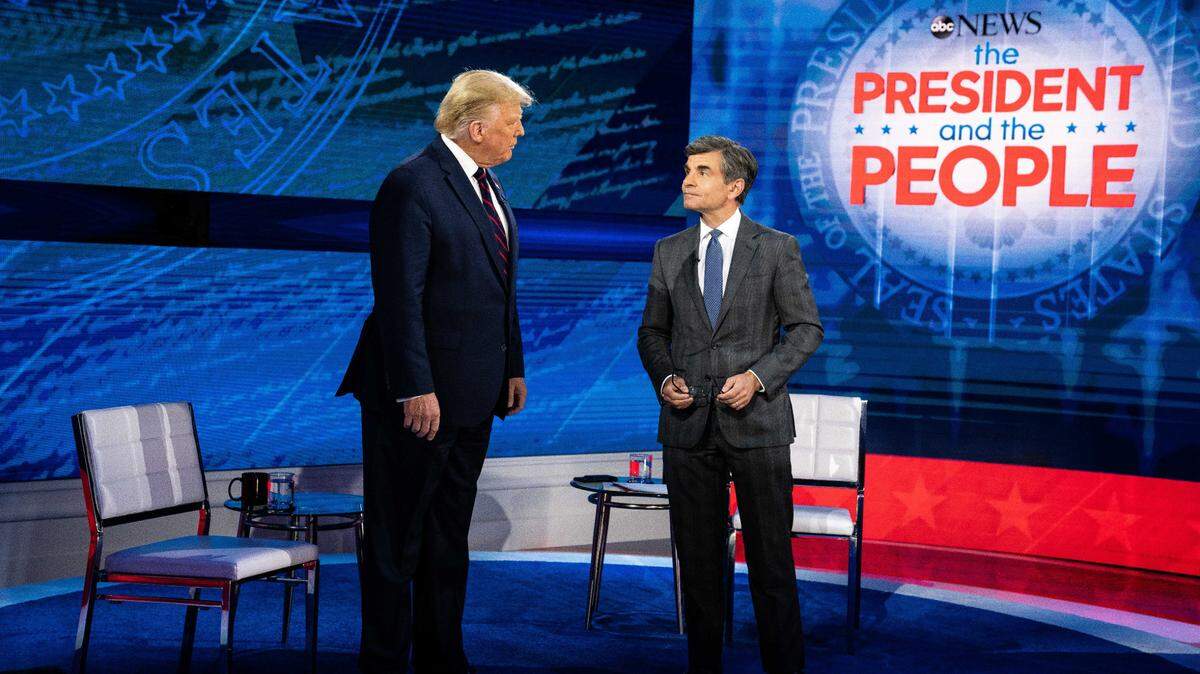
The network and its foremost political host, George Stephanopoulos, did not settle with President-elect Donald Trump because of malicious, mean attacks. Such words have been a stock in trade for many media outlets for the decade that Trump has occupied our political lives. ABC settled because its leadership knew Stephanopoulos had crossed a line that could result in an even steeper jury award and, more urgently, because Stephanopoulos was about to be drawn into the deposition phase of Trump’s defamation lawsuit.
The former president sued nine days after Stephanopoulos interviewed South Carolina Rep. Nancy Mace, pursuing a line of questioning many interviewers have followed when addressing Trump supporters. The familiar tone is: “How can you support someone who has … ,” followed by a list of perceived Trump misdeeds.
Such questions are fair game if the listed offenses are not actionably slanderous. But repeatedly throughout the interview, Stephanopoulos hammered that Trump had been found “liable for rape” in the case brought by writer E. Jean Carroll. In wondering how Mace, a rape victim herself, could support such a monster, Stephanopoulos railed that “judges and two separate juries have found him liable for rape.”
That is false. While it was hardly a win for Trump when a jury found that he sexually abused and defamed Carroll, the jury specified that the legal definition of rape was not met.
No media company or its stars want to find themselves on the losing end of a suit brought by Trump, but ABC may have been even more concerned about the depositions and other evidence that could arise from the discovery phase if the case had moved toward trial.
Whistleblowers, undercover interviews and other legal proceedings have uncovered various examples of media hostility toward conservative targets. One can only imagine what treasure troves of venom might have been found among texts and emails at ABC, which had done more than its share of partisan campaigning this year, including its discredited September debate between Trump and Kamala Harris, featuring blatant favoritism in fact-checking.
Whether ABC feared the black eye of a courtroom loss or the embarrassing revelation of vicious anti-Trump internal communications, some in the company are not pleased with the settlement. An unnamed ABC news reporter called it “frightening” and “a surrender” in quotes to Rolling Stone, adding: “My fear is this sets a tone for the next four years and that tone is: Do not upset the president.”
That reporter, and any others similarly alarmed, can relax. The lesson from this entire chapter is not to avoid upsetting anyone. The lesson is the one that should be taught on day one of a journalist’s career: Don’t lie.
This story was originally published December 19, 2024 at 3:24 AM with the headline "ABC’s Trump settlement doesn’t threaten media, as long as reporters learn this lesson | Opinion."