
Dream delayed, not denied: A Folsom rower finally gets her shot at the Olympics
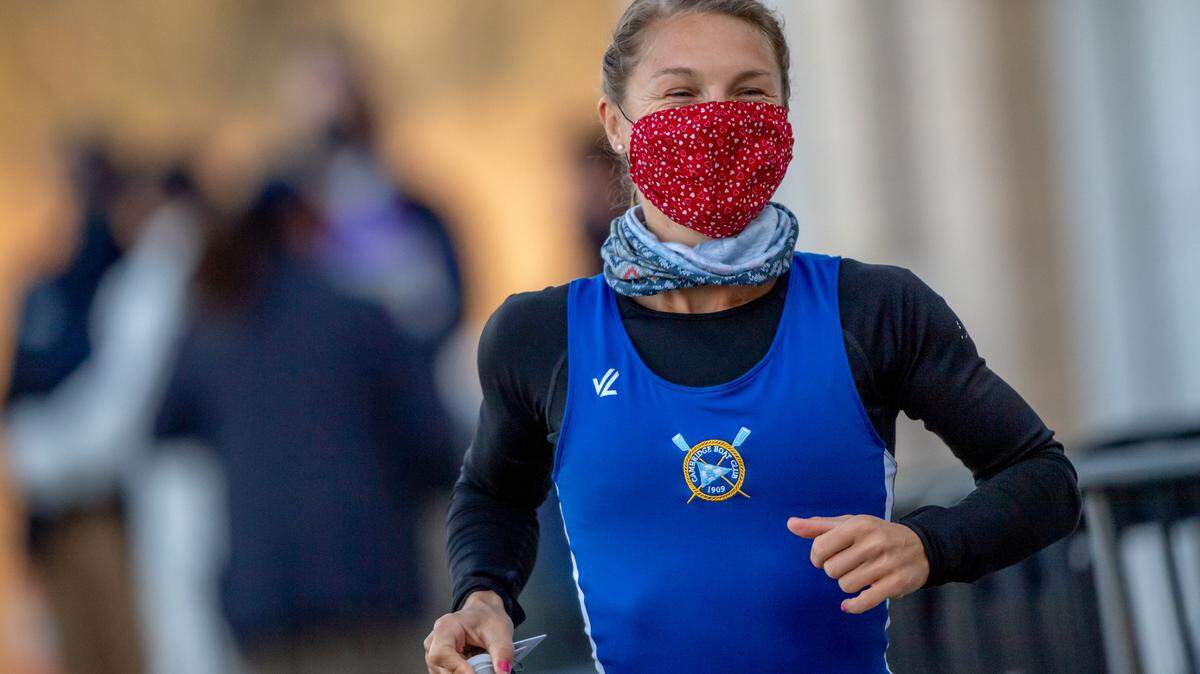
Michelle Sechser is short. Ordinarily, that doesn’t really matter. But when you’re chasing Olympic dreams, and almost every other world-class rower is 4 or 5 inches taller, it can be viewed as a disadvantage.
Fortunately, Sechser is also a born fighter. The 34-year-old spent years building up strength and stamina on Folsom’s Lake Natoma. There were injuries, an Olympic delay, but finally, after 20 years of training, Sechser is set to take her first trip to the Olympics in Tokyo this summer.
It’s a dream delayed, not denied.
Sechser was born in San Luis Obispo on Nov. 1, 1986, to Tom and Mary Sechser. She was the youngest of two girls, sister Jacquie older by two-and-a-half years. The family moved to Folsom when Sechser was 3.
“When I was two months pregnant with Michelle,” Mary Sechser said, “my doctor told me I was having a miscarriage. I asked my priest to give her a blessing. I tell Michelle, even now, that she’s a warrior because she survived when people thought she wasn’t going to survive. It’s always something that’s stuck with me whenever I think of her.”
The youngest Sechser didn’t just survive — she flourished in Folsom. She was always active, playing outdoors whenever she could. It was a family trait: her parents had grown up athletes themselves. In the summer, Sechser and the neighbor kids would play water games. She would run with her family to Lake Natoma and water ski. In the winters, she’d laugh in the Sierra snow.
But Sechser never viewed herself as a true athlete. She enrolled in ballet, orchestra and acting classes. Nothing got her adrenaline moving like performing for audiences. Her runner’s high came from being on stage.
Sechser pivoted when she met Sacramento State Aquatic Center’s Capital Crew.
Her older sister joined first. It was a sport the family had never known; when their mother first heard the word “crew,” she assumed it was a volunteer road service.
But the family soon dove headfirst into the sport as both daughters began to collect accolades and awards.
“I think the biggest thing for me is that (rowing) gave my girls confidence and self-esteem,” Mary Sechser said. “It developed them. It gave them opportunity.”
A miss, and growth
After four years on Capital Crew, Sechser entered college at the University of Tulsa. Coach Kevin Harris recruited Sechser after seeing her performance at Youth Nationals in 2003. The University of Tulsa awarded her a full rowing scholarship.
Sechser described Harris’ crew program as “hardworking and gritty as hell.” From 2004 to 2008, its rowing team was small — about 25 people. Sechser and her teammates competed in conferences against teams of 60 or more.
“I definitely came away from a small program with a better understanding of the importance of accountability and responsibility,” Sechser said. “I make sure that I’m pulling my weight and contributing every day all the time. There is no cavalry coming to save you. There’s no other person in the boat who can pick up your slack. There’s no room to spare — you’ll lose speed.”
By her senior year, Harris saw Sechser’s Olympic potential. He urged her to apply for the U-23 lightweight national team. After more prompting, Sechser applied and received an invitation — then she refused it.
For the first time in her life, Sechser feared failure. She was afraid to try, afraid that she wasn’t good enough.
“Making the U.S. National Team was only something really, really good people did,” Sechser said.
She didn’t consider herself among that group.
Sechser stayed in the University of Tulsa’s rowing program throughout graduate school. She received her MBA degree and worked as an assistant coach for the university’s undergraduate rowing team.
Still, a part of her wasn’t satisfied. Sechser knew she wanted to be in those boats, speeding through the water. She began training in her spare time. It was a rush she’d sorely missed.
Once she was in top form, Sechser decided to test her skills once again. She attended the CRASH-B Indoor Rowing Championships, medaling in the lightweight division twice. After she finished, US Rowing National Team coach Cameron Kiosoglous asked her to try out for his national team. This time, Sechser accepted.
After finishing grad school, Sechser spent the summer learning how to scull or to row with two oars. Sculling upped her skill and versatility. She joined the national team in 2011.
The feeling was like nothing she’d ever experienced before, she said.
Sechser began to travel the world, improving at a rapid pace. She competed in world championships in South Korea and Bulgaria.
It was the season of a lifetime; Sechser forced herself to confront her lingering weaknesses, improving her technique and stamina. She needed to be at the top of her game for her next goal: The U.S. lightweight pair, the only Olympic division for lightweight women.
Through trial and error, Sechser finally reached the division in 2014 alongside Devery Kars. The duo won a pair of world titles. Everything was going great as the 2016 Olympics approached.
Then disaster struck — Sechser injured herself in 2016, right before the Olympic season. Kars made it through the Olympic Trials. Sechser did not.
The momentum stopped. Kars went to Rio and retired after the games; Sechser stayed home.
“It was just me alone on the lake in my single. It was happiness and heartache. It was the most devastating time of my life,” she said.
Regrouping for the Olympics
Sechser wasn’t sure that she had another Olympic season in her. She’d been rowing for 15 years. Could she keep training for 2020? Or, as it turned out, 2021?
She headed home to Folsom to recoup. After spending time with her family, blazing through the outdoors like she did when she was young, Sechser came to a conclusion: “I didn’t come this far to only come this far.”
Sechser trained with a renewed vigor. In November of 2016, she was already back winning races. Paired with Emily Schmieg in 2017, Sechser won bronze at the world championships. The 2018 world championship trials were imminent. Sechser got injured again; Schmieg left the pairing to join Mary Jones-Nabel.
Left on her own, Sechser competed in the world championships as a single in 2018.
In April 2019, she partnered up with Christine Cavallo. The pair went up against Schmieg and Jones-Nabel in the U.S. trials before the world championships. Sechser and Cavallo won.
Their Olympic future looked bright. Then came another injury.
It was Cavallo this time. Shortly after the world championships, Cavallo broke her rib; her rowing suffered.
To decide the best team for the 2020 Olympic Trials, Sechser and Cavallo participated in a mandatory seat race. Newcomer Molly Reckford beat Cavallo out of the boat and became Sechser’s new partner.
Reckford and Sechser had only three weeks before the Olympic Trials to become a functioning team.
“I was excited for the process and nervous because Michelle is such a great rower,” Reckford said.
Reckford was talented but self-taught. She needed practice sculling, and matching Sechser’s unique rowing style took substantial effort.
“I’m about 5 inches taller than Michelle,” Reckford said. “When I’m rowing by myself, I can really leverage my length. I take these very, very long strokes. When we’re in the double, my job is to match Michelle as best I can. I had to learn a lot. The way we naturally apply power is different because we’re built differently.”
The pair spent all their time training in Sarasota, Florida. Each day they woke up at 5 a.m. to practice. They ran and biked and spent their most vital time on the water. Sechser and Reckford had to condense a year’s worth of rowing into three weeks.
Many people forget that life doesn’t stop for these athletes. No one pays them to train or funds their flights domestically and abroad. Reckford left a high-paying finance position in California to move to Florida and focus on Tokyo. Sechser had closed the lease on her apartment. Both women had left most of their belongings in storage. They sustained themselves on their savings, Tokyo on the horizon.
Delayed by coronavirus
Neither was prepared for the COVID-19 pandemic.
Florida shut down. The world shut down. The Olympics shut down, postponed until this summer.
Sechser and Reckford were devastated.
“We arranged our lives to Tokyo,” Sechser said. “I planned to retire in August. When it all got canceled, we were just in Florida thinking, ‘We don’t have a Plan B.’ We had no idea what was happening.”
Sechser and Reckford were stranded with no jobs, no addresses, and no belongings. They were living out of duffel bags and eating into their bank accounts.
Neither knew whether the Olympics would come back. They promised each other that they would train hard no matter what.
“Initially, trials were postponed for 30 days,” Reckford said. “We thought that it’d only be 30 days and that we needed to stay in top condition. At that point, we had both put so much into this that keeping the routine going was the only way to stay sane. It was very easy to slip into languishing or stay in bed watching Netflix because the outside world was so scary. We had to trust and rely on each other.”
Eventually, the two began to view the postponement as a blessing in disguise; there were 12 months to become a better partnership and train for Tokyo.
In February of this year, Sechser and Reckford won a trial, one step closer to the Olympics. Announcers called it “unprecedented”; Reckford almost lost her oar in the water.
They plunged on. The women flew to Lucerne, Switzerland, in May for the final trials. Sechser and Reckford needed to be among the top 18 countries to qualify for the Olympics.
Sechser and Reckford avoided the “O-word” throughout the event, trying to settle their anxieties, Sechser said.
“There was so much on the line,” Sechser revealed. “As soon as I started to think about the Olympics, I got choked up, so emotional that I didn’t have the clarity to focus on my race and row. We agreed that at 500 meters of the final sprint, we’d allow ourselves to really, really wrap our heads around one idea: ‘If we win this race, we’re going to Tokyo.’”
Turns out, nerves weren’t a problem. Sechser and Reckford won the last Olympic qualification regatta in May.
Sechser and Reckford are training in Sarasota. Sechser still believes she has room to improve.
“I didn’t come this far to only come this far.”
This story was originally published June 14, 2021 at 5:00 AM.