Biles, Osaka and Sherman are public faces of athletes’ long struggle with mental health
Things were different in the NFL in the early 1990s.
Hazing was often common, accepted and believed by some to toughen up players as a rite of passage – no matter how ridiculous.
“If a rookie didn’t get donuts (for his teammates) on Monday,” 49ers offensive line coach Chris Foerster said, “he was going to get taped to the goal post with no clothes on after practice that day. If anybody cuts him off, you’re next to get taped.”
Foerster, who’s been coaching in the NFL since 1992 and went through a very public personal crisis with the Miami Dolphins in 2017, acknowledged those days of hazing are long gone. Foerster was shown on video snorting a white powder; he resigned from the Dolphins shortly thereafter with an apology and a pledge to get help. Hazing, of course, has proven to have traumatic effects that can linger for a lifetime. It’s been widely phased out of the league and has become less socially accepted in recent years.
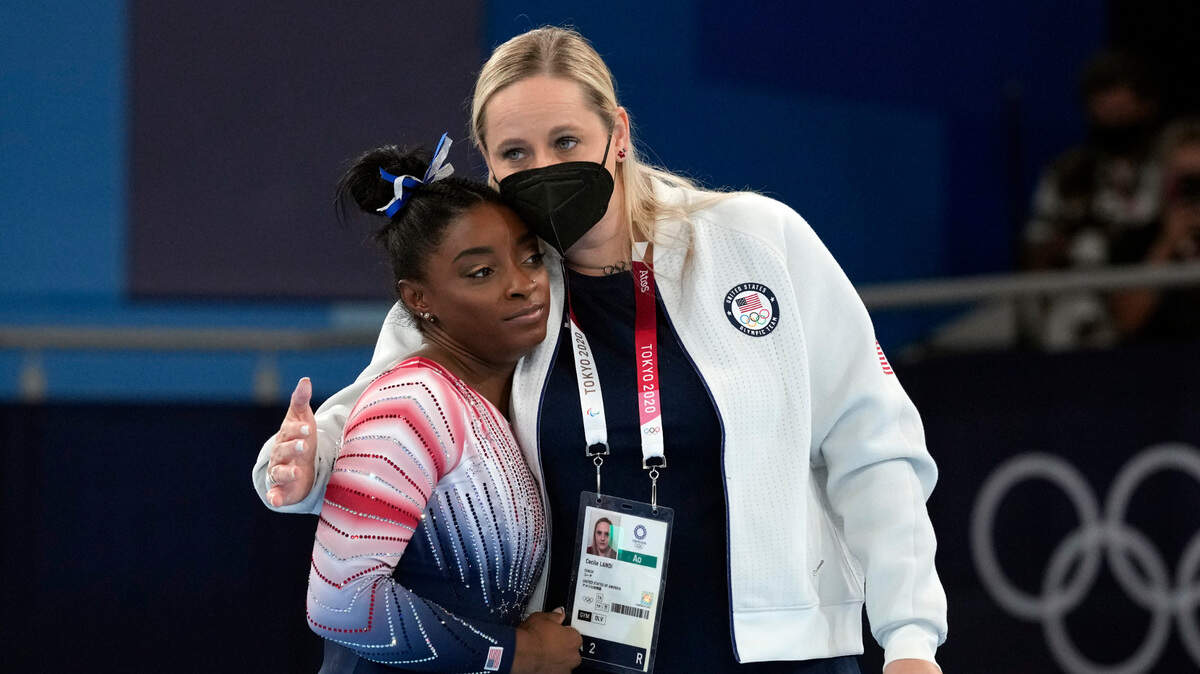
It’s one of many examples pointing to a wide-ranging emphasis on mental health throughout society, and more acutely in sports. There have been a number of high-profile examples in recent months. In the recent Tokyo Olympics, American superstar gymnast Simone Biles pulled out from the team competition, floor exercise, all-around, vault and uneven bars, citing her mental health after the unexpected death of her aunt.
Her decision sparked a worldwide discussion about mental health. It was a discussion which may have gotten swept under the rug in the 1990s, when football players were still taping each other to goal posts. Biles received an outpouring of support from other athletes, including former Olympic swimmer Michael Phelps, who said in 2018 he dealt with depression and contemplated suicide following the 2012 Olympics.
Tennis star Naomi Osaka, the first Asian player ranked No. 1 in the world by the Women’s Tennis Association, took herself out of the recent French Open and Wimbledon tournaments to focus on her mental health. She penned an essay for Time magazine titled: “It’s O.K. to not be O.K.” in which she revealed her personal struggles with media coverage and its effect on her mental well-being.
Even former 49ers cornerback Richard Sherman, a likely Hall of Famer and active philanthropist, was arrested in July on allegations of drunkenly crashing his SUV and trying to break into his in-laws’ house in suburban Seattle.
“I have been dealing with some personal challenges over the last several months, but that is not an excuse for how I acted,” Sherman wrote in a statement. “The importance of mental and emotional health is extremely real and I vow to get the help I need.”
Mental health and COVID-19
The COVID-19 pandemic beginning in the spring of 2020 can be linked to the increase of mental health challenges and awareness. According to the CDC, 40% of U.S. adults reported struggling with mental health or substance abuse in the second quarter of last year. Symptoms of anxiety disorder were roughly three times more prevalent than a year earlier, while symptoms of depressive disorder were up approximately fourfold.
For athletes, their mental health issues can be exposed on a national stage. 49ers right tackle Mike McGlinchey admitted to dealing with his own mental health problems during the 2020 season while he struggled to replicate his level of play from the previous two campaigns.
His mistakes on the field — liked a missed block of a pass rusher leading to a key interception against the Philadelphia Eagles on NBC’s nationally televised prime-time game last October — were internalized, causing him to compound his missteps by getting down on himself.
“I didn’t let myself overcome mistakes,” McGlinchey said. “I didn’t let myself overcome the trials and tribulations of what we were going through as a team. I was putting a lot of pressure on myself and it got in the way of me being able to do my job at a high level. And it just kind of kept weighing on me and weighing on me as the season went on.”
It caused McGlinchey to rethink his perspective and approach playing football with a different mindset. He had sessions with a mental conditioning specialist once a week throughout the recent offseason. “I had to get my head right,” McGlinchey said.
The goal for McGlinchey was “helping me find perspective, find focus, find where things go,” he said. “Everybody always tells you the thing that separates you is your mind when you get to this level, but you don’t believe them until things get hard. And then I looked in the mirror and you evaluate that. You look at yourself and you say, ‘You know what? The thing that’s holding me back is I’m not okay with my process, with the way that I’m focusing on my job, with all of that.’”
Part of the mental challenge McGlinchey and other 49ers faced came when the team was forced to move to Arizona for the final five weeks of the regular season, including the Christmas holiday season.
49ers and the mental challenge of recovery
The team’s home, Santa Clara County, prohibited in-person team sports in December because of the spiking number of COVID-19 cases and the threat of not having enough hospital beds for patients. The 49ers lived in a hotel in Glendale, Ariz., and practiced at the Arizona Cardinals’ nearby training facility. They played three home games in the Cardinals’ home venue, State Farm Stadium, and had another game against the Cardinals as the road team.
Players and coaches were forced to meet on Zoom, which meant roughly 100 members of the organization were confined to hotel rooms for the majority of their five-week stay. The circumstances took a toll.
“(On) everybody, not just me,” head coach Kyle Shanahan said. “But the players, coaches, the support staff, the cooks – we have a cook who has never had a bad day in his life. And when the third week I saw him in Arizona, the way he looked, I knew we were in trouble because the way he was down. That’s how everyone felt at the time.”
McGlinchey jokingly called staying at the team hotel “solitary confinement.” But there was a kernel of truth to it.
Full team and position meetings all had to be done remotely over Zoom. Players weren’t allowed to eat together in order to avoid a possible spread of COVID-19. Some players were fortunate to rent houses and host family members for Christmas. But others spent those five weeks mostly alone, save for the people they communicated with over their phones and laptops and during practice on the field.
Mental health issues have always been an issue for athletes, predating the coronavirus pandemic. Former MLB player Jim Eisenrich took two seasons off from baseball in the 1980s while he learned how to cope with his Tourette syndrome and dealing with unforgiving fans in the outfield. He went on to play until he was 39 and hit .290 for his career.
Then there are the physical ailments that lead to emotional ailments.
49ers defensive end Nick Bosa, the 2019 defensive rookie of the year who quickly became one of the team’s brightest stars, tore the ACL in his left knee in Week 2 of his second season in 2020. Bosa is renowned for his work ethic and fine tuning his body. But the injury took away football and, for a time, his physical well-being.
“Mentally, it’s really rough,” Bosa said. “When your body feels terrible, your mind kind of goes to that place.”
After surgery to repair his knee, Bosa lived with his brother, Chargers star defensive end Joey Bosa, in Southern California to recover and begin the rehab process throughout the fall. His mother would also drop in to provide support.
“And as my body started to feel better, my mind followed,” Bosa said. “Then once you’re walking around, working out — I mean, all I really know how to do is work hard. So once you get back the initial pain of it, then there’s really no other option than to come back better.”
While Bosa fought his battle mostly in private, working out in Florida gyms and rehabbing under the watchful eyes of trainers, Simone Biles worked her way out of a deep mental hole on national television. She posted workout clips from her gym in Tokyo as she fought to come back and compete in the Olympics. Eventually, she won that battle, placing third and winning a bronze medal on the balance beam, the final event of the competition.
She had a message for anybody questioning mental health as a valid reason to not compete.
“I say put mental health first because if you don’t, then you’re not going to enjoy your sport and you’re not going to succeed as much as you want to,” Biles said July 27.
Prioritizing mental wellness “shows how strong of a competitor and person that you really are, rather than just battle through it,” she said.
This story was originally published August 15, 2021 at 5:00 AM.