Sacramento’s top breakdancer eyes the Olympics. ‘I’ve always dreamed about it’
Morris Isby needed an outlet.
Like many high school students, the south Sacramento kid wasn’t sure what that meant. That is, until he came across a video playing in a clothing store at a local mall.
The video was on a VHS tape – “Battle of the Year” from 1998, an annual breakdancing competition in Europe that began in 1990. It was one of the top breaking events in the world — and one of the participants was a familiar face to Isby’s sister, Kameelah.
Gerald Casterlow was regarded as one of the world’s top breakdancers, or B-boys. He was from Sacramento and became a pioneer in the breakdancing scene; he quickly became one of Isby’s earliest influences.
“I’m in the mall with my mom and my sister, I get the video, I get inspired by seeing people dance,” Isby said.
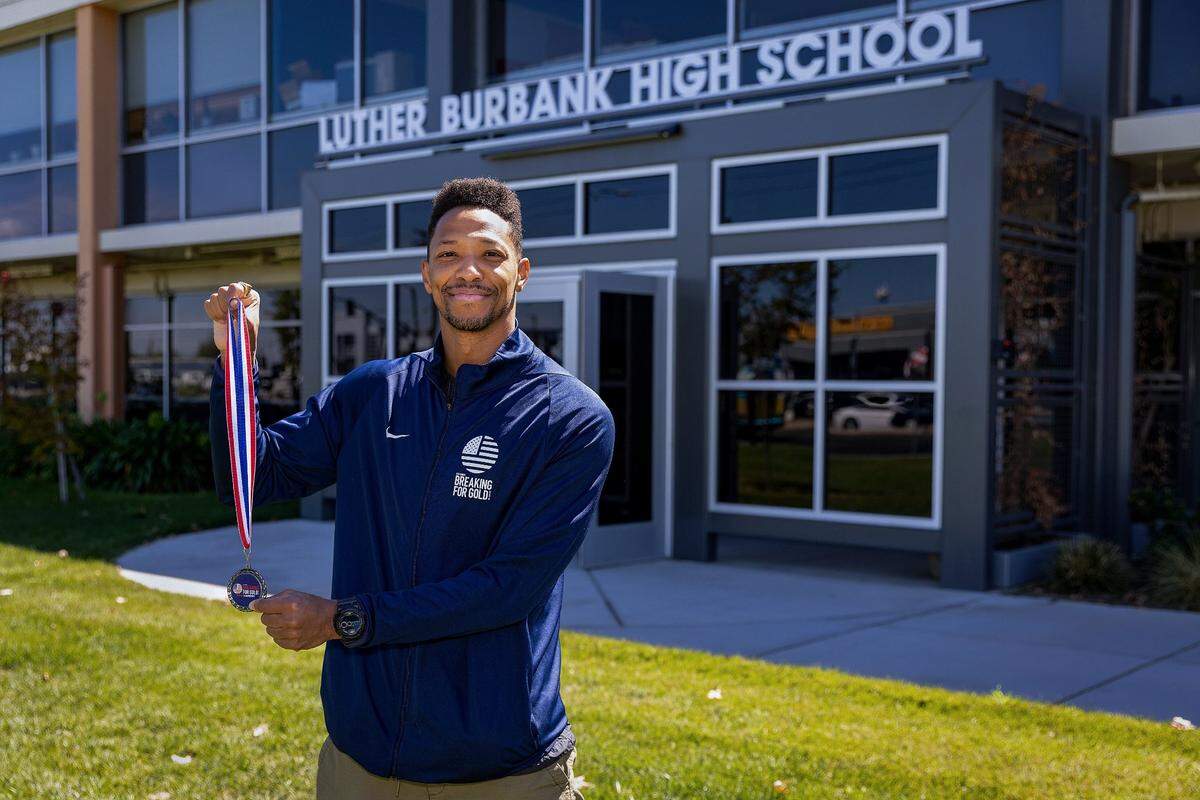
Soon after, Isby let his cockiness get the best of him. His high school, Luther Burbank, held a rally and he challenged three other students performing at the rally to a breaking competition. He was inspired by Casterlow’s performance to have a showdown of his own.
“Then we battled and they saw how bad I was, because I had been practicing for one day,” Isby said. “And one of them told me to quit. The other ones just told me to practice. It’s been history ever since.”
That was the start of Isby’s breakdancing career, which has included numerous wins in international events and captivating moments at local battles. Isby, who now goes by B-Boy Morris, built a name as one of the top U.S. breakdancers in the world, and now he faces a new challenge: nearing the age of 40, he hopes to win an Olympic medal.
Breakdancing is an Olympic event in 2024 at the Paris Summer Games. It’s a chance to validate his sport and his position in the sport. He’s come a long way from that mall VCR.
“I always dreamed about it,” Isby said. “Every generation has kinda told me they want to see it on a platform like this.”
Why breakdancing made the Olympics
The International Olympic Committee has always incorporated new sports into its programs, recently including snowboarding, surfing, sport climbing and skateboarding in an effort to appeal to a broader audience.
Breakdancing will be the only sport to make its debut in 2024.
“We have had a clear priority,” IOC president Thomas Bach said after the committee met in December 2020, “and this is to introduce sports which are particularly popular among the younger generations. And also to take into account the urbanization of sport.”
Breakdancing and more traditional Olympic sports, like gymnastics and ice skating, share some connections. They both combine athleticism and art, with breakdancing turning up the tempo in energy and music. They are both scored by judges.
Only the individual dancers will compete in one-on-one battles in a tournament format, with each winner determined by the panel of judges. Thirty-two dancers will compete in the Olympics, 16 B-Boys and 16 B-Girls.
The qualifying process is complicated. It includes three avenues for breakers all over the world getting a chance to go to Paris: the 2023 World Championships in Belgium next September, the Continental Games spanning throughout next year, and the Olympic Qualifier Series slated to take place from March to June 2024, shortly before the Olympics.
Where B-Boy Morris, the ambassador, stands in the game
Isby is regarded as one of the best and most accomplished breakers in the world. He first realized where he stood on the world stage in 2009, when he started winning events nationally and in other countries.
“I won Freestyle Session for the first time, I ended up winning Rock Steady for the first time. And then I won overseas, I won a jam called UK Champs. These were a trinity, these were the biggest events,” he said.
He went on to compete in Battle of the Year, the event that first got him into breaking with that VHS tape in 1998. He finished second in a new individual event format.
“So for me to have a year like that,” he said, “I’m (now) one of the guys.”
Isby had the drive to become one of the best in the world by what he did in competitions and casual jams in Sacramento.
“When I first met him, he was already outworking everybody in rehearsal,” said Brandon Greathouse, the owner of the former Greathouse of Dance and a key figure in the Sacramento breaking community. “And he was a guy everybody was leaning on when it came. … You know Michael Jordan? With the Chicago Bulls, you know who that last shot is going to. So when it’s time to close the battle, it’s like, man, who do we let do the last round? You already know who it’s going to.”
Isby is now a full-time breakdancer, thanks largely to prize and sponsorship money. He’s endorsed by Red Bull and hopes to make enough money to travel to all the events he needs to qualify for to reach the Olympics over the next year and a half.
His breaking resume also includes going on tour with Sean Kingston, being a regular performer at Sacramento Kings games, an appearance in the “Hip Hop Nutcracker” with Kurtis Blow and many others.
Isby has no guarantee he will be one of the 16 male competitors in the Olympics. As it stands, he has to unseat B-Boy Jeffro or B-Boy Frankie, two American breakers who are ahead of him in the qualification points. Next year’s regional events leading to the Belgium World Championship and Continental Games could give Isby the points he needs to qualify.
But it won’t be easy. Isby is a veteran in a young man’s game. He’s 38, which means he’s nearly twice the age of some of his competitors, and he’ll be 40 when the Olympics come around. That requires strenuous training, body maintenance and dieting to stay fit.
“I’m trying to make sure I’m comfortable where I can represent Sacramento, California, the United States properly,” Isby said. “And represent the 40-year-olds because I will be 40 when I make it to the Olympics. So I want to make sure they know we can still do it, we can still make a difference. No sleep just training and getting my body right.”
Isby in 2021 became an ambassador for Breaking for Gold USA, the American arm of the World Dance Sport Federation in charge of creating the Olympic competition and qualifying processes.
Which means his influence will be felt even if he isn’t competing in the games. He’s helping create the competitions, choosing judges and their criteria, and using his experience to set an example for dancers in the U.S. and around the world.
“As far as his skill set, he’s phenomenal,” said Tyquan Hodac, communications director at Breaking for Gold. “He’s one of those breakers where he understands the scope of what the Olympic initiative is about. And not a lot of people want to be proactive and learn the ins and outs of the Olympic initiative.
“Morris is one of those guys who takes proactive actions to learn what is this landscape about. So from the judging system to everything, he studied. He takes out his time to study what the system is about. It’s a great thing because competing on this platform, you need to know what the system is about, the ins and outs.”
Inside a breakdancing practice
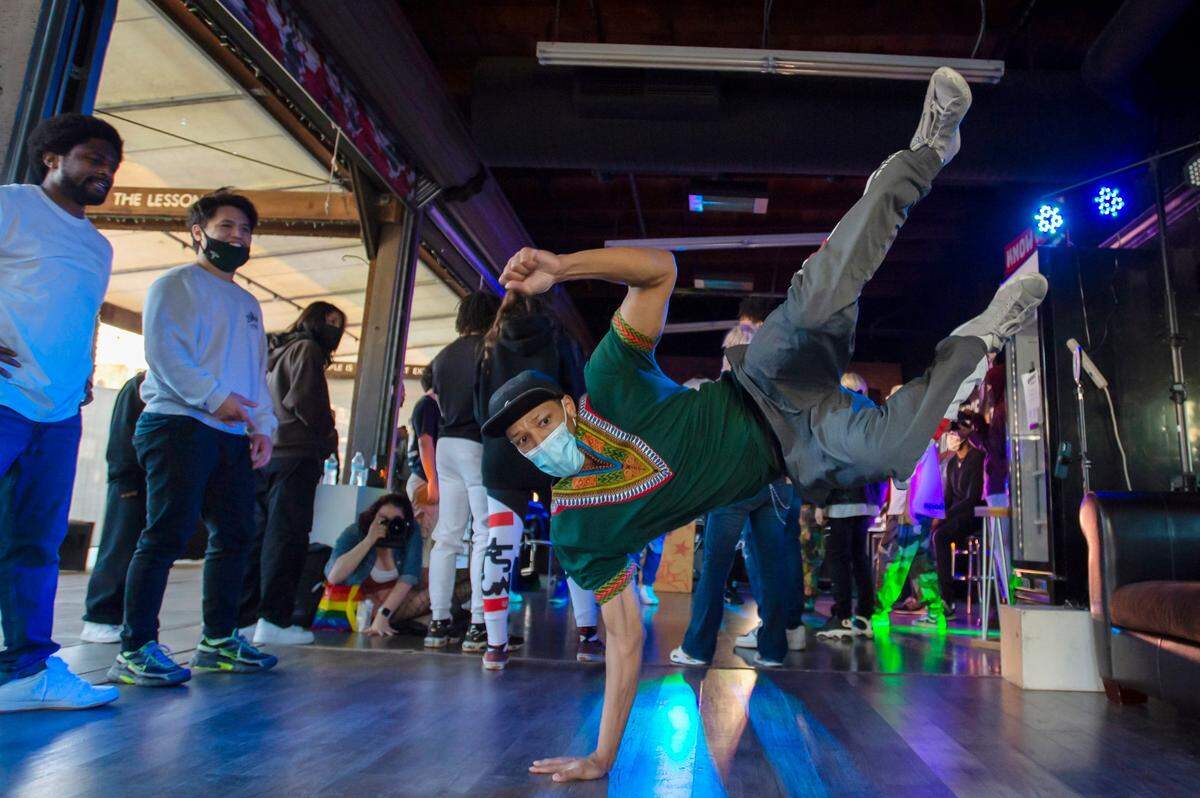
Practicing breaking is like pickup basketball. All it takes is a few friends and a hard surface — only instead of a hoop and ball, you need a boombox and a playlist.
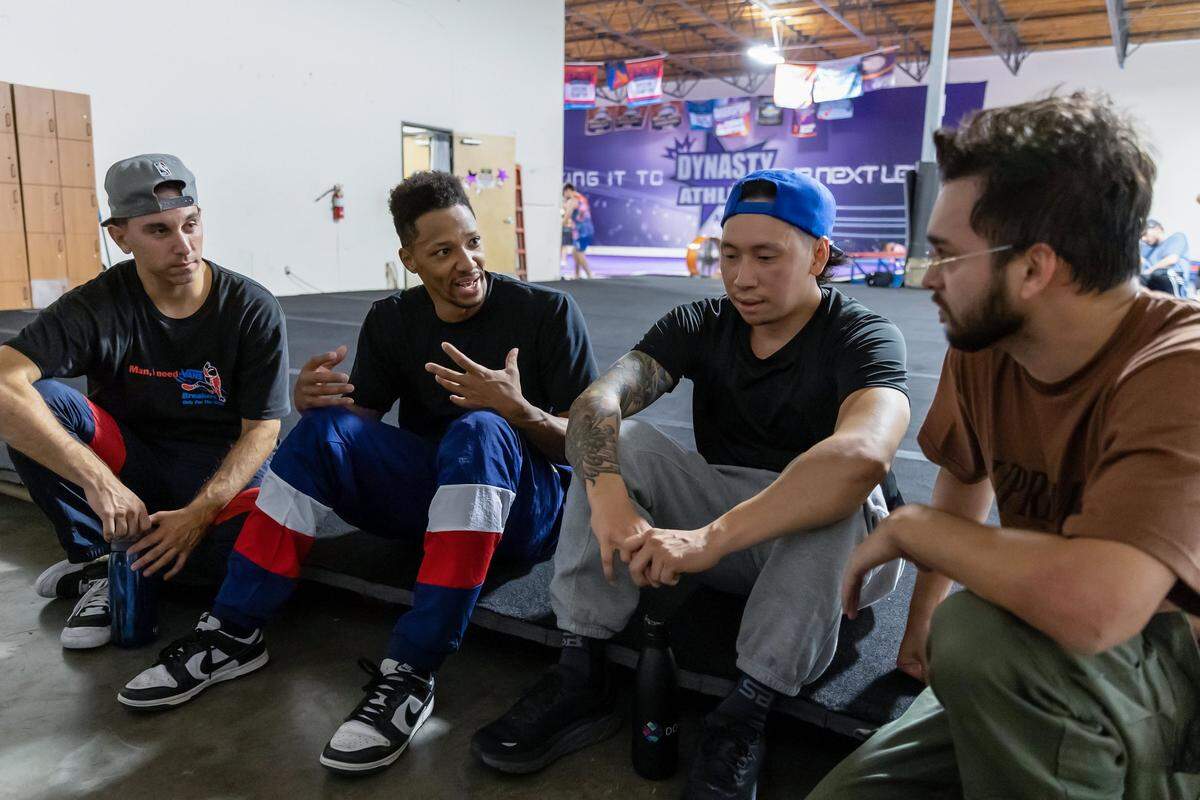
Isby, friends and members of his breaking crews met on a Monday night last month in a south Sacramento dancing center as part of their normal practice routine. The music was upbeat but simple. The breakers tried their moves in roughly 30-second increments, sometimes falling as they tried new twists and variations, sometimes keeping things basic and honing what they were already comfortable with.
Isby stood out. From his ability to contort his body, his balance, ability to self propel his spins and transition from move to move without natural momentum proved his level of difficultly was beyond his peers.
Each set came with different beats, which meant a different mindset and tone for each combination of moves.
“It’s just trying to translate the music the best way I can,” Isby said.
In talking about breaking, he describes it as making moments, whether that be practicing or in a heated competition.
“Over anything, I feel like any dancer, any athlete, if you really look at the ones that are amazing, they create moments when they’re doing their craft,” Isby said. “Whether they’re dunking a basketball, running or when they play football and they score a touchdown, the little dance afterwards. It’s that little bit of personality that makes the difference.”
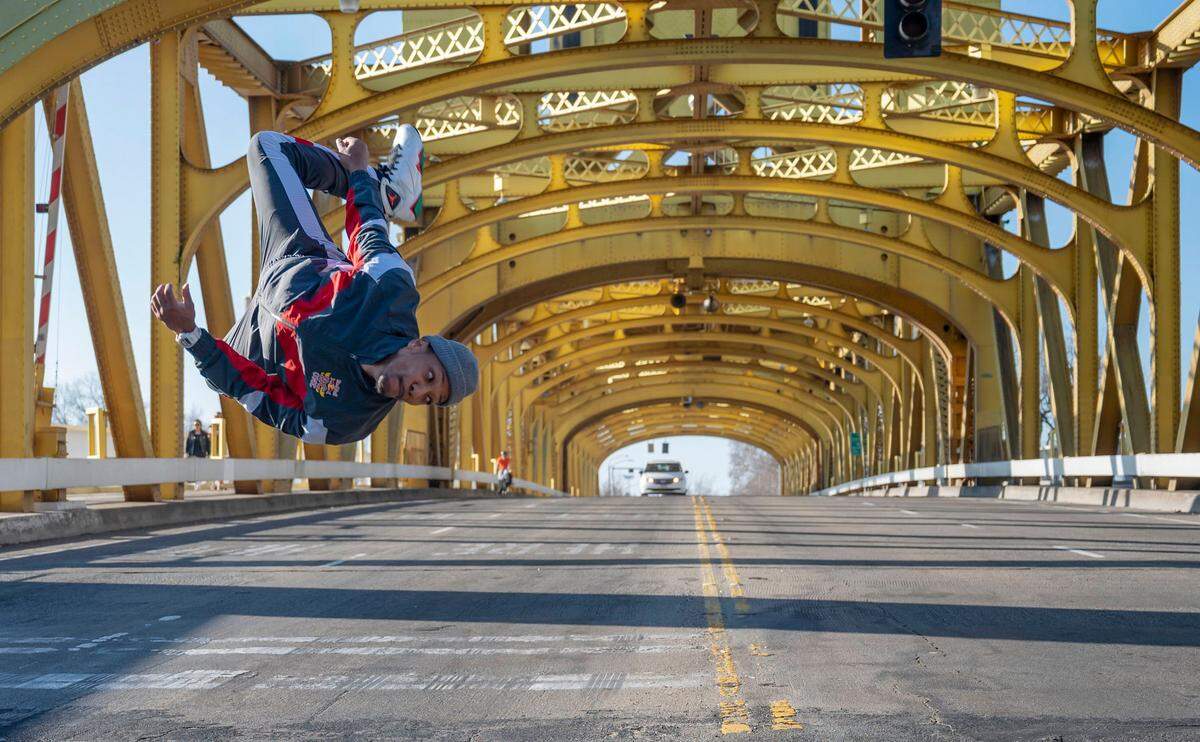
That’s what Isby has been known for in competitions: creating memorable moments. He’s best known for spinning on his elbow at the Red Bull BC One competition in 2011. He also jumped over a competitor during the World B-Boy Classic the same year.
Isby hopes his next big moment can come on the Olympic stage, where he can pay back the sport that’s given him so much.
“It’s a culture, self expression. For me, I use it to be myself,” Isby said. “I can be an aggressive person. I can be my own superhero if I want to be when I’m out on the dance floor, which takes away from you being that type of person in a normal life. So it’s an outlet for me. But it’s a great platform where I get to meet amazing people, have amazing experiences, travel the world. It’s really shaped and molded my life.”
This story was originally published November 4, 2022 at 5:00 AM.