Is your kid’s head safe playing high school football? What Sacramento-area coaches say
Joe Cattolico has a familiar football story about head injuries.
Cattolico, currently the coach of Granite Bay High School, recalled one of his last games at Overfelt High School in San Jose, which he helped to a section championship in 1998.
“I played a game my senior year in high school that I got on the bus and did not remember, nor do I remember any part of that game,” he said. “And I played the whole game and never came out.”
The culture surrounding head injuries often led players to believe succumbing to them was a sign of weakness. You didn’t leave the field or not be available for games. An all-too-common saying among football players — “your best ability is availability” — meant overcoming a hit to the head was simply about mental toughness.
Winning at all costs was the priority.
“The bad part, too, is I never said anything to anybody,” Cattolico said. “I was back practicing on Monday.”
That approach surrounding head injuries has changed dramatically since the turn of the century. Sacramento area coaches are noticing the improvements. A new prep high school season of football is upon us – players hit the field Aug. 23 and 24 – and you can see in equipment or approaches a new appreciation for protecting young players from what could be a debilitating series of blows over the course of their playing careers.
Coaches, parents and officials have a better understanding of the long-term consequences of brain trauma, particularly in youth, and they have taken steps to empower players to tell someone they don’t feel right, rather than being encouraged to overcome and get back on the gridiron.
The CIF Sac-Joaquin Section, the governing body for prep sports in the region, has had a concussion protocol in place for more than a decade, assistant commissioner Will DeBoard said. Anyone suspected of suffering a head injury is required to get checked by a doctor. And if no doctor is on the sideline during a game, that player is not allowed to return.
If a concussion is diagnosed, that player is required to have regular checkups with a doctor who will determine if or when they can play again. Generally it’s a multiple-week process, DeBoard said, which takes longer if a player suffers multiple head injuries.
“Doctors are going to be pretty strict about that,” DeBoard said.
Numerous studies of Chronic Traumatic Encephalopathy, caused by repeated concussions and traumatic brain injuries, suggest the disease is related to blows to the head and is most common among football players and military combatants.
According to the Mayo Clinic, CTE is still not considered to be well-understood. It has been associated with what’s called “second impact syndrome,” when a second head injury happens before the brain is fully recovered from an earlier traumatic event. It’s often deadly and often cannot be diagnosed without an autopsy of the brain.
Local high schools in recent years have dialed-down full contact in practice, unlike previous decades where hitting drills lasted up to three days. From the NFL down to youth, the old idea of driving into an opponent with his helmet was discouraged. It’s made the game safer. And some are practicing with specific equipment to help protect players’ heads while their hearts and minds are in the game.
Trickle down from the NFL
The attitude of awareness started in the NFL in the late 2000s and 2010s, largely with push back from players and the public over heightened rules to emphasize player safety. Penalties for hits to the head that used to be considered controversial are now more accepted. In 2009 blindside blocks and contact to the head or neck area of defenseless players were made illegal.
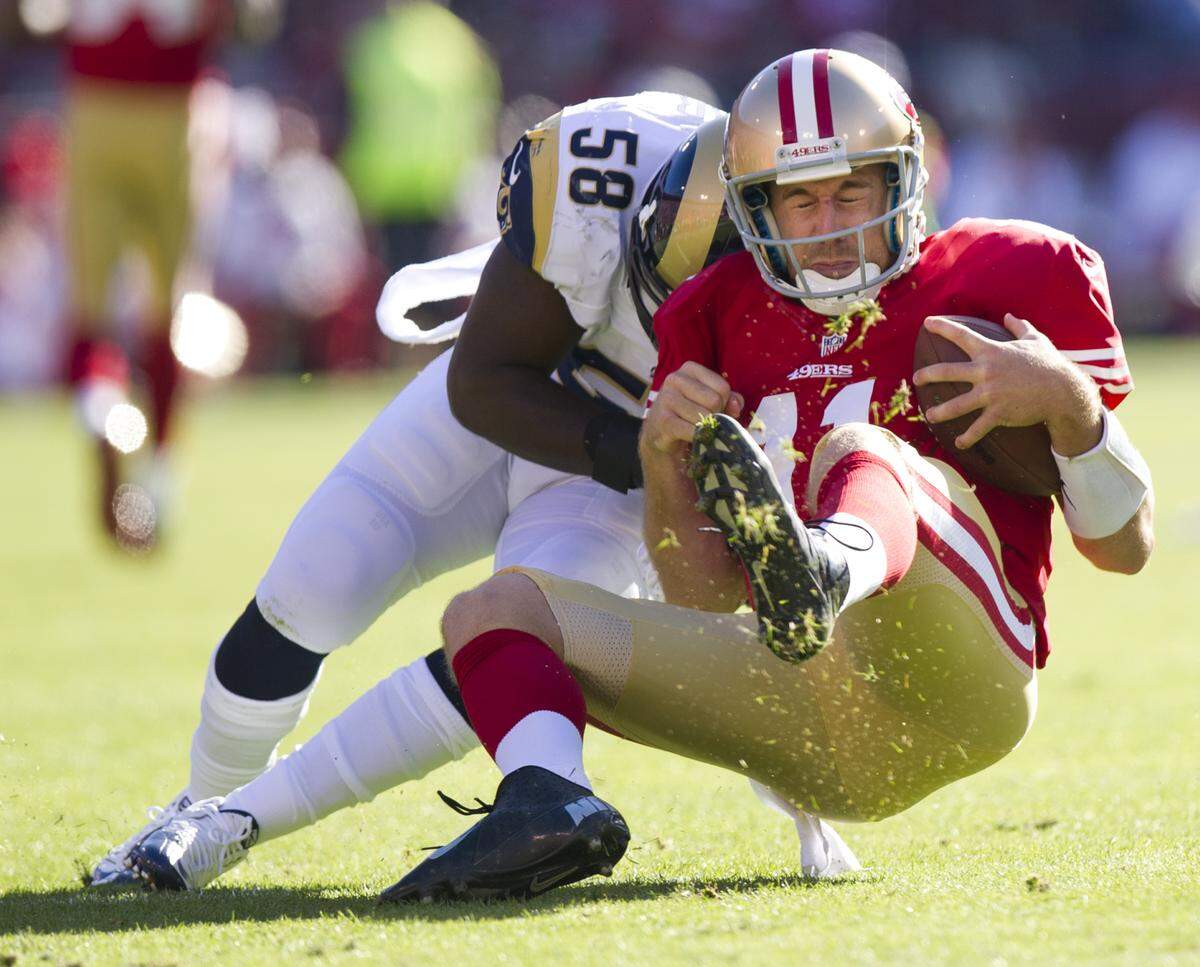
Seemingly each offseason new iterations of rules are aimed at improving player safety. And equipment has evolved with improved technology. The NFL currently uses sensors in mouth guards and tracking data to understand better injuries and attempt to legislate dangerous techniques out of the game.
High school coaches in the Sacramento area have noticed the trickle-down effect to their teams.
“What we’re always talking to the guys about is it’s really critical to communicate, both with their families and with us the way their bodies feel,” Cattolico said.
“Especially when we start talking about internal organs and your spine and your head. Is it OK if I battle through a finger that I bang up? Sure, and that’s kind of a football thing, right? But I shouldn’t be battling through something in here,” Cattolico added while pointing to his head.
New equipment at head of the class
Some schools in the area have been using Guardian Caps at their recent training camp practices as they prepare for the 2024 season.
The padded hoods that are worn over helmets were first mandated at NFL practices for players at certain positions, such as offensive and defensive lines, in 2022 and 2023. Most players at a recent 49ers training camp practice wore the helmets, even receivers and defensive backs, despite teams not having live tackling or collision drills for most of the last decade.
This year, players will be allowed to wear Guardian Caps during games for the first time.
Colts running back Jonathan Taylor became one of the league’s first and most high profile players to try the Guardian Cap during their preseason opening game Aug. 11.
49ers linebacker Dee Winters first started wearing the Guardian Cap during practice as a sophomore at TCU in 2020 and has continued wearing one at practice in Santa Clara.
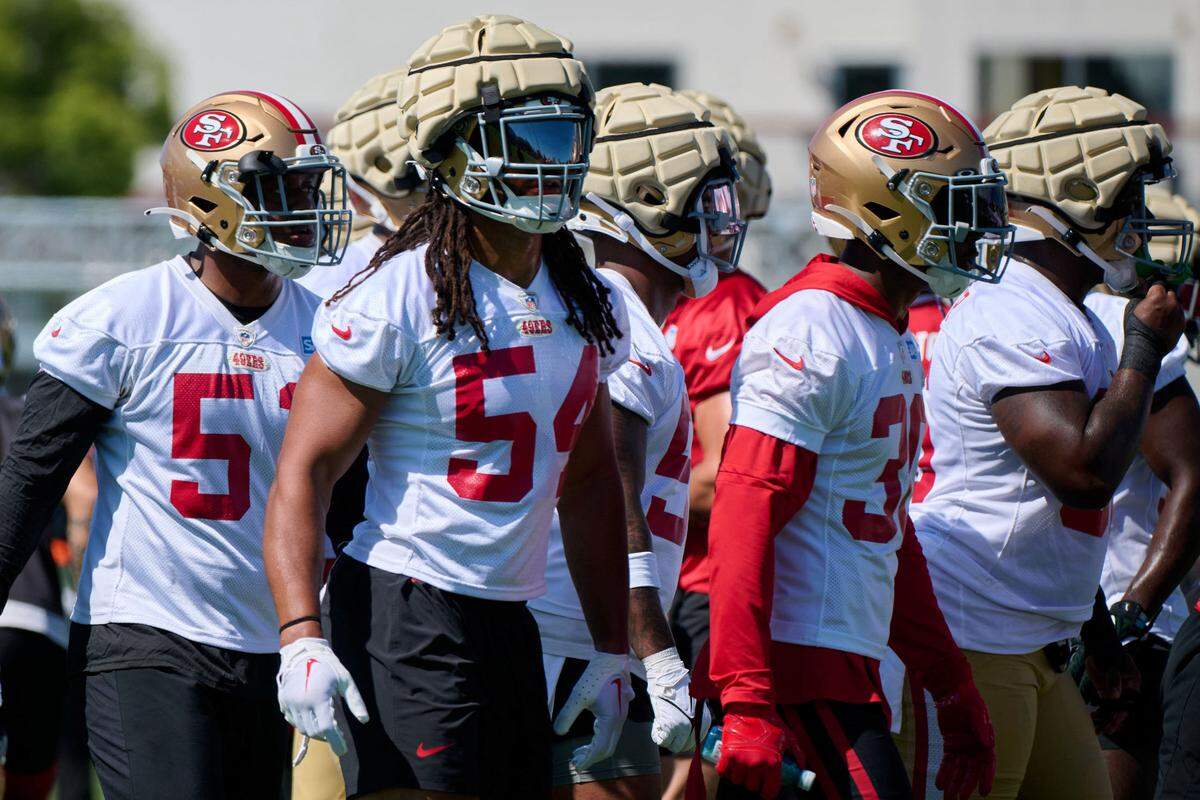
“There’s definitely reasons for it, concussion purposes and things like that,” Winters said. “It’s gotten a whole lot easier for me (to get) kind of used to it now. So I’m definitely happy to have those.”
But only a handful of high schools in the Sacramento region use the Guardian Caps during practice, and it remains to be seen if any will be used in games.
Some high schools choose protective helmets
Many schools must consider the additional cost issues. The caps cost roughly $70 apiece. They pay from $175 for basic versions of football helmets to $900 for helmets that have the most modern safety technology. The Sac-Joaquin Section and state-wide CIF has not mandated their use and might have trouble funding them. There are also questions about supply.
“(We have) 2,500 schools in California,” DeBoard said, “and many of them play football. So if we mandated something like that, we’d have to find those helmets. Our schools would have to find those helmets, and that could get a little dicey.”
Cattolico’s Granite Bay team does not wear Guardian Caps because his practices aren’t physical enough to warrant them, he said. The same is true for powerhouse Folsom High School, which relies heavily on teaching fundamentals to help players avoid taking hits to the head.
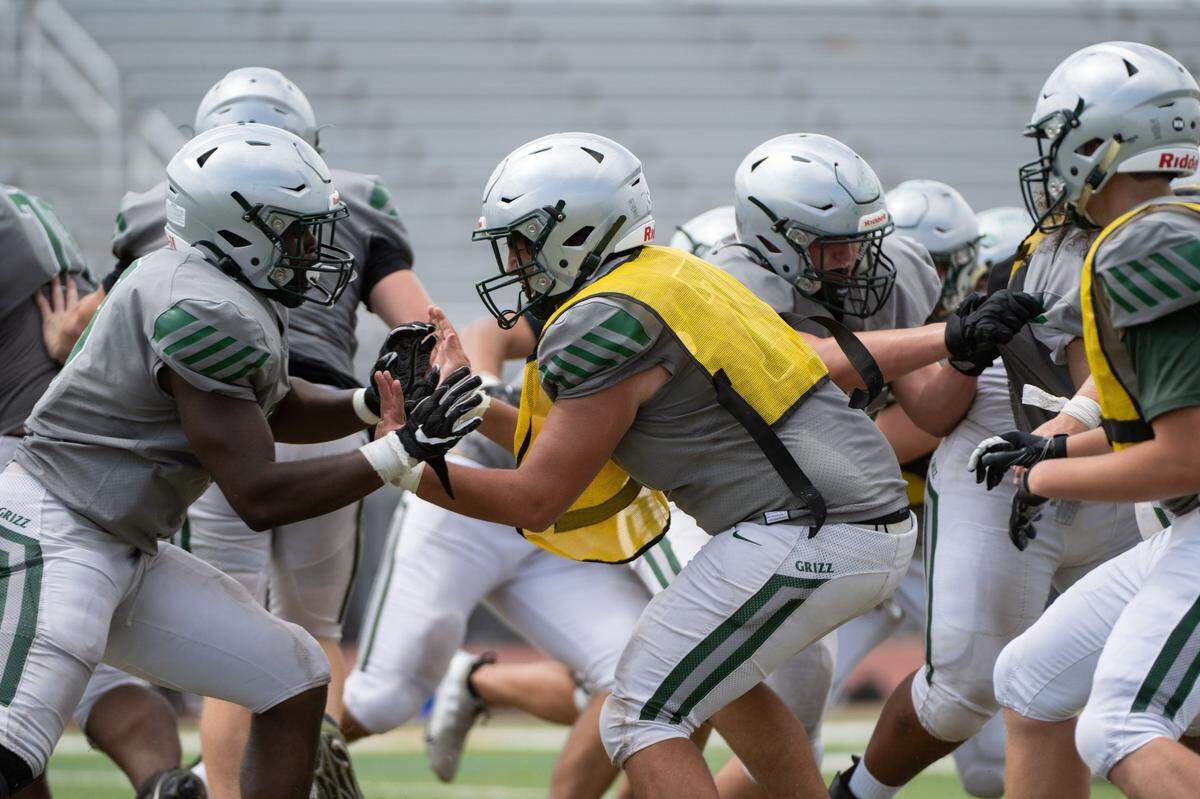
But at small-school Bradshaw Christian, a championship program in south Sacramento, the Pride wear the Guardian Caps.
The roster includes 27 varsity players. The team traditionally runs the ball, which includes a lot of contact in the trenches and for linebackers running into ball carriers.
“All the safety put into football is helpful,” Bradshaw Christian quarterback Ethan Rickert said. “As a small school, we don’t have big roster numbers, so we don’t have the depth and keeping everyone healthy is huge.”
As a team captain and the son of Pride head coach Drew Rickert, Rickert the quarterback said it is the responsibility of everyone to be mindful of potential concussions, be it in a game or a practice. The idea is to steer that player to the sideline to be checked out and not back to the huddle for the next play.
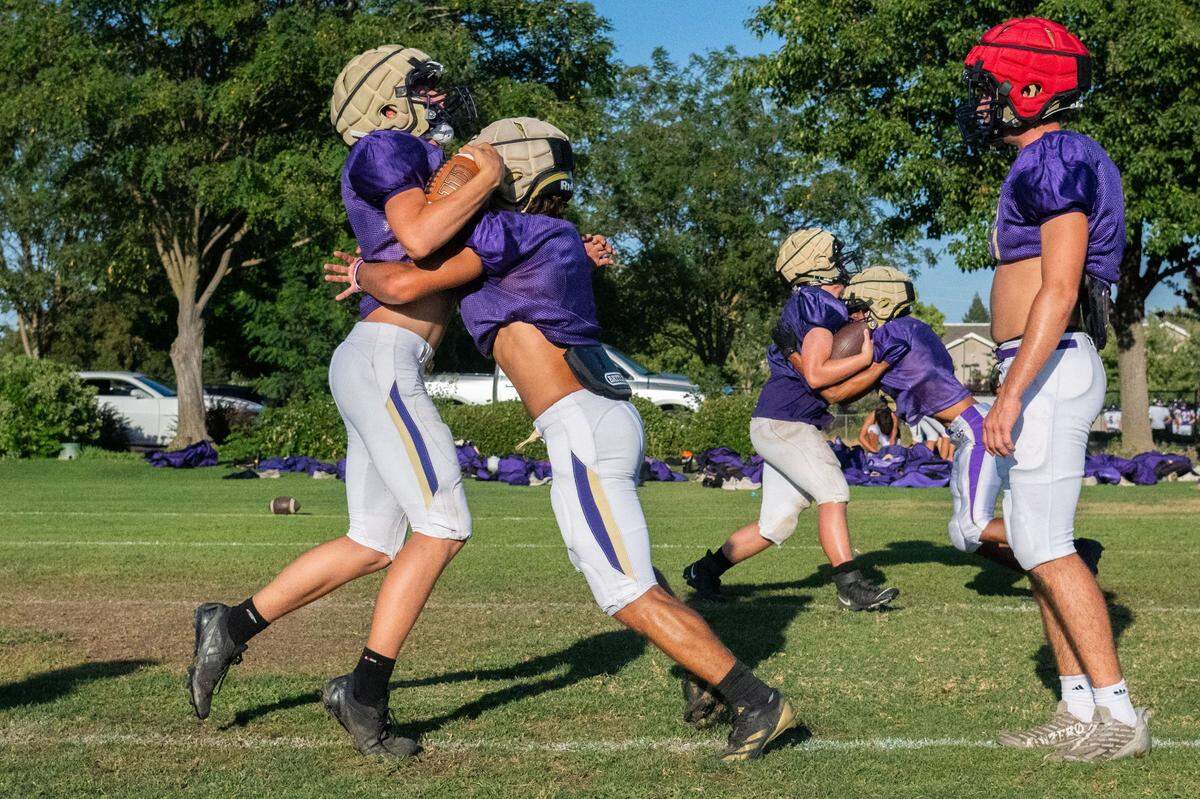
“It’s definitely the wise and mature thing to do,” Rickert said. “Early last year, a teammate was hit blind side and he was wobbly. He wanted to stay in but we made him get checked out by the trainer. He had a concussion. He had to sit three weeks but he was OK.”
Elite college connections
Folsom, one of the top programs in California, won its fifth state championship last season. It has dealt with just one player concussion in the past six seasons, according to head coach Paul Doherty.
“We practice the right way, we tackle the right way, we take the out of the game,” Doherty said. “You talk about player safety and concussions, that’s been going for six or seven years. That’s old news to us. And we changed everything (we do).”
One of Doherty’s previous head coaching jobs was at Sacramento High, where he said his team practiced tackling, colliding nearly every day leading up to the season.
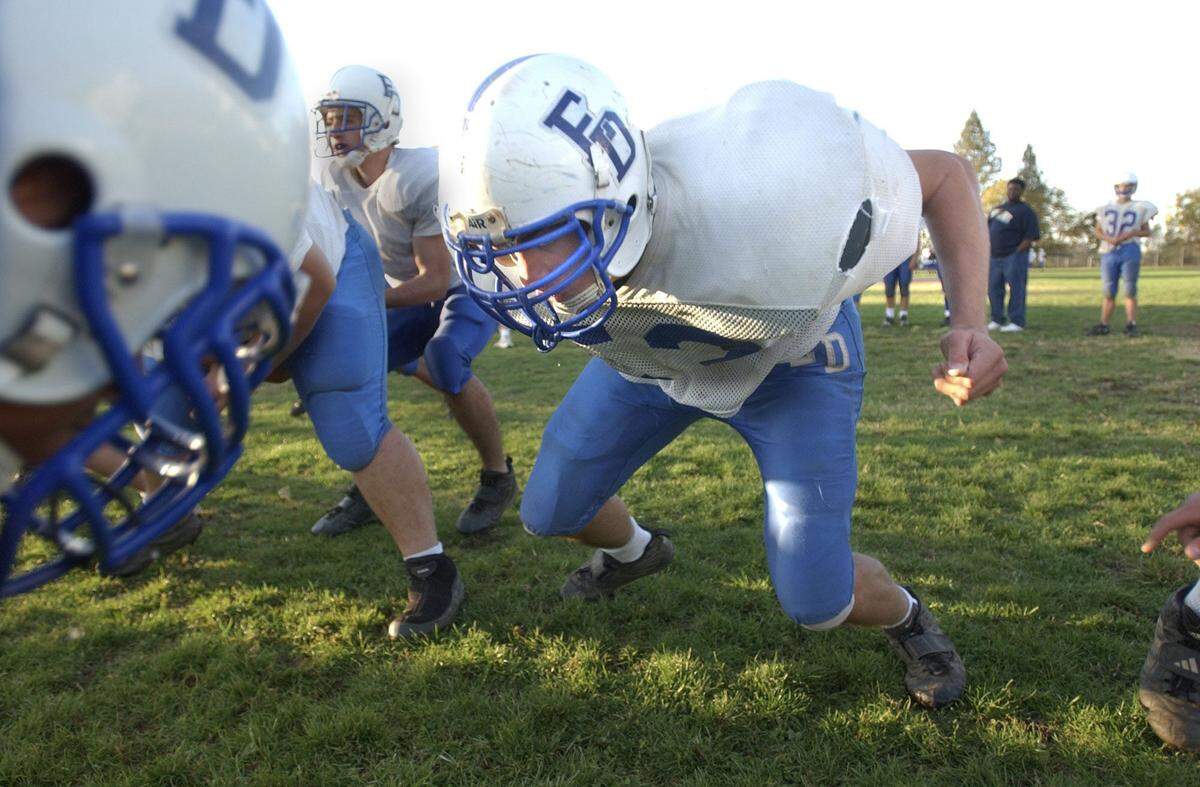
But that changed at Folsom largely because of the nature of the program. Folsom, like many elite programs in the area, has youth feeder programs that teach tackling fundamentals to kids as young as 8 years old. This summer, Folsom had one “live” scrimmage with full tackling and it will be the only instance outside of a game.
“It’s really been a non-issue with us,” Doherty said.
Doherty had a similar story to Cattolico during his time as a high school player. He said during his senior year he took a hit from Travis LaBoy of Marin Catholic who went on to play seven seasons in the NFL as a defensive end after being a second-round draft pick.
“He knocked me out cold, on TV,” Doherty said. “And I ended up playing the next week. I played the worst game of my life the next week. You know, I don’t remember it.”
Doherty said his assistant coaches are instructed to keep an eye out for players suffering head injuries. And they have additional help through the use of film they watch regularly on the sideline.
Doherty admitted he didn’t love the player safety rules when they were first implemented roughly a decade ago. But like many others, he’s learned to appreciate them with time. He said there was an adjustment period to teaching fundamentals despite limited contact at practice.
“But we’re a lot better now,” Doherty said. “My kids are healthy, my kids are fast, my kids are fresh, my kids are smart. I’m coaching a smarter football player with better technique, better drills.”
Because of his program’s success, Doherty has an inherent advantage when it comes to finding drills to help his players with their technique to help avoid injuries. Folsom has players sprinkled through the Division I college football landscape, which has led to Doherty visiting many of the top programs in the country where he sits with coaches and spends hours learning how they teach players to play safely with the right fundamentals.
“We’re fortunate enough because we got relationships with these schools and we’ve got kids at these schools,” Doherty said. “We’ve been to Nebraska, Notre Dame, Arizona State, U-Dub (Washington), USC, Texas, Oregon. In the last five years I’ve been to 109 big time college football programs and you find drills. Coaches are open books ... and these guys are good. This guys are getting paid $500,000, $600,000 a year to come up with a new drill and they’re doing a good job of it.”
But those connections are not afforded to the vast majority of programs in the Sacramento area. Doherty said he’s in contact with a network of coaches in the region who have watched his practices and hopes teaching safe fundamentals reach other teams.
However, not every school has the same talent and resources.
“Maybe if I was at a different school that wasn’t as good, we would be hitting a lot more,” he said. “But my guys have been hitting since they were 8.”
This story was originally published August 22, 2024 at 5:00 AM.