
Got Winter Olympics fever? Fast-growing Roseville curling club offers lessons
Curling is one of the few sports where men and women can compete against each other and not need different yardage or equipment. So the sport that always seems to capture America’s attention every Winter Olympiad is a great place to meet a significant other or bring your romantic partner to throw stones down a sheet of ice, and have a blast while doing it.
The Sacramento region is some 6,000 miles away from Milan or Cortina d’Ampezzo, where Italy is hosting the 2026 Winter Olympics that wrap up this coming weekend. And aside from its proximity to Lake Tahoe, California’s capital isn’t known for being a winter sports hub.
But can one still learn to curl — whether the intent is to win medals someday or just to sneak in a curling date night in February? You bet.
“Curling is the only Winter Olympic sport where you play on the same sheet of ice as the Olympians,” Wine Country Curling Club President Katie Feldman said. “You can’t get on the track and expect to compete against Usain Bolt or get into the pool and beat Michael Phelps. But you have a chance to beat (Olympians) in curling. The ice is a great equalizer.”
The Wine Country Curling Club, based at Roseville’s Skatetown Ice Arena, has more than 140 members and many are couples. The club conducts weekly “learn-to-curl” sessions at Skatetown on Sundays. They usually sell out, said club president Katie Feldman. Leagues are held Tuesday nights and Sunday mornings alongside the newbies.
“The Winter Olympics cycle is our club’s favorite time, and we are so busy bringing our love of curling to the Sacramento area,” Feldman said. “A lot of people get curious once they see it on TV, and we’re here to help them check it off their bucket list.”
Feldman and her husband, Brian, are avid curlers and compete in national events. They met in high school when neither one curled, she said.
But curling keeps them close. Their son, Brian Jr., also curls and joined dad and two others to win a gold medal at the 2024 USA Curling Arena Nationals. The other two members of the team were Chris Hillman of El Dorado Hills and Camren Spangler of Meadow Vista. The Feldmans live in Sacramento’s Florin neighborhoods.
The Arena Nationals are for clubs that curl on hockey ice. There are quite a few curling clubs that curl on dedicated sheets, mostly in the upper Midwest, Feldman said. Katie and teammates Amy Putnam (Rocklin), Melissa McGuire (Roseville) and Rocklin’s Lee Ann Shearing won bronze at the 2024 USA Curling Arena Nationals.
Rules of curling
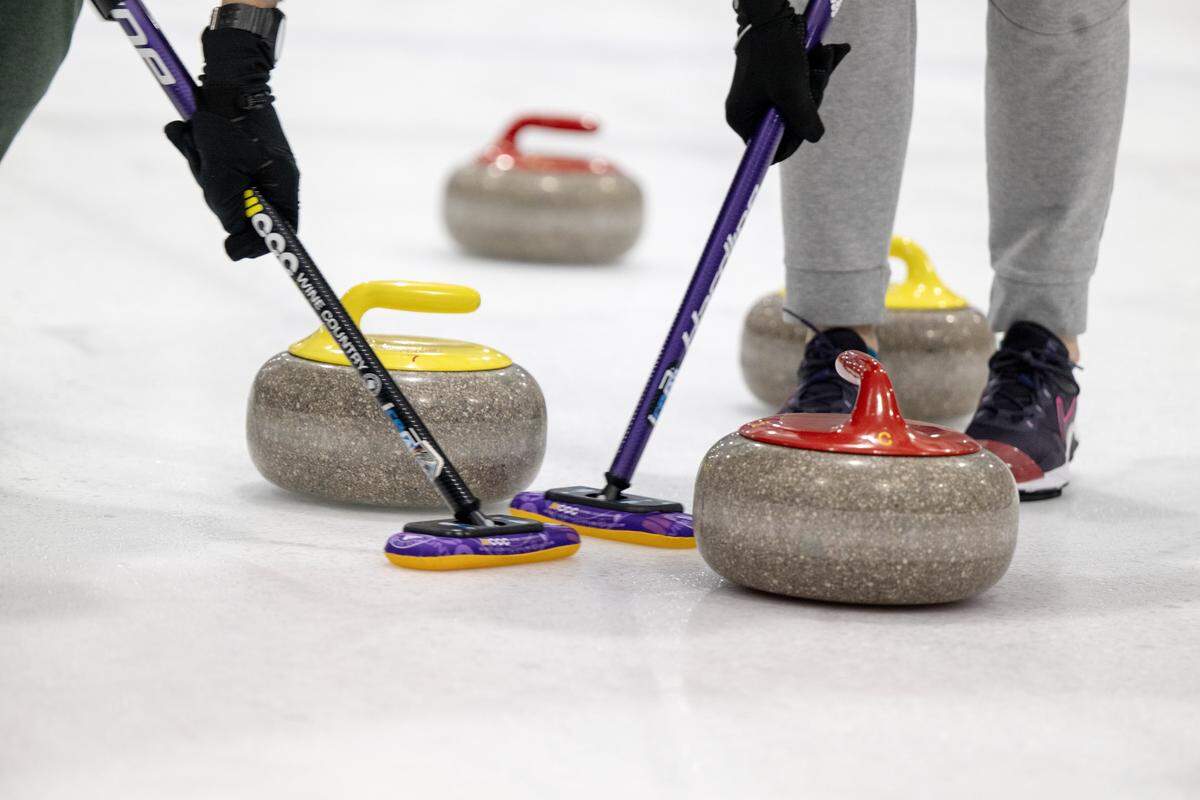
Curling is a team sport played on ice that combines strategy, precision, and communication. Two teams of four players take turns sliding 42-pound granite stones down a 150-foot-long sheet of ice toward a circular target called the house.
The goal is to get as many stones as possible closer to the center, or the button, than the opponent’s stones. After each stone is released, two teammates sweep the ice in front of it with specialized brooms.
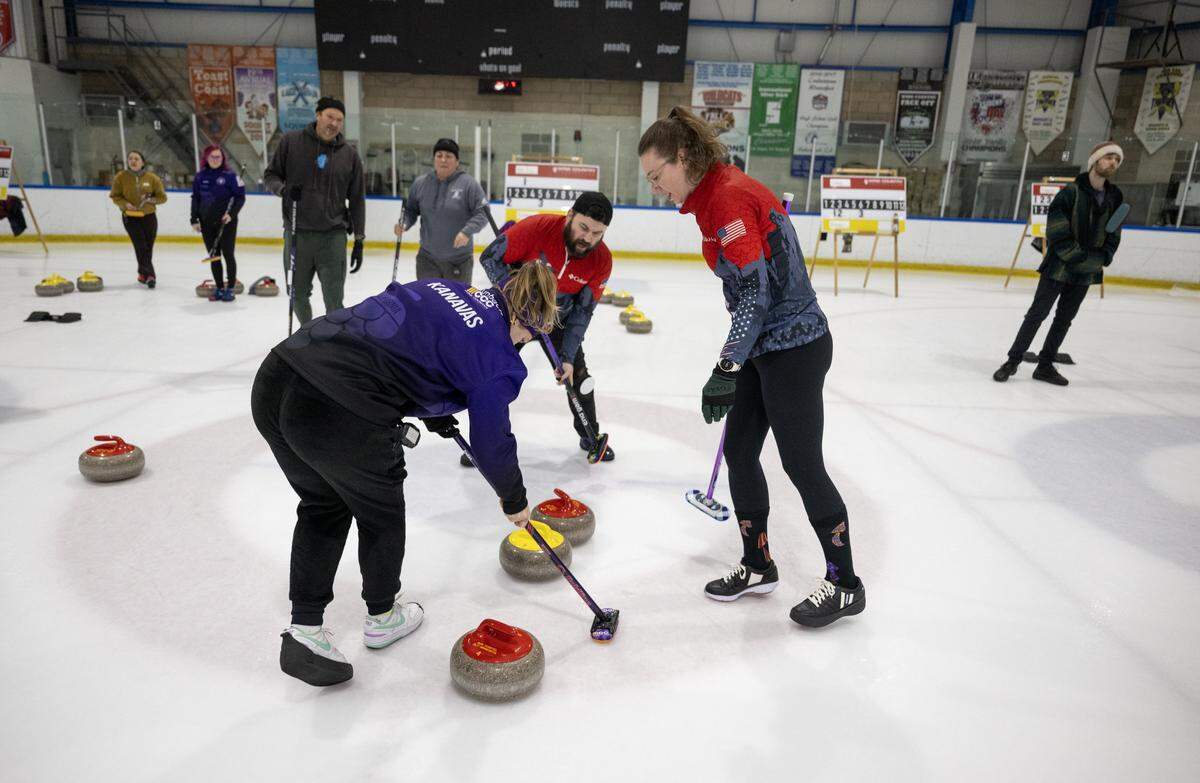
Sweeping slightly melts and smooths the ice, reducing friction so that the stone travels farther and curls less. The “skip” will yell instructions to the sweepers to make small adjustments in speed and angle to direct and curl the stones.
The game is played in rounds called “ends,” typically six or seven for amateurs and eight or 10 in professional play.
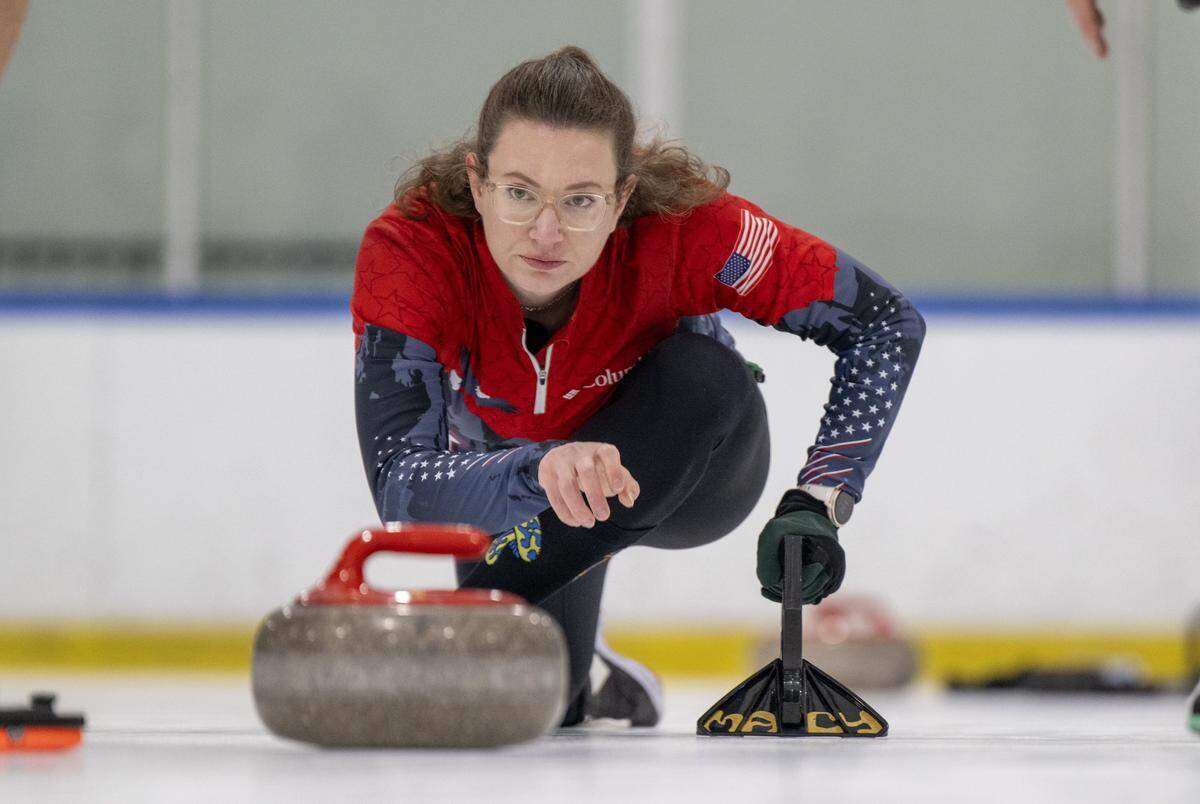
The Wine County Curling Club only gets two hours of ice time per session before the Zamboni machine starts up. Each player throws two stones per end, and after all sixteen stones are delivered, only one team scores. Teams earn one point for each stone closer to the button than the other team’s nearest stone.
Strategy is a huge part of curling, and teams use stones placed in front of the house to guard, while other shots are takeouts that blast stones out of the house.
The sport is often compared to chess on ice, demanding careful planning, teamwork, fine motor control to place and set the stone slowly spinning. It also takes a surprising amount of core and leg strength as well as endurance to not only balance while throwing a stone, but also to sweep.
Roseville club is growing
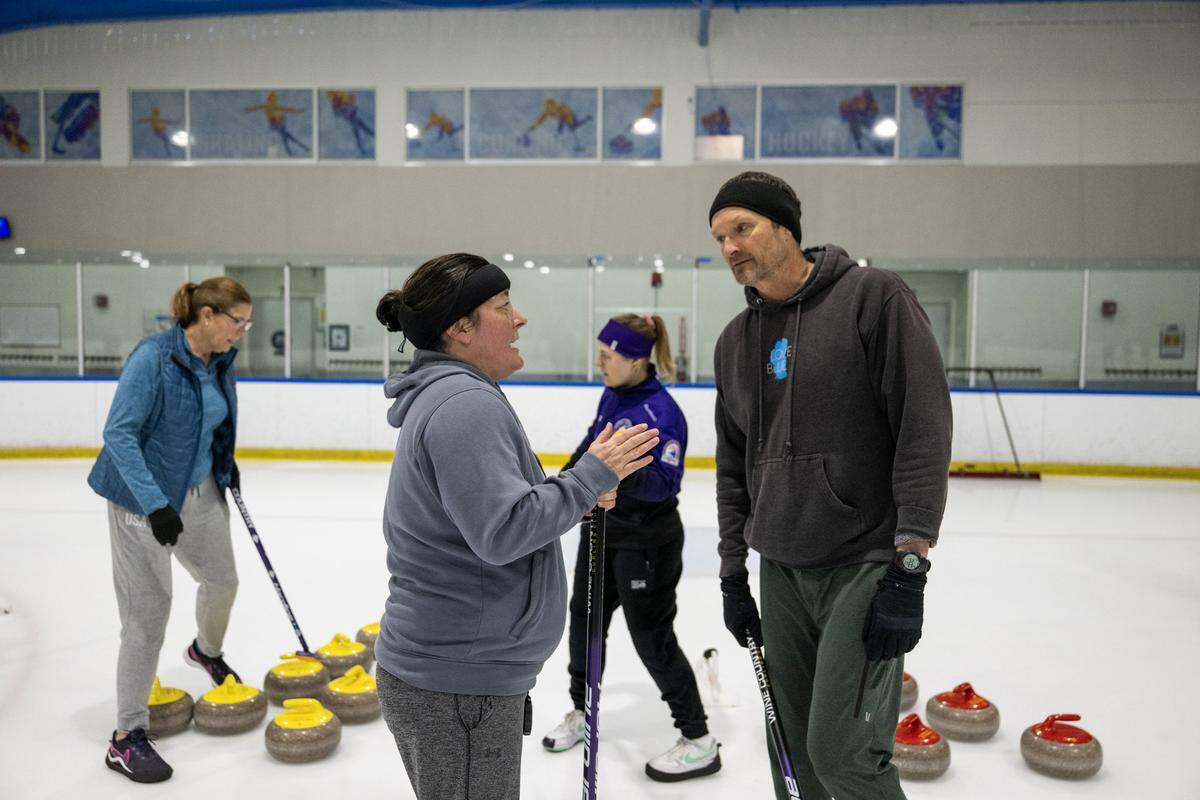
The club started in Vacaville in 2007 and moved to Skatetown in 2012. The group has five sheets to compete on and runs learn-to-curl classes.
The club had less than 20 members when it started, founding member David Markowski said. Markowski said he feels like a proud papa to see the membership numbers, the interest and the success continue to grow.
The club now has 143 members. Some are as young as 12.
.JPG "SAC_0827_261002_JV_Curling (1).JPG")
Markowski said he met his wife, Karla, when the club was in Vacaville.
“I’ve heard there’s a lot of people that have found curling as a single and then got married after that, which is a pretty unique thing,” said Markowski, who still commutes with Karla to and from Vacaville most weeks to curl. “So, it’s good to have both spouses interested in the same sport. Otherwise, it’s like, ‘Hey, honey, I’m going off golfing, I’ll be gone for four or five hours.’ It’s good to have both spouses into it.”
Lee Ann Shearing said she never curled as a youngster growing up in Brantford, Ontario, Canada. A Canuck that didn’t curl? Oh, you betcha. But after retiring, a Google search showed the club’s learn-to-curl lessons, and she thought it would be a great sport for her and her husband, Michael Guidera, to try.
“I knew I was never going to run another marathon or climb another mountain,” the 66-year-old Rocklin resident said. “I loved it right away. (Michael) liked it, too, but later said he’d rather hurt his back golfing than curling.”
Olympic curling medal match schedules
Those watching the Olympics from home have seen curling hit new heights of fiery competitiveness this year, with allegations of cheating ensconcing the Canadian team in about as much scandal as is possible in such a friendly sport.
In mixed doubles last week, the U.S. took home silver after falling in the championship match to Sweden.
For those on the U.S. West Coast tuning in live via NBC or Peacock, Olympic curling concludes with the men’s bronze medal match that starts 10 a.m. Friday, followed by the men’s gold medal match at 10 a.m. Saturday. The women’s bronze medal match is 5 a.m. Saturday, with the gold medal match 2 a.m. Sunday before the closing ceremony later that day.
This story was originally published February 20, 2026 at 5:00 AM.