
Is Sacramento’s baseball talent pool dry? Why just 2 locals were taken in MLB draft
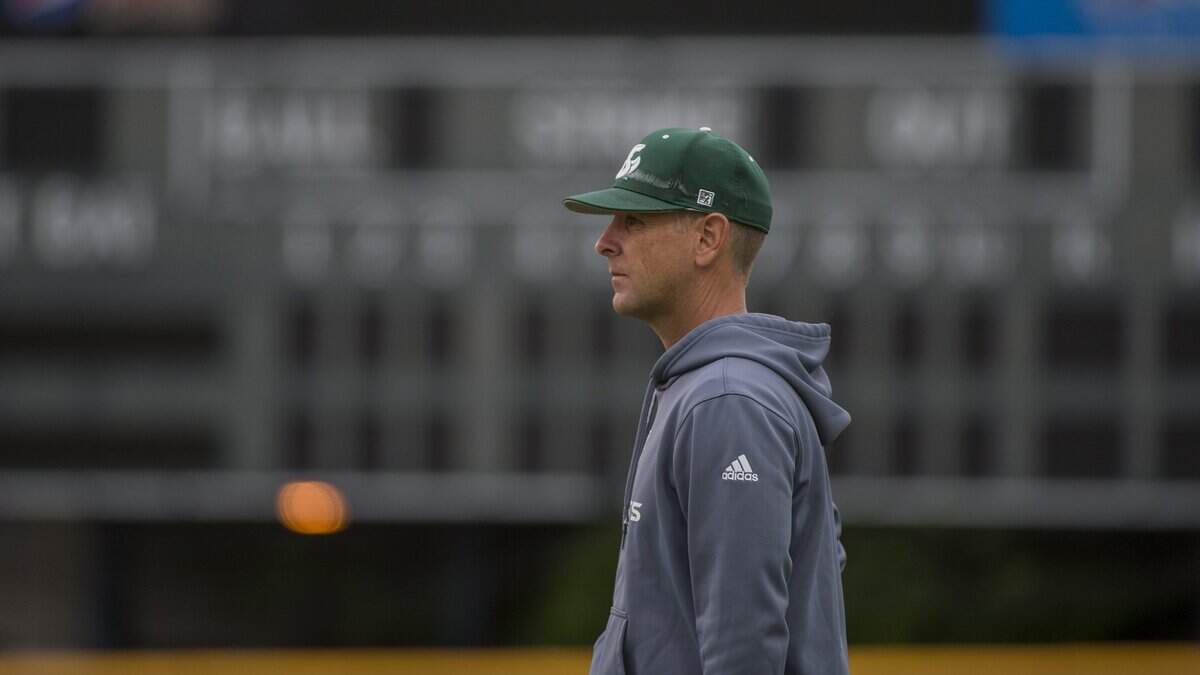
Two Sacramento State players were selected in the 2026 Major League Baseball draft. This comes as no surprise, as it’s been a tradition for coach Reggie Christiansen since his Hornets hiring in 2011.
But what is a surprising is that those two prospects — pitcher Ethan Lay going in the sixth round to the Minnesota Twins, and outfielder Erick Dessens going in the 13th to the Cleveland Guardians — represented the only two in the greater Sacramento region to receive a draft call over the weekend.
Has Sacramento, known as a baseball town since the 1940s, suddenly hit a dry spell? Has the talent pool thinned and is evaporating?
“That’s crazy,” Christiansen said Tuesday, asked about how few locals had been picked this year. “There’s great baseball here, but the draft has really changed.”
And those changes — a reduction of rounds and more emphasis on drafting four-year collegiate players — have changed the look and results of the draft. Those who get lost in the new-wave draft shuffle are the promising high school prospects and the junior college gems.
The thinking now, Christiansen said, is MLB teams want to focus on the more experienced and battle-tested players. But a top prep prospect always rises to the top, when the region has one.
That the Sacramento region did not have a single high school senior picked in the draft is rare. UC Davis has had scores of players drafted historically, but not in the last three years.
It was also the norm in decades past to have local junior college players picked out of American River, Cosumnes River, Folsom Lake and Sacramento City colleges within the Los Rios Community College system, as well as Sierra College in Rocklin.
Those programs collectively play superb baseball, but that doesn’t necessarily equate to draft calls. When those players sparkle at the four-year level, that’s when the draft radar comes their way.
Recent first-round draft picks with Sacramento roots include Malcolm Moore out of McClatchy High School and Stanford to the Texas Rangers in 2024; Daniel Susac of Jesuit High and the Arizona Wildcats going to the A’s in 2022; Nick Madrigal of Elk Grove High and Oregon State going to the Chicago White Sox in 2018; Dylan Carlson of Elk Grove High going to the St. Louis Cardinals in 2016; Matt Manning of Sheldon High going to the Detroit Tigers in 2016, and Derek Hill of Elk Grove High getting picked in the first round by the Tigers in 2014.
There were no such highly sought prospects to dot the region in recent seasons.
Reduction of rounds
The MLB draft has historically at least 50 rounds, which is how many rounds took place each season from 1998 through 2011. There were draft years that included 60 or more rounds, topping off at whopping 101 rounds in 1990 as MLB teams sought to fill out Minor League rosters.
From 2012 through 2019, the draft was trimmed to 40 rounds. In 2021, MLB and the MLB Players Association agreed to permanently shorten the draft to 20 rounds.
If the draft was still 40 or 50 or more rounds, there would certainly be more locals drafted. If a player does not get drafted, it does not mean his dreams of playing pro ball are over. Players can sign as undrafted rookie free agents, though their chances of climbing through the minors will be steep.
Christiansen said his teenage daughter, Ava, asked him over the weekend what the odds are for a player drafted in the 11 to 20th round to reach the big leagues. It’s small, they found out through Google searches. Data show those players have about an 11% chance to reach the bigs (compared to about 81% for those picked in the first round).
“Mike Piazza getting drafted low (in the 62nd round in 1988 to the Los Angeles Dodgers and finding stardom) and stories like that are still out there, but it’s harder than ever now,” Christiansen said. “The baseball in Sacramento is strong, really good. What’s happening is baseball scouts voice what their eyes tell them from a player projection standpoint, but it may, unfortunately not be as heard in draft rooms.”
The coach added: “A lot of teams are looking at a model of numbers, stats, analytics. If you draft a kid out of a Power 4 college conference or a mid-major, and it trickles down to the junior colleges and high schools, there’s just more information on the higher-level college guys. More data, games and things like that.
“I’m not saying it’s the right way because a lot of guys will get missed, and that’s why fewer JuCo and high school kids are getting picked. A four-year college player is considered a safer pick, a better investment.”
Christiansen said four-year college programs should not be viewed as developmental outfits for MLB teams. He said that’s the job of the minor-league clubs, where fans go to games to see prospects and to enjoy affordable tickets and family fun — and not agonize over wins and losses.
In college, players, coaches and fans agonize over wins and losses.
“Seems like the owners in Major League Baseball maybe want to put some of the development on the colleges programs, but I’m not sure that’s the right way to go,” Christiansen said. “I don’t know if college is true development. We’re trying to win games at the collegiate level because winning or losing can cost people their jobs. In the minor leagues, there are 140 games, and no one is losing their jobs for developing players.”
Christiansen said four-year college baseball programs have a lot more older and seasoned players. MLB scouts appreciate experience, Christiansen said.
Since 2011, Christiansen has seen 33 of his players get drafted or signed by MLB teams. He expects that trend to continue as the Hornets move into the California-heavy Big West Conference next season.
Insight on the 2026 drafted Hornets
Lay, the right-handed pitcher for Sac State, went 168th overall. He was the Hornets ace, a senior out of Colusa High School and a transfer from Chico State.
Lay posted a 3.78 earned run average over 88 innings in earning first-team All-Western Athletic Conference honors, and he is the highest drafted Hornet since Rhys Hoskins went 142nd overall in 2014 (Hoskins is still in the big leagues, now with Cleveland).
“Ethan had a really good junior year and a great senior season,” Christiansen said. “Getting picked in the sixth round showed how much teams valued him. It’s hard to find starting pitching in the major leagues, and he can certainly emerge as a starter someday. It’ll be fun to see how he develops.”
Dessens was the 393rd pick in the draft. The outfielder is the son of former Major League Baseball pitcher Elmer Dessens. The younger Dessens batted .356 with 10 home runs and 64 RBIs.
“Everywhere Eric’s been, he’s been able to hit,” Christiansen said. “He was fifth or sixth in the country in hits, and he did that despite being banged up the last three weeks of the season. He was one of the best under-the-radar hitters in the country.”
Christiansen spoke to numerous MLB personnel leading up to the draft. Teams invest a ton in players and want to know exactly what they’re getting: Work ethic, does he love the game?
“They’re pretty thorough, and the front offices look into a lot of analytics and data. Eric doesn’t strike out. MLB teams look for that. Ethan has four good pitches, and scouts like that.”