US red card explained: Why it’s controversial, what it means as World Cup continues
AI-generated summary reviewed by our newsroom.
- Folarin Balogun received a controversial red card in the 61st minute during its last win.
- The U.S. cannot appeal the automatic one-game suspension that accompanies a red card.
- FIFA’s Disciplinary Board could extend Balogun’s ban, which the U.S. intends to appeal.
The United States soccer team was riding high Wednesday, with one major exception.
The team’s 2-0 win over Bosnia-Herzegovina at Levi’s Stadium represented its second knockout round victory in the modern era and the team’s third of this year’s World Cup — the most ever for a U.S. men’s team. Its 10 goals in four games are also the most in U.S. World Cup history.
The negative?
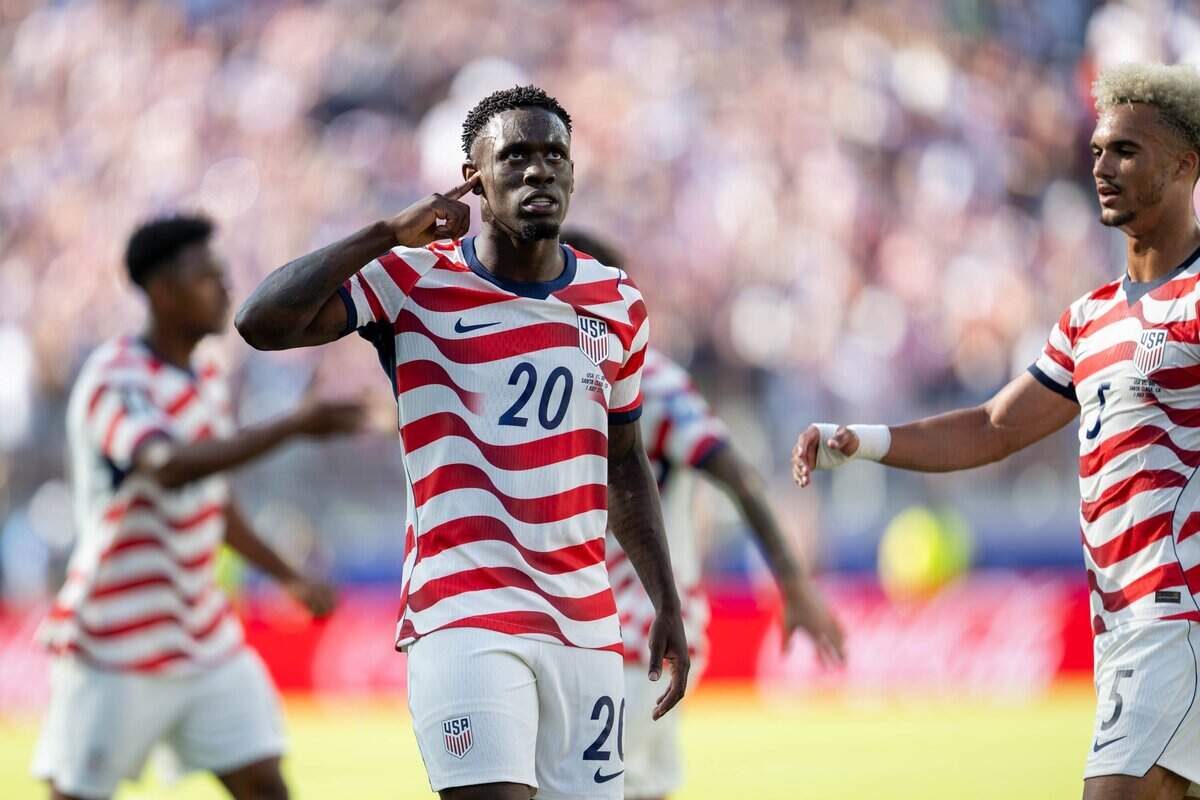
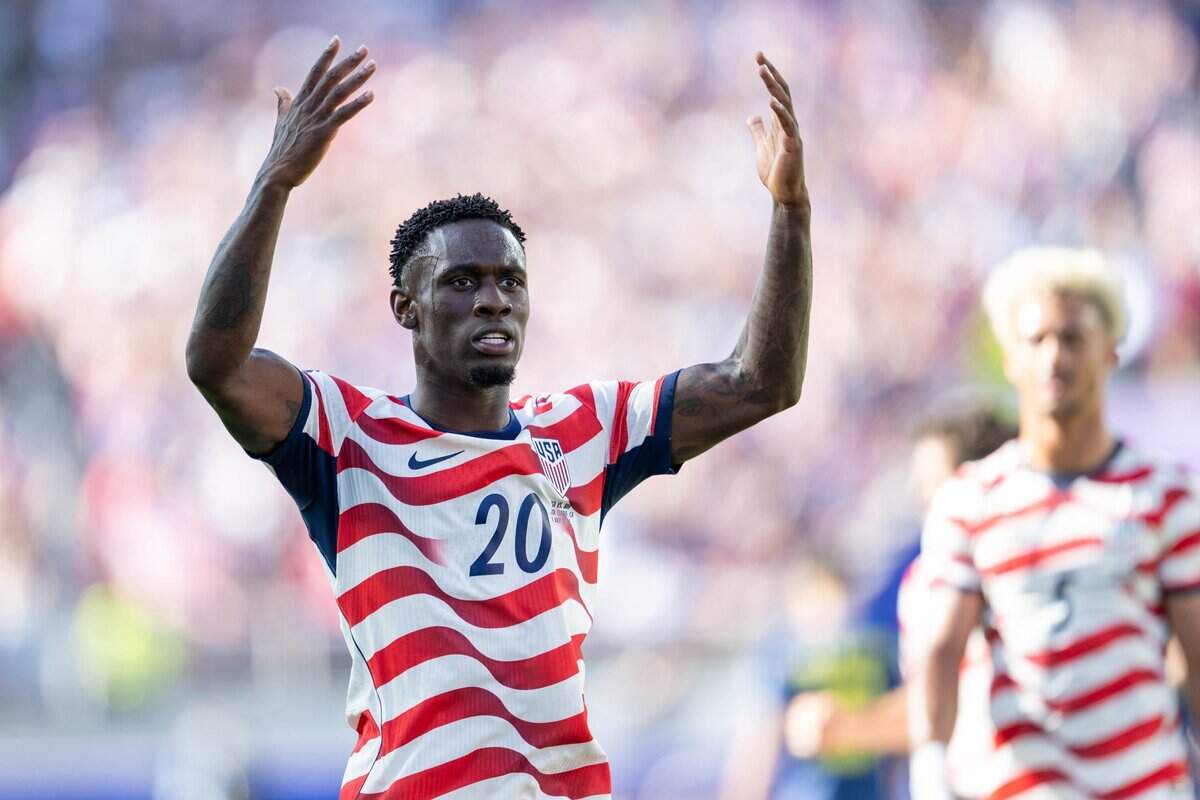
One of the biggest pieces of that success, star striker Folarin Balogun, who scored his team-high third goal earlier in the match, received a red card in the 64th minute on a controversial call that will keep him out for at least the next game against Belgium — and it appears there’s nothing the U.S. can do about it.
What happened on the play?
During the play, Balogun went for a ball in the air before crashing into Bosnia’s Tarik Muharemovic, landing his foot on top of Muharemovic’s ankle before the two fell to the ground and were treated on the field for potential injuries.
In real time, no penalty was issued, though the video assistant referee (commonly known as VAR) recommended a review of the play while the two were down, later assessing Balogun a red card.
After the red card, U.S. fans, Fox television broadcasters and members of the team criticized the ruling, saying the play lacked intentionality and that the slow-motion replay exaggerated the severity of the foul.
“For me, never is this red card,” U.S. coach Mauricio Pochettino said postgame, according to the Los Angeles Times. “Watching after on TV, never was (it) intention(al) to step up on the player.
“That was a normal action in football that happened by accident.”
The red card has drawn additional controversy after multiple analysts, including Fox’s Alexi Lalas, drew parallels between Balogun’s play and a similar play from Argentina’s superstar Lionel Messi that did not receive a foul in a different game.
“It’s questionable,” U.S. midfielder Weston McKennie said postgame. “There’s been many other plays throughout the tournament on other players that a card wasn’t given at all. So it’s disappointing.”
What do the rules say?
Red cards are issued for serious offenses — including endangering opponents, harassing officials and violent behavior — or accumulating two yellow cards.
According to the Athletic, a referee announced that Balogun was charged with a “serious foul,” which appears to refer to “serious foul play,” an offense that would lead to a suspension of at least two games, according to the FIFA Disciplinary Code.
FIFA’s Disciplinary Board has not yet made a ruling on whether it will extend Balogun’s suspension beyond the minimum one game.
The International Football Association Board’s Laws of the Game, which the World Cup follows, defines serious foul play as “a tackle or challenge that endangers the safety of an opponent or uses excessive force or brutality.”
In terms of the review rules, the Laws of the Game state that the video assistant referee can only assist the on-field referee in cases of “clear and obvious error” or “serious missed incident.”
The original decision, in this case no penalty, can only be overturned if the referee finds the original decision to have been a “clear and obvious error,” the guidelines read. The review process cannot be started by the video assistant, only recommended to the referee, who must make a decision first before potentially turning to the video for assistance.
No matter what, the final decision is in the referee’s hands, per the IFAB guidelines.
Can it be challenged?
Team U.S. officials on Wednesday confirmed to the Los Angeles Times, among other publications, that the U.S. cannot appeal the automatic one-game suspension that goes along with a red card.
The Disciplinary Code states that a sending off or automatic suspension can only be challenged if it was issued to the wrong player.
Should FIFA’s disciplinary committee add additional games to Balogun’s suspension, however, the U.S. could appeal that decision.
A spokesperson for the U.S. team told ESPN the team would appeal any suspension of more than one game.
What does it mean?
The U.S. is still slightly favored against Belgium on some betting markets (Draft Kings as of Friday listed odds of minus-120 for the U.S. and minus-105 for Belgium), but has even odds on FanDuel even without Balogun, who has been arguably the team’s best player.
In other words, the Round of 16 matchup is widely expected to be a toss-up. Before the tournament, Belgium likely would have been favored in the matchup, but the stronger showing by the U.S. in the Round of 32 — with no goals allowed despite playing from the 64th minute down a man — and clean play in their group stage would have likely made them favorites without Balogun’s red card, a Draft Kings official told the New York Post.
An extension to Balogun’s suspension would crush the U.S. hopes of advancing past the top eight, where the Americans would likely face reigning European champion Spain, who await the result of Portugal versus Croatia to decide their Round of 16 foe.
The U.S. men’s national team has never made it beyond the final eight of the World Cup before, only advancing out of the Round of 16 (the first knockout round in most previous World Cups, with the Round of 32 newly added this year as FIFA expanded the field) once in its history. Team USA beat Mexico 2-0 in 2002.
Without Balogun, the U.S. will take on Belgium at 5 p.m. Pacific on Monday in Seattle.
“Purple hearts!” Balogun posted on his Instagram story Thursday, with multiple purple heart emojis in the text. “The war continues.”