
Sacramento-area prep football: Coaches scrap tackling (and history) to keep players healthy
This is a sport rooted in the fundamentals of contact, but what is largely missing from high school football practices in the Sacramento area is the crucial part of preventing first downs and touchdowns: tackling.
There is very little of it going on in this era of fresh and fast football. Not because the coaches and the game have become softer over time. Quite the opposite. The game is safer now than it was a generation ago. Prep programs have in recent years been limited to two days of full contact sessions each week of no more than 45 minutes each day, per California Interscholastic Federation rules. The mandates were put in place to ensure better player safety.
Even with those restrictions, coaches in large part have dialed it down more. Coaches need to get their athletes used to collisions without wearing them out. Coaches use five days of practice for offensive play repetition, blocking sled work and drills that include players crashing into bags and not into each other.
It has led to fewer reported and documented concussions and crushing injuries. No one signs up for football to lean on crutches from a practice injury. Tackling is more prevalent in the lower levels, freshman and junior varsity, where a good many players are still learning the basics of the game. Otherwise, teams have called off the dogs until game night, especially if they anticipate a long season well into the playoffs, where fresh legs outlast rubbery ones.
“We’ve all learned over the years that you don’t have to knock the snot out of each other every day in practice to become a tougher, better team,” Elk Grove coach John Heffernan said. “But come game night, we turn guys loose and we tell them to get after it. That’s when you can play without restrictions.”
Heffernan for years worked with youth football programs across the country to stress how to tackle properly. He stresses that daily still with his players, right on down to where to place your head. Area coaches are aware through mounds of data and proof that leading with the helmet never made sense.
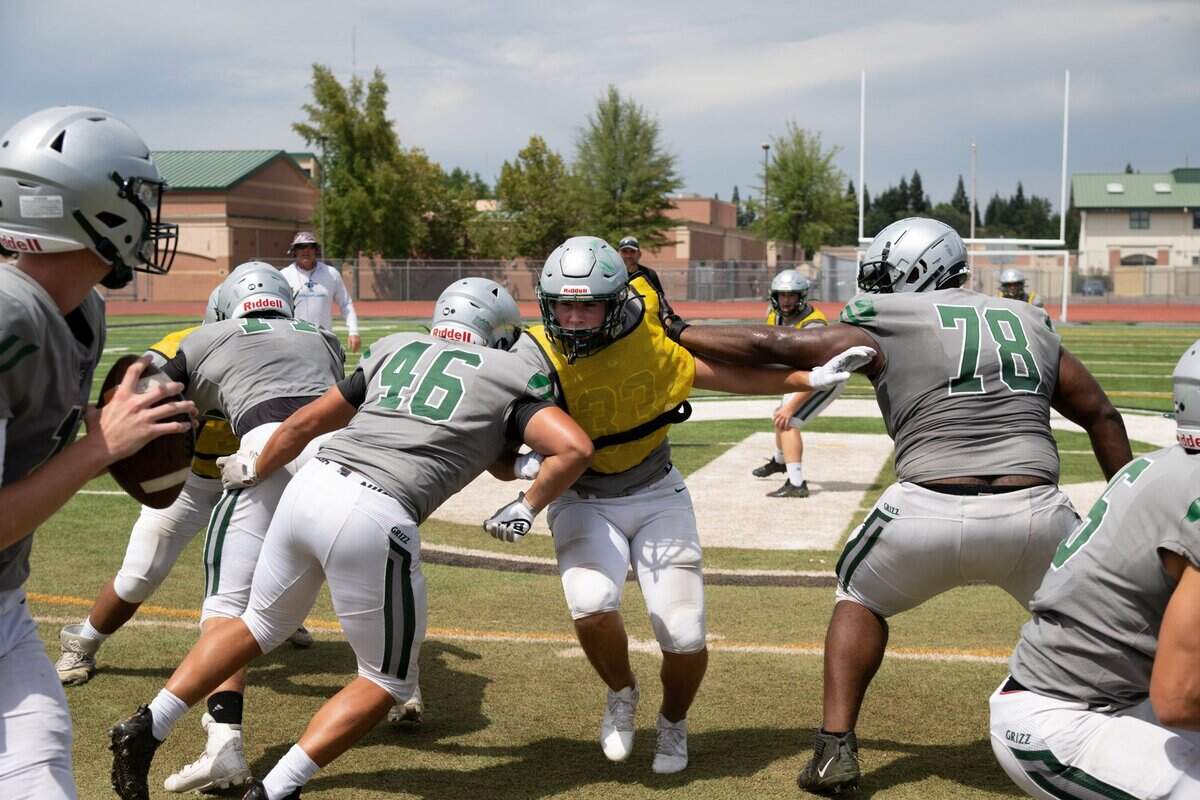
Comparing old days to new
In south Sacramento at Sheldon, coach Chris Nixon isn’t just a coach of the region’s No. 5-ranked team, he’s the father of two players: Sean Nixon, now at Sacramento City College, and returning All-Metro receiver Scott. The coach needs his players to be game-ready, but he doesn’t need them to be seeing stars all week, including his sons at the dinner table.
It’s a far cry from when Nixon played football for his father, Marshall Nixon, at Nevada Union in the 1980s.
“I remember as a player at Nevada Union lining up for the bone-crunching Oklahoma drill, mentally preparing myself to be a crash-test dummy,” Nixon said. “Brutal collisions were just a normal part of practice. At Elk Grove and now at Sheldon, we as a coaching staff rarely run team drills that involve tackling. One or two plays of short yardage or goal line and that’s it.”
Nixon added that fundamentals of proper tackling are stressed daily.
“The head used to be included in tackling technique, sometimes as a battering ram,” he said. “No longer. We teach ‘Hawk’ tackling, a rugby-style shoulder tackle made popular by the Seattle Seahawks about 10 years ago that takes the head out of the tackle. We do spend time on proper tackling technique, but our tackling drills are mostly run at less than half speed and are so safe that we tell players, ‘Go home and practice ‘Hawk’ tackling your mom.’ I can’t remember the last concussion we had. It’s all about keeping the head safe and the legs fresh.”
In Orangevale, Casa Roble coach Chris Horner recalled similar brutish practices as a player some 30 years ago when he was a lineman at San Juan. Horner revels at having his players work over the blocking sled at Casa Roble as compared to knocking each other silly. Save that for kickoff.
“From where I stand, the approach is a lot more cerebral in getting players prepared for a football game,” Horner said. “Coaches have to think outside of the box with the way we approach practices. Lining up kids 15 yards apart and having them participate in ‘Oklahoma Drills’ for thirty minutes while the most violent kid makes every opponent want to switch sports to year-round basketball is a thing of the past.”
Safety first
Football isn’t for everyone, coaches remind, with the hot weather and demands. And not everyone is keen on contact. Assuring parents of a 14-year-old that practices will be brutal affairs of tackling is a sure way to scare them off.
Said Horner, “We are coaching a sport where the participation numbers have declined over the years. I once had 90 kids show up to play freshman football 15 years ago. The declining numbers aren’t because football has decreased in popularity. It’s because parents don’t want their kids to play football because it’s too dangerous.”
So coaches have to offer football as a sport that isn’t to be compared to the barbaric one of years past. Game day? That’s different. It’s as intensely played as ever.
“Part of our job as coaches is to prove to parents that their kids are going to be safe in practice, while at the same time getting them prepared for Friday nights,” Horner said. “It’s definitely a balancing act. I love hearing parents tell me they signed their kid up for football to make them tougher. It’s not about making the kid tougher, it’s about making the kid more confident that he or she has the ability to use proper form while at the same time trusting that the equipment they are wearing will protect them when the time comes.”
So how does a coach replace tackling sessions in practice? Be creative.
“There are so many ways you can supplement tackling time in practice, from tackling wheels, form tackling fundamentals, tackling dummies, bag work, etc., and if Oklahoma Drills are your jam, there are ways you can modify it to make it more controlled and safe,” Horner said. “I can’t speak for everyone out there, but I don’t have the depth on my roster to lose anybody to injuries, so making things as physical but as controlled as possible is something I am very aware of when it comes to designing a practice plan.”
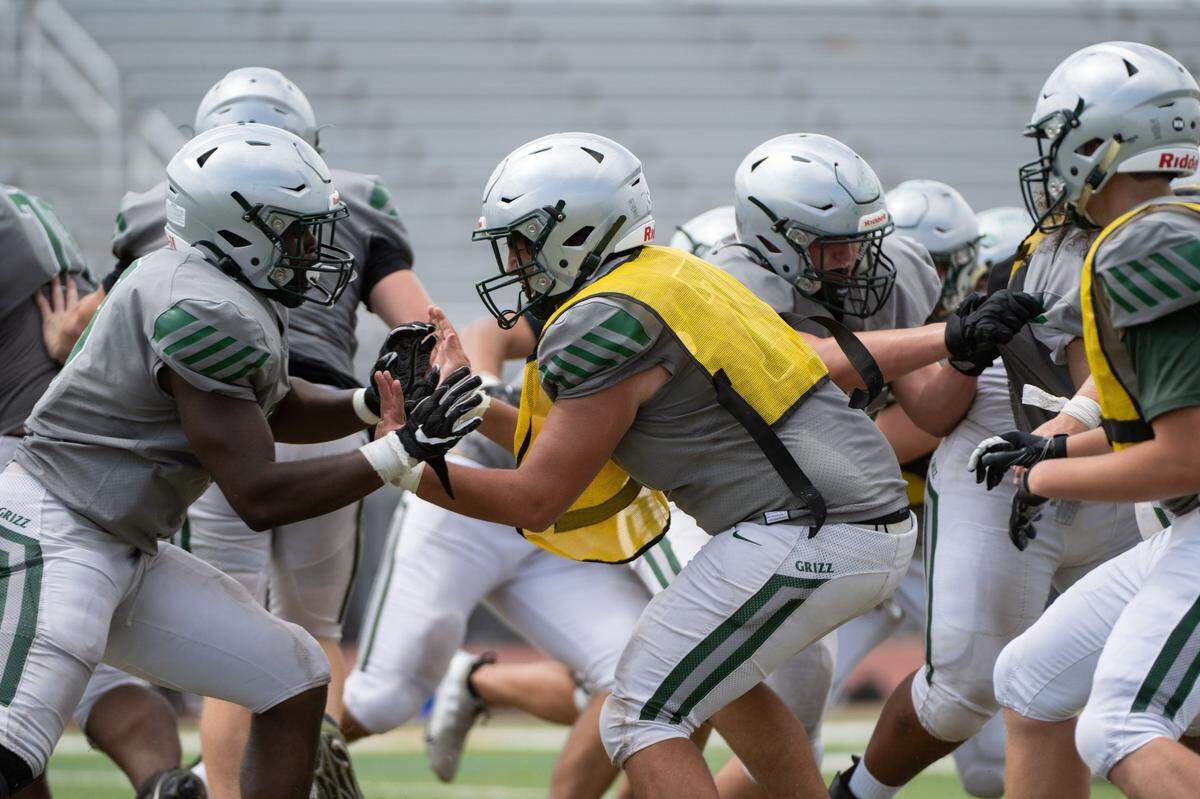
Small roster risks; Folsom’s approach
In Clarksburg at Delta High, coach Tim Rapp recalled the amount of tackling for his playing days for the Saints in the 1980s. The Saints had about 35 players on their varsity roster. They now have 19, but remain a competitive program in part because of the way they approach practices.
“I mimic our old practice schedules with a lot less full contact,” Rapp said. “We use a lot of bags and such, Our roster numbers are so low that we can’t line up a full scout team to play the starters, and we can’t afford injuries.”
At powerhouse Folsom, the Bulldogs do not have small rosters at any level. Football is the thing to do here, and the intensity is clear in practices. They do it without clobbering each other.
“We don’t tackle in practices,” Folsom coach Paul Doherty said. “We do in intrasquad scrimmage, and our annual scrimmage and definitely in games. We have the tackle bags and crash pads and sleds. We’re allowed at this level to practice full contact after six practices. We waited until Day 12. It’s worked for us.”
Doherty added that elite programs with large participation numbers don’t have to worry about injuries as much as schools with smaller rosters. Still, he said, programs such as Folsom are fortunate to have feeder youth programs that teach tackling. Some schools in the city do not have that luxury.
“When I was coaching at Sac High, we had to tackle because those kids didn’t know how to tackle,” Doherty said. “We do a ton of repetition here. Teaching is a progression of skills. If we’re planning on playing in December, in the playoffs, we need to be fresh.”
Learning the hard way
Casey Taylor learned the hard way how tackling took its toll when he coached at Del Oro. His Golden Eagles reached two CIF State finals in the early 2010s but were out of gas in facing fresher opponents in the final game.
By 2015, Taylor cut back on contact in practice and Del Oro and Taylor made a historic breakthrough, winning a state championship. The team nearly repeated in 2016. Taylor coached a 13-1 section championship team at Capital Christian in 2018 with reduced tackling in practices. He is now in his second season at Oak Ridge.
“It’s a balance because our No. 1 goal is to be physical, so how do you do that?” Taylor said. “We have four stations of tackling drills for two days, but not from yards away, like the Oklahoma drills. Now the goal is to stay off the ground in practice, to stay fresh. The season lasts 16 weeks. We don’t need Oklahoma drills to find out who can play and who can’t.”
This story was originally published August 26, 2022 at 5:00 AM.