
Are Hiram Johnson logos and Warriors imagery offensive? School principal says no
Garrett Kirkland took two visitors across the Hiram Johnson High School campus on Wednesday, just after the lunch-hour crunch.
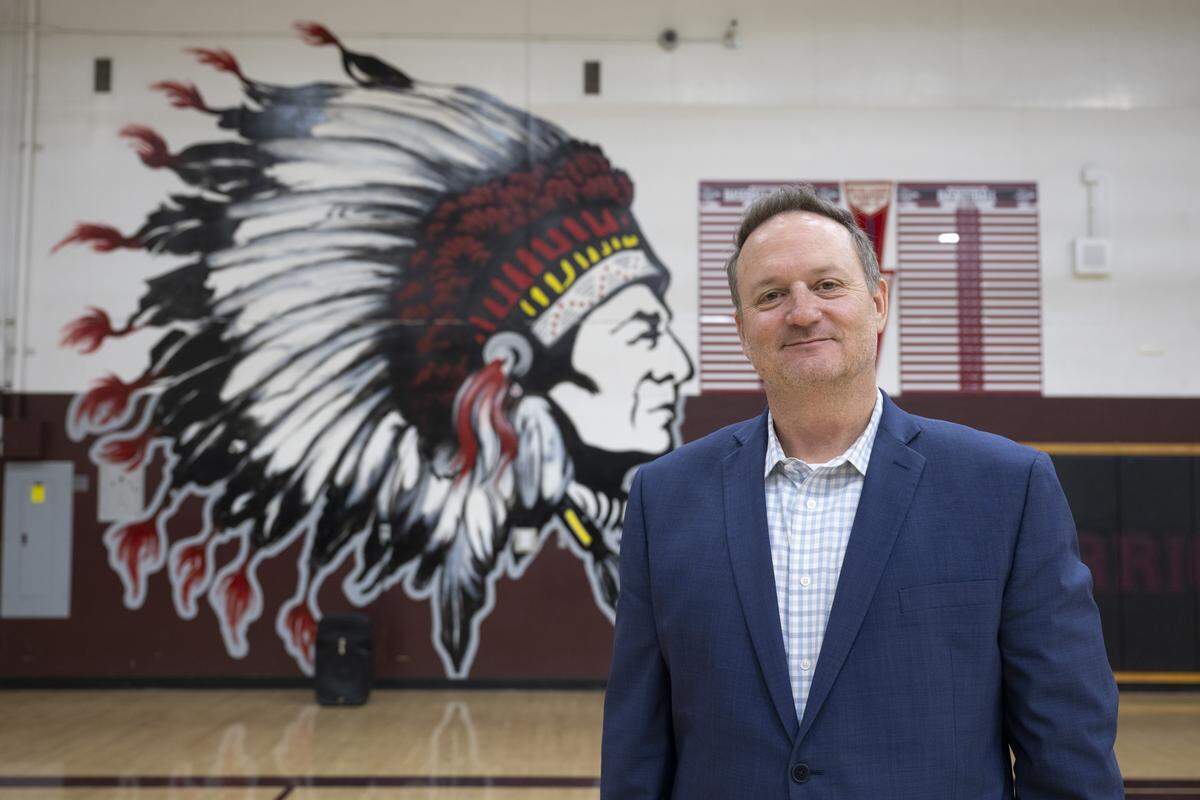
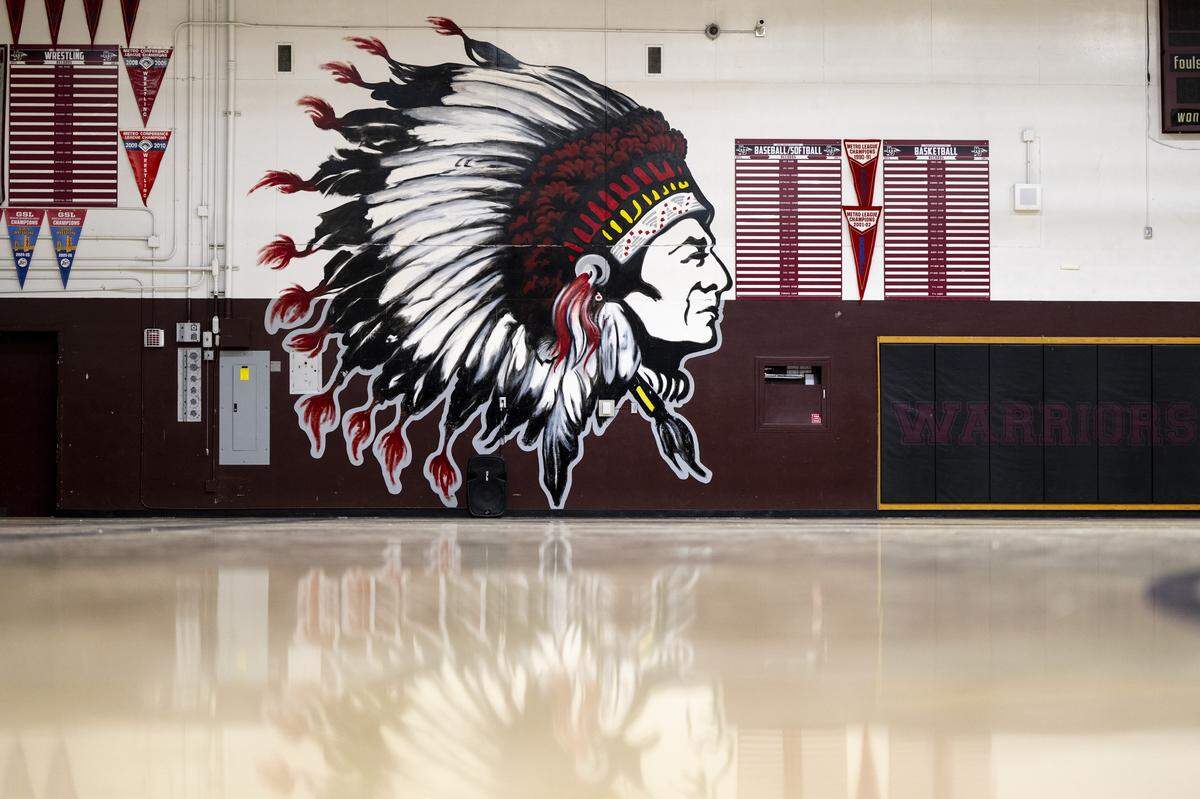
The ninth-year principal for the Sacramento City Unified School District campus that opened in 1958 stopped in the gymnasium, where a large mural shows a depiction of a Native American man wearing a bonnet and regalia representing the school’s mascot and athletics team name: Warriors.
The mural strikes different chords. Some see it as an image of honor, bravery and strength. Others view it as something deeply hurtful.
“I don’t see anything offensive when I see this,” Kirkland said as he guided two Sacramento Bee journalists through the school. “I see pride. I think of Warriors, and I think of pride, and I have students and alumni for years who say they see it the same way.”
Lozen Miranda-Brightman sees it differently.
A junior at The Met High School in the same school district, she has led a movement to change the mascot, a topic raised in last week’s SCUSD trustee meeting, where the push for mascot and imagery change has sparked discussion. Miranda-Brightman said she doesn’t see an image of a Warrior in the Hiram Johnson gymnasium — she said the mural is a racial caricature that is offensive to the Indigenous community. She has gained more than 330 signatures from members of local tribal and district communities to enact change.
The SCUSD also is confronted with a state law passed in 2024 that prohibits public schools from any Native American term that can be deemed as derogatory as its mascot, athletic team name or nickname. Assembly Bill 3074, the California Racial Mascots Act, mandates that public schools cannot carry any such traditions past July 1, absent “written consent from a local federally recognized tribe.”
This issue is personal for Miranda-Brightman. A tribe member with Cheyenne River Sioux, Otomi, Yaqui and Muscogee heritage, she is involved with the Tribal Youth Forward that works at the local and state levels, including cultural traditions. In 2024, Miranda-Brightman and a group of 60 youth with Tribal Youth Forward attended an event at Hiram Johnson. In the gym, she saw the mural and the anguished expressions that matched her own.
“My grandparents were with me, and what they saw devastated them,” Miranda-Brightman said. “We’re in the (21st) century. It’s sad that we have to have conversations like this. It’s sad that this hasn’t been taken care of. It’s my culture and my people being degraded, and the feel of humiliation and racism. It’s normalizing racism in an educational place. We have to stop the normalization of racism.”
Kirkland said he is mindful of sensitivity on a campus big on diversity. He said he has not fielded any complaints by any students or teachers in his nine years on campus. He said he would listen if there were such concerns.
History of Hiram Johnson’s mascot, nickname
Kirkland said the district and Hiram Johnson officials consulted with a local tribe in 1956 or 1957 about honoring Native Americans as a mascot. Kirkland said his school does not use a costumed mascot with a headdress or regalia but does stand by the imagery as something of honor and not insult.
Hiram Johnson introduced its mascot — Wampum Willie — in the fall of 1959. The mascot appeared at school rallies and campus sporting events. In a 1959 Bee story, Willie’s outfit was of “brightly colored feathers and beaded buckskins.” The outfit was made by Hiram Johnson science teacher Tom Wittche. The student who played Willie, according to The Bee’s 1959 story, “is painted with grease and war paint.”
By the late 1970s, Kirkland said that mascot outfit was retired to an old closet on campus. It may still be in there, the principal said.
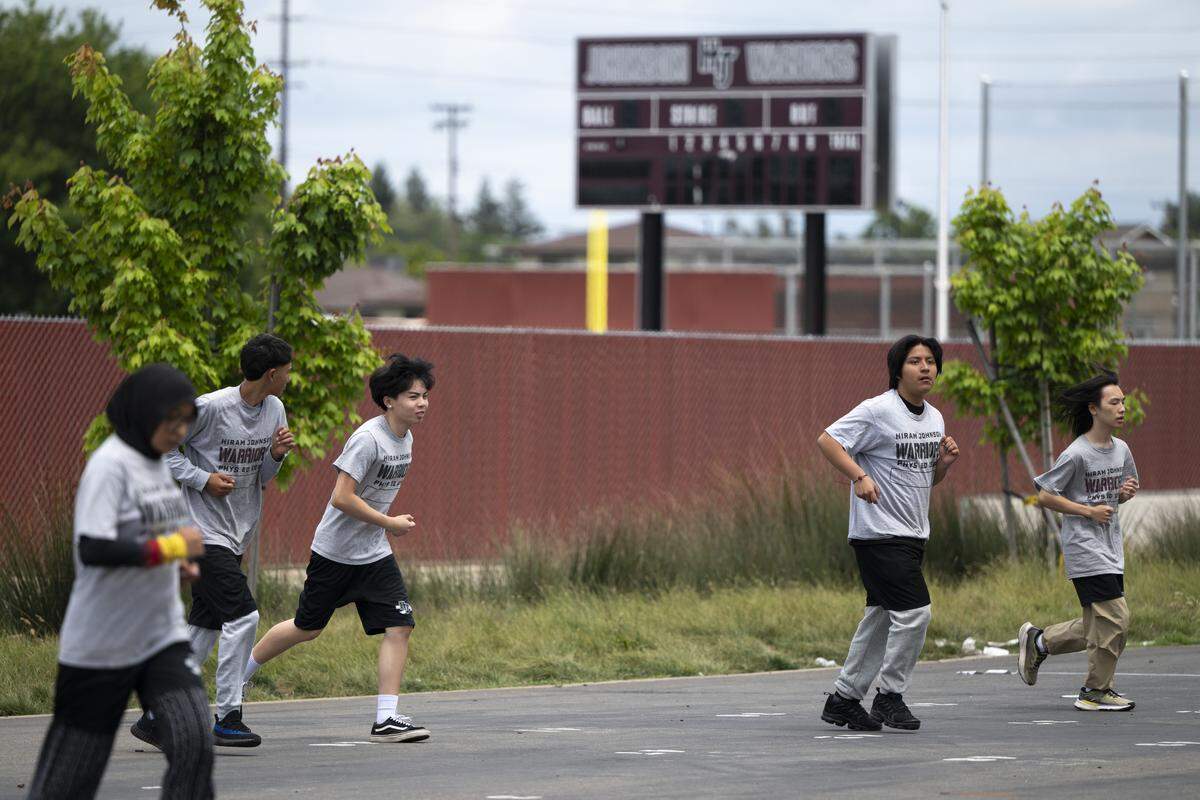
On this campus tour, Kirkland showed off the three-year-old football stadium that sparkles, and the new baseball and softball diamonds nearby. The campus, at the corner of 65th Street and 14th Avenue in Sacramento’s Tahoe Park East neighborhood, has aged nicely. It is without litter or graffiti.
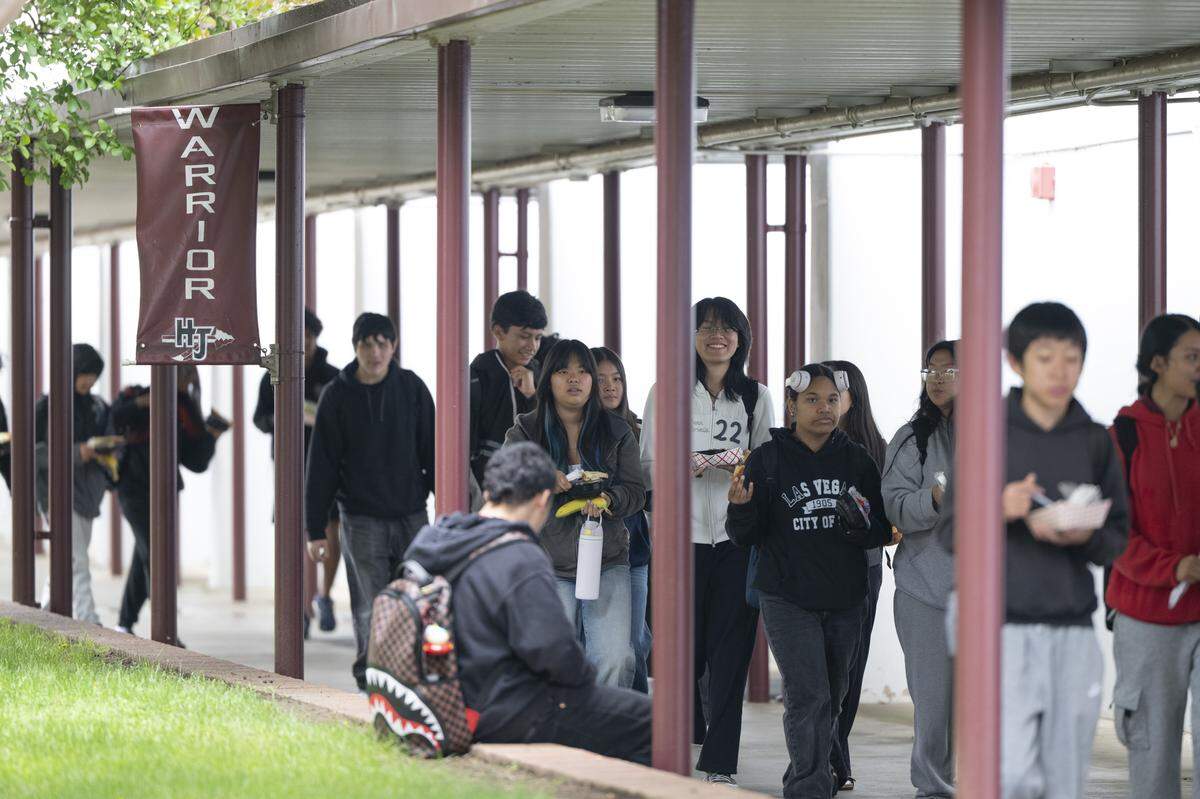
The campus also includes tiled Native American mosaics that were installed when the campus was constructed in 1956 and ’57. The school logo has been modified in recent years to show an “HJ” with an arrow and feather.
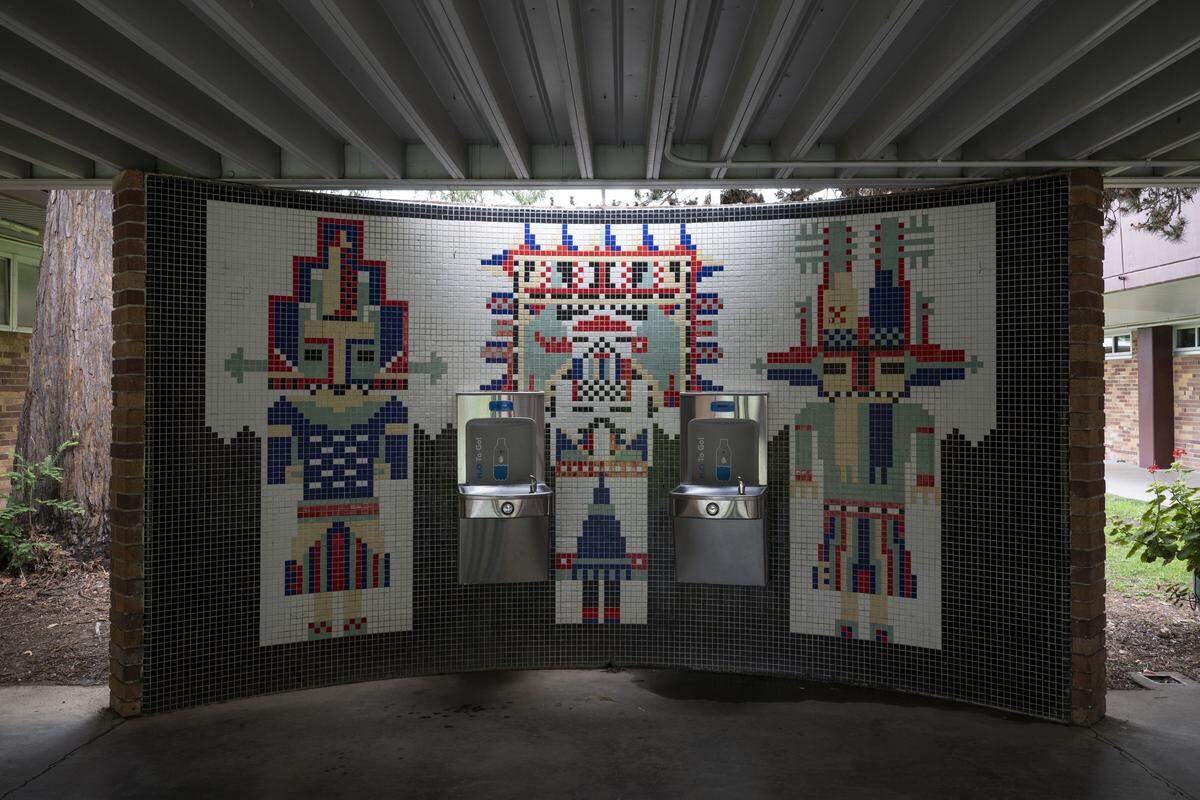
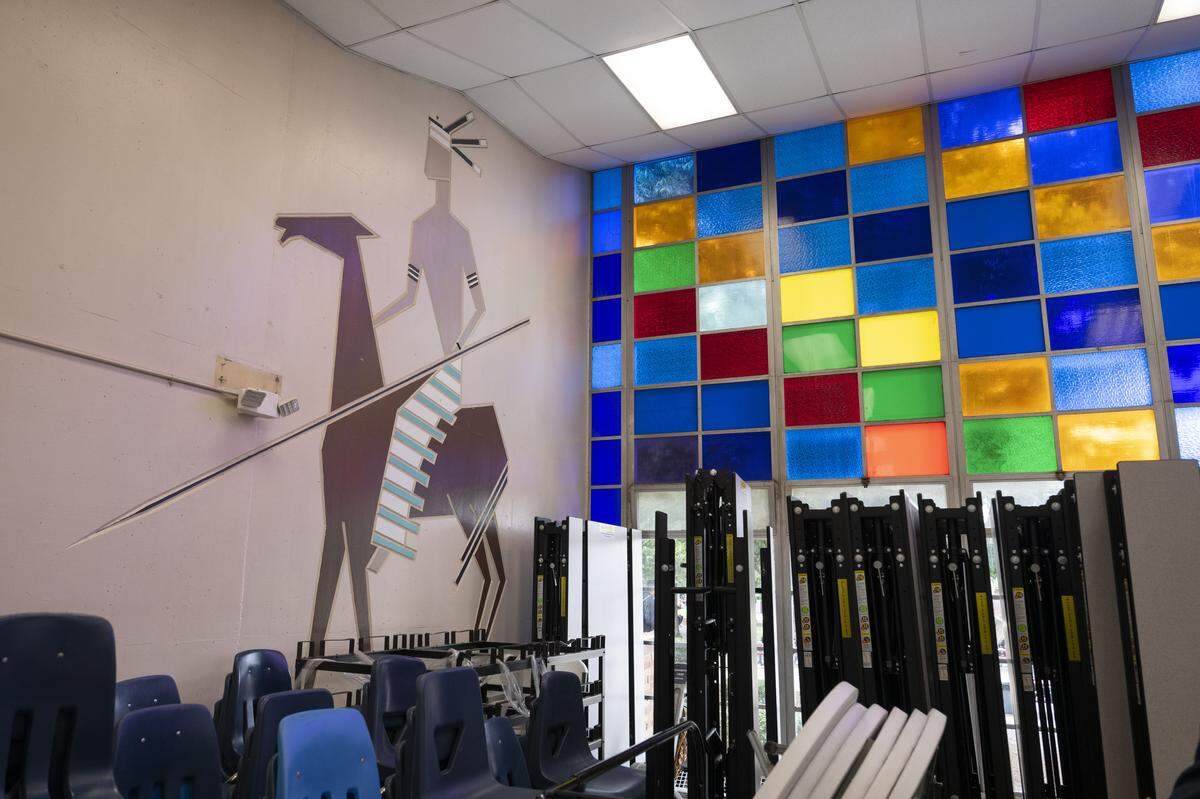
“We won’t use a mascot here running around during events as a caricature mascot because I can see that point,” Kirkland said. “That’s stereotypical. We don’t have a mascot. We have an emblem. I want our uniforms to say ‘Johnson High School,’ because that’s who we are. If we have to paint over the mural in the gym, we will. But if we have to strip the middle of the football field of the arrow or pull off tiles, is that going too far? And who pays for that?”
Nathaniel Browning, the district’s director of facilities planning, at last week’s meeting estimated the cost of changing the team uniforms, school merchandise and campus signage at $250,000.
To Kirkland’s questions of the football field, AB 3074 does address this: It calls upon facilities bearing prohibited names or mascots to remove and replace them “no later than the next time the associated part of the facility is replaced in the normal course of maintenance.”
This does not preclude a school district from doing so sooner, and the SCUSD board of trustees directed staff to start by removing offensive imagery from the campus as soon as possible.
The language of the law also includes a list of a dozen Native American team names considered derogatory; “Warriors” is not among them, though the list is noted as nonexhaustive.
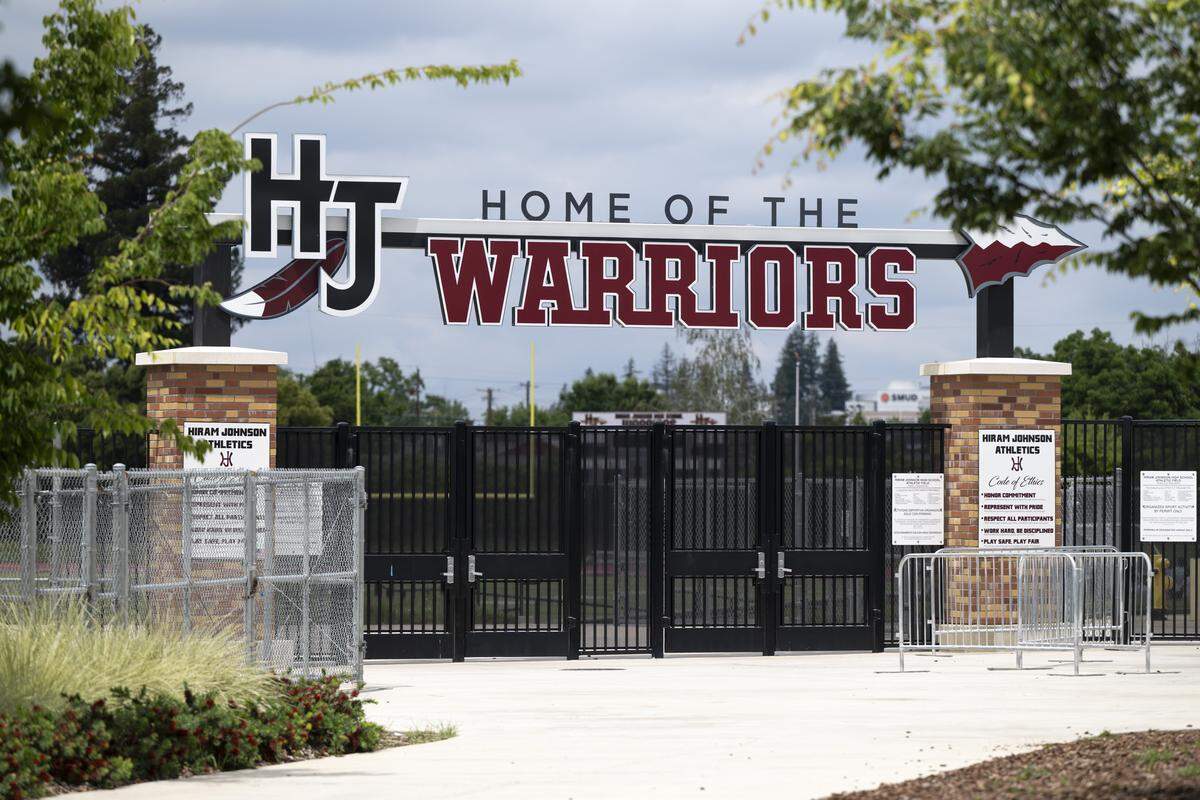
“The word Warriors is not offensive,” Kirkland said. “I wish we can focus on teaching and learning, but we’ll abide by anything that we have to.”
Miranda-Brightman’s quest has become her intern project with Tribal Youth Forward. She plans to study Native American history in college.
Tribal Youth Forward director Tona Miranda said the imagery at Hiram Johnson doesn’t fit any tribes that were in Sacramento, or even California. The war bonnet depicted in the Hiram Johnson gym and on the granite stone outside the school since 1997 was traditionally worn by leaders of the American Plains Indian Nations, which includes North Dakota and South Dakota.
“If you want to honor and depict a tribe, it shouldn’t be a tribe that’s hundreds and hundreds of miles away,” she said. “You don’t honor a local tribal community that way.”
An Indigenous woman from the Yaqui, Blackfeet, Otomi and Chichimeca tribal nations, Miranda recalled the emotions of her group when they visited Hiram Johnson two years ago, and how the gym imagery left an impact.
“Our youth sat there for two hours, and they couldn’t believe what they saw,” she said. “It made them sick. Some left crying. If that isn’t causing harm, then I don’t know what is.”
Said trustee Jasjit Singh during the school board meeting: “If you’re not Native American, I actually don’t care what your opinion is on Native imagery and use of mascots.”
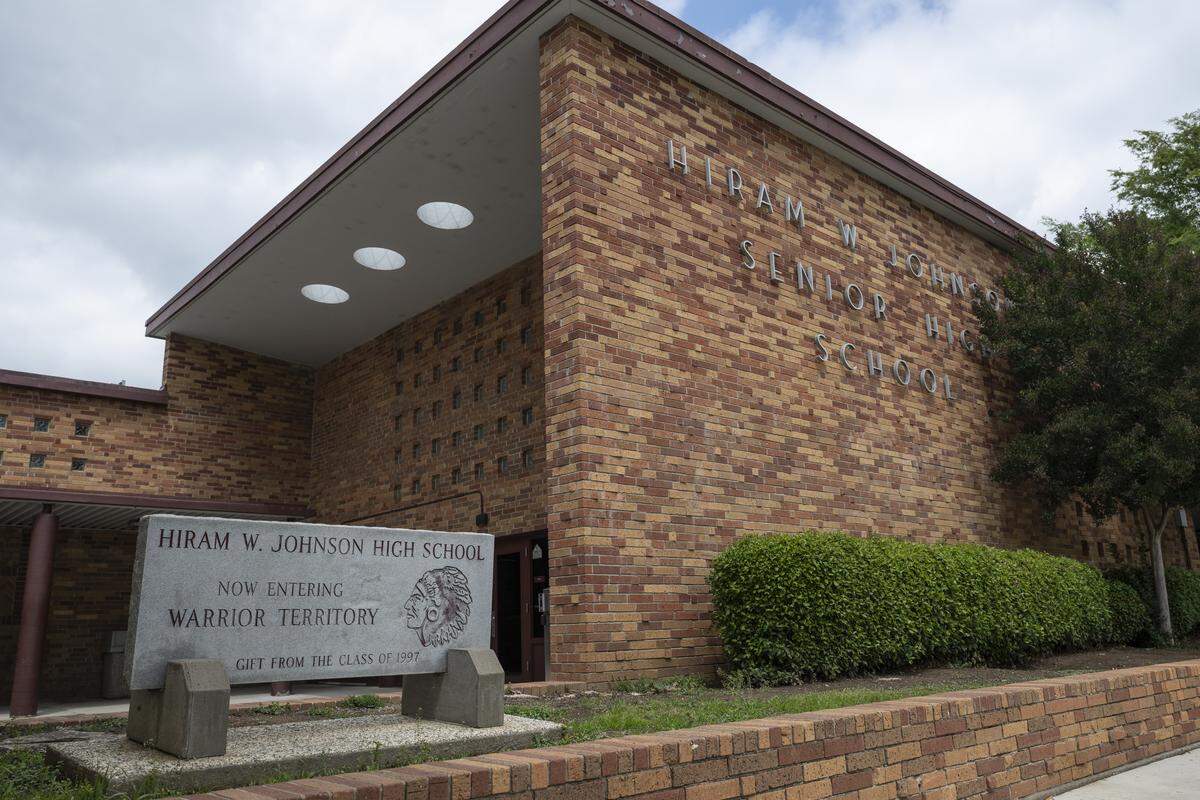
Hiram Johnson student president open to dialogue
Christian Guerrero is the student body president at Hiram Johnson, a senior who is part of the school’s ROTC program with visions of joining the Air Force after graduation. He keeps tabs on campus events and is aware of the mascot issue. Part of his campus role is to listen to students and teachers.
Guerrero said he is mindful of stereotypes and how they can hurt. He said he would like to talk to Miranda-Brightman, The Met student advocating for this imagery change.
“Being a person of color, I can see the reasons why people are angry about the image and why they want change,” Guerrero said. “Teachers on campus here talk about it, and if (the mural and depiction) is representing the right community and highlighting them the correct way. I can see how some see the mural as a stereotype and not a highlight.
“As the school president, I’m proud of how we take care of our school, how we’re involved in the community, and the pride of being a Warrior, of being brave. We all come together here on campus for sporting events, rallies and dances, and we have community multicultural night. We care about everyone.”
Miranda-Brightman said she is open to dialogue with anyone at Hiram Johnson, including Kirkland. She said cultural sensitivity training would be a good course to introduce in schools.
“It’s needed because some just don’t know how hurtful mascots can be,” she said.
Miranda-Brightman said she embraces her culture, including regalia she wears to ceremonies.
“I wear what we call authentic regalia,” she said.
This story was originally published May 7, 2026 at 3:45 PM.