
Oakland Raiders will leave nothing but memories after Sunday’s final Coliseum game
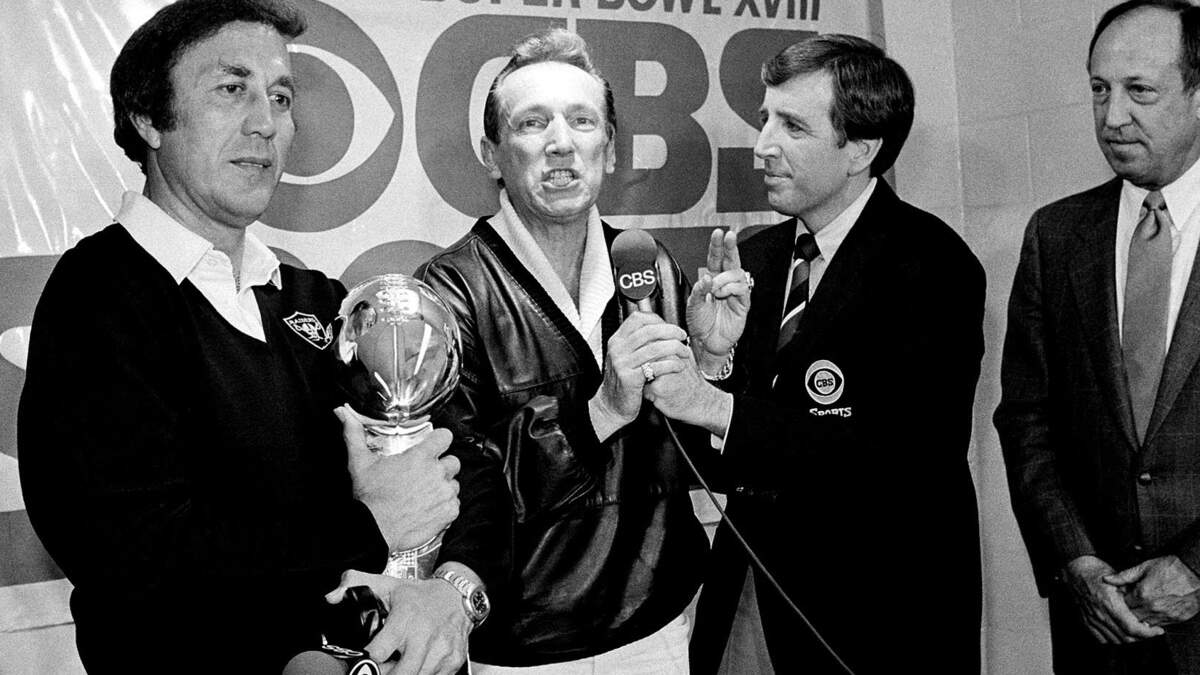
This time it won’t feel so much like a reunion for old friends bonded by football, memories and all shades silver and black.
Sunday in the East Bay will be something of a wake. This is a goodbye to old friends and old haunts as the Raiders bid farewell to a city that has called them their own for 60 years.
Tom Flores knows. He’s an original Raider.
He is as connected to the franchise as any player to pull on a silver helmet with a pirate on it. He was the team’s first quarterback, starting in 1960. He was an assistant coach in the 1970s, head coach in the 1980s with two Super Bowl triumphs and has worked for the franchise in some capacity ever since.
So, yes, Flores feels this final chapter right to his soul. The father of three, Sunday’s final Raiders home game will be a great deal more difficult then sending kids off to college. Kids come back. Franchises do not.
“Sad,” Flores said by phone this week. “I’m not sure how I’ll handle Sunday. I have so many mixed emotions, so many memories, and a lot of us old Raiders will talk about it.”
Sunday will mark the somber end of an otherwise glorious era. The Raiders have been identified by catchphrases created and polished by Al Davis — “Pride and Poise” and “Just win, baby” — and equally as much by their fan base. Or the asylum that packed into a concrete fortress.
The Oakland Coliseum, before corporate names became the necessary norm, was home for the Raiders from 1966 through 1981 and again from 1995 through this week’s contest with Jacksonville. Home games became a regular Halloween fright night of characters in costumes from within the Black Hole in the heart of Raider Nation.
Fans were never an issue in regards to sellouts. The stadium opened as an envied venue when Lyndon Johnson was in the White House. But age took its toll. There are cracks and leaks in the structure. The stadium grew old while the rest of the NFL went new.
The money was never there to construct a new stadium in Oakland. That’s why the Raiders bolted to Los Angeles in 1981, and it is the reason they are leaving after a second tour began in 1995.
In professional sports, money talks and money walks. The Raiders bow out of their decaying venue for the Las Vegas Strip next season. Nevada offers a sparkling $1.9 billion venue, a 65,000-seat controlled-environment jewel that makes the Coliseum look like a Port-a-Potty , which isn’t too much of a stretch given the sewage issues.
End of two eras
The Raiders and the NFL on Sunday will bid farewell to the last of the multisport stadiums that were prevalent in the 1970s and ‘80s.
When the Raiders left for greener cash pastures before the 1982 season, Oakland was one of 16 teams in the 27-member NFL that shared a stadium with a baseball team. Now the A’s are the lone tenant in Oakland, stuck with the most outdated ride in the race.
“I don’t feel that we should move as a franchise,” Flores said. “But I understand why we have to move. Oakland didn’t do anything to try and keep the Raiders, even with all that land available. Find a way.”
Flores lived through this once, and he’s dying a second slow death of loyalty and love again.
“I remember I was head coach in 1979 and Al Davis called me and said, ‘I think we have a deal to stay in Oakland,’” Flores said. “A week later, we didn’t have a deal. Then Al started to look into LA, and all of a sudden, Al was challenged, and you don’t challenge Al Davis. He was told by the NFL that he couldn’t move to LA. Really? That’s when (NFL commissioner) Pete Rozelle made a mistake a d told the city of Oakland that we couldn’t move. Al said, ‘watch me.’”
Flores added, “But this is it now: This is the end. A new stadium, and that’s what the Raiders wanted all along — a class stadium, the ability to compete with other teams with luxury suites. You just hate that it comes to this.”
Raiders coach Jon Gruden also embraces Raiders history and the fans who poured finances and emotions into all of it. Gruden regularly visits those in the Black Hole after home wins. On bidding the old place farewell, Gruden said this week, “I get emotional about it. So do a lot of people.”
The Raiders went 98-26-3 in their first home era and are 192-131-3 there all-time. The fans never wavered. They have enjoyed one playoff season in the past 16 years. Can they squeeze out one more win?
“I hope so,” said Mark Miller, a 68-year old retired educator from Sacramento who has attended Raiders games since the 1970s. “I can’t believe it’s going to end. It’ll be exciting during the game, and then it’ll be like a funeral. For me and a lot of others, a part of us will die Sunday.”
Vadabond Raiders and early roots
The Raiders were founded in 1960 in the American Football League. Their colors were black, gold and white.
A “Name Your Football Team” contest from the Oakland Tribune granted the initial mascot as “Senors,” in what some suspect was an inside job by a Raiders part owner who called his pals, “Senor.” A backlash led led to an immediate change — Raiders.
Flores was on that initial team, as was perhaps the greatest Raider of them all in center Jim Otto. The old friends will sit together in the owner’s suite Sunday with owners Carol Davis and son Mark Davis. Al Davis died in 2011.
“I’m the first guy in pro football who put his hands under Otto’s ass, and was proud to do it!” Flores joked.
Even in the Raiders early days, finding a home was a chore. The team headquarters the first years were in three hotel rooms.
The Raiders had different training camp sites and were something of a traveling circus. The franchise’s first victory with a young Flores leading the charge was at Hughes Stadium in Sacramento in front of 9,551. It was a 23-17 exhibition effort over the New York Titans, coached by Sammy Baugh.
“We played all over the place in the early days,” Flores said. “We didn’t have a stadium. It was destined to be that way.”
Cal wasn’t keen on letting the Raiders use Memorial Stadium in Berkeley in 1960, so the Raiders settled on home games at Kezar Stadium and Candlestick Park in San Francisco. The Raiders went 6-8 in 1960 and 2-12 in 1961. Undone by poor attendance, the franchise lost more than $500,000 — a staggering sum.
Oakland owners needed a secret loan of nearly $500,000 from Buffalo Bills owner Ralph Wilson to stay afloat. Wilson’s fear was if the Raiders went under, the AFL could follow.
From 1962-65, the Raiders played at Frank Youell Field, a 18,000-seat venue in Oakland that was compared to an Erector Set. And how’s this for twisted irony?
Youell Field was named after an Oakland undertaker. Frank’s job it was to prepare the dead for funerals when he wasn’t tasked with duties as an Oakland City Councilman. Youell Field was leveled in 1969, replaced by parking lots at Laney College.
In 1963, Al Davis came aboard as coach, and later became general managing partner, changing the team colors to silver and black and their image of renegades. In 1966, Davis bought into the Raiders ownership share for $18,000, which equates to $441,000 in today’s dollars.
The 50,000-seat Coliseum broke ground in 1965, with Otto on hand to watch the shovel presentation. It opened for football in 1966, constructed for $25.5 million — $200 million in today’s economy. The first game in what was then the Oakland Alameda County Coliseum was on Sept. 18, 1966, against Kansas City. There was a 20-minute pregame ceremony for the 54,000 that packed in, and 36,000 beers were sold, but it was all Chiefs from there in a 32-10 rout.
“Over the years,” Flores said this week, “I’d tell people that growing up as the Raiders franchise, we didn’t have a home. We were orphans. We got a tiny home with hopes of a bigger home. That’s why we loved the fans. They were underdogs like us.”
The Black Hole
Some of the best action on Raider game day can be found in the Black Hole, located behind the south end zone. Or the parking lot, where people tend to get their game faces on with assorted beverage intake.
It’s not uncommon for fans to take a swig of Jack Daniels before approaching the stadium, and for the late arriving to swig during the national anthem.
The Black Hole was born in 1996, the second season of the Raiders return. Misfits rooted in the very image of the Raiders.
Opposing coaches brace for the Black Hole and the venue, and they appreciate it, too.
Said Chiefs coach Andy Reid earlier this season, “There’s just something about that place that’s crazy. Last year, the sewage system flooded, and it simplifies the game for you. You got to work through a few things to get out there, and then you still have the baseball infield (with the A’s).”
Los Angeles Chargers players and coaches last month recalled being pelted by debris in Oakland over the years. Or doused by beer and cursed by men and women.
“Every game’s like Halloween,” Chargers coach Anthony Lynn said before Oakland defeated the Chargers 26-24 on Nov. 7. “A lot of energy, a lot of excitement. I’m going to miss it, no doubt.”
Gruden, the Raiders coach, has joked that his only friends are the snarling sorts within the Black Hole. Once, Gruden said he peered over and saw a familiar face.
“It was pregame warmups, and I looked over there and I saw my mom,” Gruden said during his Wednesday press session in Oakland. “I said, ‘Somebody go get my mom!’”
Jacksonville coach Doug Marrone brings his team into Sunday’s game with a hint of nostalgia. He was drafted by Al Davis out of Syracuse in 1986, though he did not make the final roster. The men remained friends until Davis’ death.
“I think for me there will be a point I think, ‘Wow! I can’t believe the Oakland Raiders are moving.’” Doug Marrone said this week on a conference call.
Raiders quarterback Derek Carr is the stadium’s career passing leader with 10,492 yards, but it’s not yards that he’ll remember most about Oakland.
“Just put it in perspective — a little kid from Fresno is playing for his dad’s favorite football team,” Carr said. “Let’s be real about it. That’s pretty awesome. It’s a dream come true. To be here, play on the same field as all those legends… It is a really cool thing.”
This story was originally published December 13, 2019 at 5:00 AM.